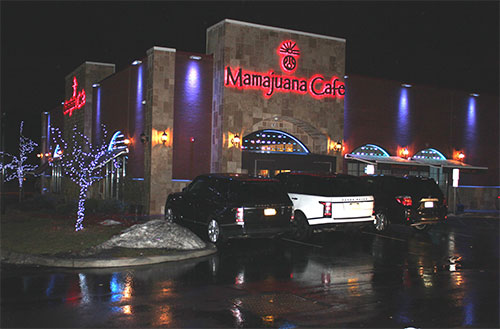
 The Mamajuana Café franchise opened its doors to their newest addition in Paterson, N.J., with an addressable MS-9200UDLSsystem from Fire-Lite Alarms by Honeywell to protect its occupants and livelihood. The system was designed and installed by High End Electric, an experienced, licensed electrical contractor, owned by Narciso Jimenez and Ramon Guzman. The Latin restaurant also came away with a more reliable, money-saving means for monitoring its fire alarm system with the IPGSM-4G fire alarm communicator from Honeywell Power.
The Fire-Lite fire alarm system monitors and controls a variety of heat and smoke detectors, and pull stations, as well as sprinkler and water flow valves throughout the restaurant. In an emergency, the system’s addressability allows it to provide precise information, gathered from all devices, concerning the location of alarms and the type of event detected. The MS-9200UDLS offers the café ample coverage with plenty of add-on capacity to handle future additions without overpaying upfront for unneeded capabilities.
Honeywell Power’s IPGSM-4G communicator enabled the café to utilize its existing Internet line as the primary means of reporting fire alarm data to a central station. For a backup communication path, the café’s system relies on cellular (GSM). The use of two different communication paths boosts the reliability of fire alarm reporting.
If High End Electric had taken the more traditional approach to fire alarm communications using two phone lines, the café’s monthly cost would equal $105, including $75 for the two phone lines and $30 for monitoring.
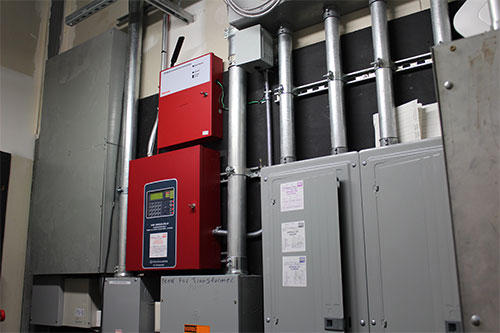 Today, the restaurant pays $45 per month to cover monitoring and digital cellular communications via Honeywell’s AlarmNet network. Through an arrangement with several of the nation’s largest wireless carriers, AlarmNet provides digital cellular communications to a network operations center, where signals are converted into any one of multiple alarm communications formats and forwarded to the central station monitoring the account.
High End Electric Leadman Electrician and Fire Alarm Specialist Luis Rodriguez says he was initially concerned about using cellular communications for the Mamajuana Café because the restaurant is located in a low altitude that can cause a weak signal.
“AlarmNet gave us some tips about how to install the digital cellular communicator. And the first time we used it, we were able to set it up in about two hours, including the time spent on the phone with AlarmNet to set up the account,” Rodriguez explained. “Since then, we have used these communicators in over 300 installations and now it takes about an hour to install them.”
Rodriguez points out authorities in his area allow the IPGSM-4G to be used as the sole communications method for commercial fire installations, in accordance with local and National Fire Protection Association (NFPA) standards.
The IP (Internet Protocol) and cellular option is gaining acceptance nationwide as more and more local authorities adopt the 2007, 2010 and 2013 versions of NFPA 72: National Fire Alarm and Signaling Code. Those versions of the code allow the use of UL-approved, IP and cellular communicators as the single reporting path when they are programmed to send a supervisory check-in signal to the central station every five minutes. The central station must also send an alert if a check-in signal is not received at the expected time.
Miguelina Arce, co-owner of the Mamajuana Café, sums up the whole fire alarm experience as “excellent. We are happy that we didn’t have to pay for two phone lines to serve just the fire alarm system.”