House Report Criticizes Security Gaps at Airports

House Report Criticizes Security Gaps at Airports

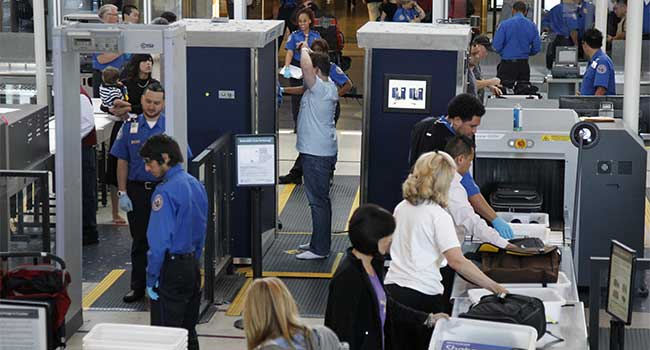
A report written by the House Homeland Security Subcommittee says that the systems in place to vet the nearly one million people who work within U.S. airports are insufficient.

The report, obtained by CNN, found inconsistent screening of airport employees, insufficient TSA access to intelligence information used to vet individuals and inadequate control of access to sensitive areas of airports.

The report cited several headlines from media reports that covered times people with security clearances smuggled guns or drugs into airports, or were associated with militant groups like ISIS. It also highlighted a number of specific cases where the government said dozens of employees had incomplete records.

In addition to the reports summation of this “disturbing reality,” the report also referred to many previous government and media reports about shortcomings in airport security; most notably, the leaked government watchdog report that showed a 95 percent failure rate from covert texts of the TSA screening process. Almost all banned items made it through airport security in that report from 2015.

As a solution to these security issues, the subcommittee recommended tightening the process for granting airport workers credentials and instituting regular reassessments, as well as airports and air carriers look at the “costs and feasibility of expanding the physical screening of employees.”

They also called for airports to implement the FBI’s RAPBack program, a background check database that constantly monitors and updates employers on the criminal background of employees.

The report also repeatedly called for increased cooperation from the FBI, with the Department of Homeland Security leading the way, as different government organizations to monitor the nation’s airports. They believe the FBI has been slow to involve their agencies and said the FBI had not been “forthcoming” to the Homeland Security Committee.

Featured

  • Security Today Announces 2025 CyberSecured Award Winners

    Security Today is pleased to announce the 2025 CyberSecured Awards winners. Sixteen companies are being recognized this year for their network products and other cybersecurity initiatives that secure our world today. Read Now

  • Empowering and Securing a Mobile Workforce

    What happens when technology lets you work anywhere – but exposes you to security threats everywhere? This is the reality of modern work. No longer tethered to desks, work happens everywhere – in the office, from home, on the road, and in countless locations in between. Read Now

  • TSA Introduces New $45 Fee Option for Travelers Without REAL ID Starting February 1

    The Transportation Security Administration (TSA) announced today that it will refer all passengers who do not present an acceptable form of ID and still want to fly an option to pay a $45 fee to use a modernized alternative identity verification system, TSA Confirm.ID, to establish identity at security checkpoints beginning on February 1, 2026. Read Now

  • The Evolution of IP Camera Intelligence

    As the 30th anniversary of the IP camera approaches in 2026, it is worth reflecting on how far we have come. The first network camera, launched in 1996, delivered one frame every 17 seconds—not impressive by today’s standards, but groundbreaking at the time. It did something that no analog system could: transmit video over a standard IP network. Read Now

  • From Surveillance to Intelligence

    Years ago, it would have been significantly more expensive to run an analytic like that — requiring a custom-built solution with burdensome infrastructure demands — but modern edge devices have made it accessible to everyone. It also saves time, which is a critical factor if a missing child is involved. Video compression technology has played a critical role as well. Over the years, significant advancements have been made in video coding standards — including H.263, MPEG formats, and H.264—alongside compression optimization technologies developed by IP video manufacturers to improve efficiency without sacrificing quality. The open-source AV1 codec developed by the Alliance for Open Media—a consortium including Google, Netflix, Microsoft, Amazon and others — is already the preferred decoder for cloud-based applications, and is quickly becoming the standard for video compression of all types. Read Now

New Products

  • A8V MIND

    A8V MIND

    Hexagon’s Geosystems presents a portable version of its Accur8vision detection system. A rugged all-in-one solution, the A8V MIND (Mobile Intrusion Detection) is designed to provide flexible protection of critical outdoor infrastructure and objects. Hexagon’s Accur8vision is a volumetric detection system that employs LiDAR technology to safeguard entire areas. Whenever it detects movement in a specified zone, it automatically differentiates a threat from a nonthreat, and immediately notifies security staff if necessary. Person detection is carried out within a radius of 80 meters from this device. Connected remotely via a portable computer device, it enables remote surveillance and does not depend on security staff patrolling the area.

  • Unified VMS

    AxxonSoft introduces version 2.0 of the Axxon One VMS. The new release features integrations with various physical security systems, making Axxon One a unified VMS. Other enhancements include new AI video analytics and intelligent search functions, hardened cybersecurity, usability and performance improvements, and expanded cloud capabilities

  • 4K Video Decoder

    3xLOGIC’s VH-DECODER-4K is perfect for use in organizations of all sizes in diverse vertical sectors such as retail, leisure and hospitality, education and commercial premises.