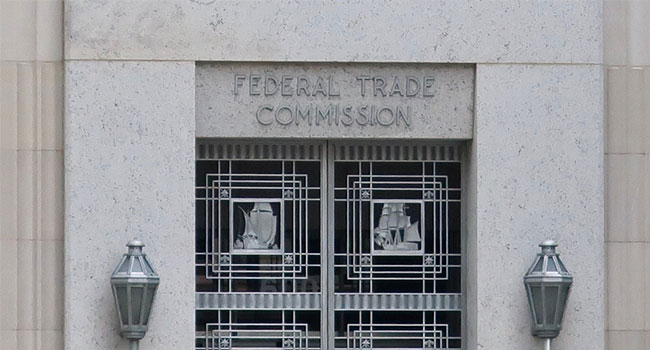
Federal Trade Commission

FTC Reaches Settlement With Utah Company Accused of Improperly Protecting Customer Data

Between 2014 and 2016, a hacker was able to access the personal information of about 1 million InfoTrax Systems customers. Now, the FTC is taking action.

In its latest bid to punish companies for failing to protect customer data, the Federal Trade Commission has reached a proposed settlement with InfoTrax Systems, a provider of operations systems for multi-level marketers.

InfoTrax, which is based in Utah, faced a series of intrusions between 2014 and 2016 that exposed the data of about 1 million customers, including information like addresses, Social Security numbers, passwords and more. Some 500 payment card numbers and 16 bank account numbers were also compromised, according to the FTC.

The commission found that the company failed to implement “reasonable security safeguards,” essentially allowing a hacker to access the sensitive data more than 20 times before InfoTrax realized it had been hacked in March 2016.

“Service providers like InfoTrax don’t get a pass on protecting sensitive data they handle just because their clients are other businesses rather than individual consumers,” Andrew Smith, the director of the FTC’s Bureau of Consumer Protection, said in a statement on Tuesday. “As this case shows, it’s every company’s responsibility to protect customers’ personal information, especially sensitive data like Social Security numbers.”

Under the proposed terms of the settlement, InfoTrax will be required to create a cybersecurity program to address the security failures in the FTC complaint. Those issues included failing to delete personal information the company no longer needed, adequately segment its network and implement safeguards to detect unusual activity in the network.

Customer data was also left unencrypted within the company’s systems, making it easy for hackers to access and use the information for malicious purposes.

In addition to creating and enforcing a cybersecurity plan, InfoTrax will face third-party assessments of its program every two years. The third-party assessor, which the FTC must approve, will conduct employee interviews, conduct independent sampling and review documents before drawing conclusions about the effectiveness of the security measures.

Just last month, the FTC handed down another proposed settlement that banned a mobile app company, Retina-X Studios, LLC, from selling “stalkerware” monitoring apps unless they implemented measures to ensure the apps were used for “legitimate purposes.”

That settlement also required the company and its owner to implement a cybersecurity plan similar to the one described in the InfoTrax case. After a public comment period of 30 days, the FTC will finalize the settlement and InfoTrax must follow its terms for 20 years -- a time period questioned by Commissioner Christine S. Wilson in a statement released on Tuesday.

“I believe that, in many industries, it is not realistic for the Commission to draft injunctive relief expecting that it will remain relevant and continue benefitting consumers for 20 years,” Wilson wrote, urging the commission to limit settlement periods to 10 years.

About the Author

Haley Samsel is an Associate Content Editor for the Infrastructure Solutions Group at 1105 Media.

Featured

  • Security Today Announces 2025 CyberSecured Award Winners

    Security Today is pleased to announce the 2025 CyberSecured Awards winners. Sixteen companies are being recognized this year for their network products and other cybersecurity initiatives that secure our world today. Read Now

  • Empowering and Securing a Mobile Workforce

    What happens when technology lets you work anywhere – but exposes you to security threats everywhere? This is the reality of modern work. No longer tethered to desks, work happens everywhere – in the office, from home, on the road, and in countless locations in between. Read Now

  • TSA Introduces New $45 Fee Option for Travelers Without REAL ID Starting February 1

    The Transportation Security Administration (TSA) announced today that it will refer all passengers who do not present an acceptable form of ID and still want to fly an option to pay a $45 fee to use a modernized alternative identity verification system, TSA Confirm.ID, to establish identity at security checkpoints beginning on February 1, 2026. Read Now

  • The Evolution of IP Camera Intelligence

    As the 30th anniversary of the IP camera approaches in 2026, it is worth reflecting on how far we have come. The first network camera, launched in 1996, delivered one frame every 17 seconds—not impressive by today’s standards, but groundbreaking at the time. It did something that no analog system could: transmit video over a standard IP network. Read Now

  • From Surveillance to Intelligence

    Years ago, it would have been significantly more expensive to run an analytic like that — requiring a custom-built solution with burdensome infrastructure demands — but modern edge devices have made it accessible to everyone. It also saves time, which is a critical factor if a missing child is involved. Video compression technology has played a critical role as well. Over the years, significant advancements have been made in video coding standards — including H.263, MPEG formats, and H.264—alongside compression optimization technologies developed by IP video manufacturers to improve efficiency without sacrificing quality. The open-source AV1 codec developed by the Alliance for Open Media—a consortium including Google, Netflix, Microsoft, Amazon and others — is already the preferred decoder for cloud-based applications, and is quickly becoming the standard for video compression of all types. Read Now

New Products

  • Mobile Safe Shield

    Mobile Safe Shield

    SafeWood Designs, Inc., a manufacturer of patented bullet resistant products, is excited to announce the launch of the Mobile Safe Shield. The Mobile Safe Shield is a moveable bullet resistant shield that provides protection in the event of an assailant and supplies cover in the event of an active shooter. With a heavy-duty steel frame, quality castor wheels, and bullet resistant core, the Mobile Safe Shield is a perfect addition to any guard station, security desks, courthouses, police stations, schools, office spaces and more. The Mobile Safe Shield is incredibly customizable. Bullet resistant materials are available in UL 752 Levels 1 through 8 and include glass, white board, tack board, veneer, and plastic laminate. Flexibility in bullet resistant materials allows for the Mobile Safe Shield to blend more with current interior décor for a seamless design aesthetic. Optional custom paint colors are also available for the steel frame.

  • A8V MIND

    A8V MIND

    Hexagon’s Geosystems presents a portable version of its Accur8vision detection system. A rugged all-in-one solution, the A8V MIND (Mobile Intrusion Detection) is designed to provide flexible protection of critical outdoor infrastructure and objects. Hexagon’s Accur8vision is a volumetric detection system that employs LiDAR technology to safeguard entire areas. Whenever it detects movement in a specified zone, it automatically differentiates a threat from a nonthreat, and immediately notifies security staff if necessary. Person detection is carried out within a radius of 80 meters from this device. Connected remotely via a portable computer device, it enables remote surveillance and does not depend on security staff patrolling the area.

  • Automatic Systems V07

    Automatic Systems V07

    Automatic Systems, an industry-leading manufacturer of pedestrian and vehicle secure entrance control access systems, is pleased to announce the release of its groundbreaking V07 software. The V07 software update is designed specifically to address cybersecurity concerns and will ensure the integrity and confidentiality of Automatic Systems applications. With the new V07 software, updates will be delivered by means of an encrypted file.