new york camera

New Tool Uses Video Surveillance Feeds and Computer Algorithms to Track Social Distancing Behaviors

A MIchigan company is monitoring traffic in typically busy areas to show how locals are following stay-at-home orders during the coronavirus crisis.

A startup based out of the University of Michigan is using a new tool to show how video surveillance and artificial intelligence can come together to help monitor social distancing behavior during the COVID-19 pandemic.

Voxel51, which is run by electrical and computer engineering professor and CEO Jason Corso, announced last week that his company has developed a tool to track vehicle, cyclist and pedestrian traffic in several usually busy areas across the U.S. and Europe, ClickOnDetroit reported.

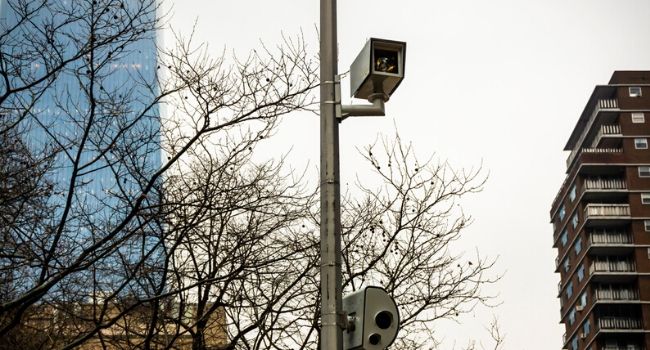
The tool combines footage from existing public street cameras with computer vision models to track whether social distancing protocols are being followed at a certain time in a specific location. Voxel51’s algorithm assigns each location a “physical distancing index,” or PDI score, every 15 minutes by counting the number of objects in the frame.

“The PDI score helps people understand and compare how the coronavirus is changing social behaviors over time and enables municipalities to visualize how they’re doing from a public health perspective," Corso said, according to ClickOnDetroit. "Even though the virus is spreading, overall, we can see that the public response to the stay-at-home mandates has been rather dramatic and impressive.”

Right now, the program is actively tracking coronavirus hotspots like New York’s Times Square and Seaside Heights in New Jersey as well as Abbey Road in London, Fremont Street in downtown Las Vegas and a Fort Lauderdale beach. Intersections in Dublin and Prague are also part of the project.

Corso told MLive that the researchers chose to pull data from public camera feeds with higher quality footage that included “historical data” that researchers could access to compare to despite emergency warnings by the government, but have since tapered off due to fears of spread and shelter-in-place orders.

Responding to concerns about privacy of the people seen in video surveillance footage, Corso told VICE that the data is “an aggregate statistical measure with no identifying information at all” and would not include any individualized information if shared with law enforcement.

Voxel51 plans to add more specific locations for local governments and imagines that residents could use the tool to see if an area is crowded before deciding to head to the location, according to MLive.

“We expect to find rich information in the joint analysis of the physical distancing index and these other feeds,” Corso told ClickOnDetroit. “There is even a chance that the PDI can feed into a predictive model for cities not yet greatly affected and the potential for a renewed outbreak next year.

About the Author

Haley Samsel is an Associate Content Editor for the Infrastructure Solutions Group at 1105 Media.

Featured

  • Security Today Announces 2025 CyberSecured Award Winners

    Security Today is pleased to announce the 2025 CyberSecured Awards winners. Sixteen companies are being recognized this year for their network products and other cybersecurity initiatives that secure our world today. Read Now

  • Empowering and Securing a Mobile Workforce

    What happens when technology lets you work anywhere – but exposes you to security threats everywhere? This is the reality of modern work. No longer tethered to desks, work happens everywhere – in the office, from home, on the road, and in countless locations in between. Read Now

  • TSA Introduces New $45 Fee Option for Travelers Without REAL ID Starting February 1

    The Transportation Security Administration (TSA) announced today that it will refer all passengers who do not present an acceptable form of ID and still want to fly an option to pay a $45 fee to use a modernized alternative identity verification system, TSA Confirm.ID, to establish identity at security checkpoints beginning on February 1, 2026. Read Now

  • The Evolution of IP Camera Intelligence

    As the 30th anniversary of the IP camera approaches in 2026, it is worth reflecting on how far we have come. The first network camera, launched in 1996, delivered one frame every 17 seconds—not impressive by today’s standards, but groundbreaking at the time. It did something that no analog system could: transmit video over a standard IP network. Read Now

  • From Surveillance to Intelligence

    Years ago, it would have been significantly more expensive to run an analytic like that — requiring a custom-built solution with burdensome infrastructure demands — but modern edge devices have made it accessible to everyone. It also saves time, which is a critical factor if a missing child is involved. Video compression technology has played a critical role as well. Over the years, significant advancements have been made in video coding standards — including H.263, MPEG formats, and H.264—alongside compression optimization technologies developed by IP video manufacturers to improve efficiency without sacrificing quality. The open-source AV1 codec developed by the Alliance for Open Media—a consortium including Google, Netflix, Microsoft, Amazon and others — is already the preferred decoder for cloud-based applications, and is quickly becoming the standard for video compression of all types. Read Now

New Products

  • FEP GameChanger

    FEP GameChanger

    Paige Datacom Solutions Introduces Important and Innovative Cabling Products GameChanger Cable, a proven and patented solution that significantly exceeds the reach of traditional category cable will now have a FEP/FEP construction.

  • HD2055 Modular Barricade

    Delta Scientific’s electric HD2055 modular shallow foundation barricade is tested to ASTM M50/P1 with negative penetration from the vehicle upon impact. With a shallow foundation of only 24 inches, the HD2055 can be installed without worrying about buried power lines and other below grade obstructions. The modular make-up of the barrier also allows you to cover wider roadways by adding additional modules to the system. The HD2055 boasts an Emergency Fast Operation of 1.5 seconds giving the guard ample time to deploy under a high threat situation.

  • Compact IP Video Intercom

    Viking’s X-205 Series of intercoms provide HD IP video and two-way voice communication - all wrapped up in an attractive compact chassis.