Advanced Facial Recognition Brings Security, Simplicity to Healthcare’s Most Complex Workflows
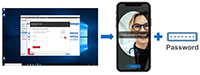 Imprivata®, together with technology partners Aware and IDEMIA, has introduced an innovative mobile facial recognition solution, taking advanced security technology and enhancing and simplifying it for application to unique healthcare requirements.
Developed in partnership with established facial recognition providers, this first-to-market healthcare mobile facial recognition solution will help healthcare organizations improve security and compliance, substantially simplify usability and workflow, and advance their digital identity strategy. The solution enables seamless self-enrollment by the prescribers for electronic prescriptions for controlled substances (EPCS). This innovative facial recognition solution increases convenience for prescribers, bolsters security, and maintains compliance with DEA requirements for EPCS.
“Imprivata is leveraging advanced mobile recognition to simplify workflow and help prescribers and providers remain focused on their most important goal: delivering top-quality care,” said Gus Malezis, CEO at Imprivata. “This technology partnership allows us to deliver a solution that adheres to an increasing need for mobile, remote and virtual workflows, which requires a robust digital identity strategy. This first application of mobile facial recognition strengthens our position as the market leader in EPCS technology by helping customers transition from the initial phases of implementing EPCS to now optimizing and simplifying EPCS as a high-value workflow for providers and patients, while bolstering cybersecurity and meeting DEA and other compliance requirements.”
Aware, a leading global provider of biometric-based authentication software services, has an industry-leading mobile biometric authentication solution that uses face for passwordless login with liveness detection. IDEMIA, the global leader in augmented identity, offers industry-leading facial recognition technology. IDEMIA recently achieved the top rank for accuracy in the National Institute of Standards and Technology’s (NIST) latest “Face Recognition Vendor Test.”
"We are very interested in facial recognition and how it can improve convenience for providers,” said Dr. Scott Smitherman, CMIO at Providence Health. “We are looking forward to seeing how Imprivata expands the use of facial recognition in the future.”
The use of facial recognition for self-enrollment addresses a long-standing challenge for EPCS users: enrolling a new phone-based authentication method to be used to sign EPCS orders.
“When a provider gets a new mobile phone, they must enroll it for EPCS in a way that binds their trusted identity to that device – a time-consuming and inconvenient process that typically requires working in-person with a witness to the enrollment,” said Dr. Sean Kelly, M.D., chief medical officer at Imprivata and a practicing emergency physician. “This new mobile facial recognition solution eliminates the inconvenience of supervised enrollment of a new phone by allowing providers to self-enroll. Providers can bind their identity to the new phone in a fully compliant, self-service workflow that takes only two minutes to self-enroll. This is highly convenient for providers and minimizes disruption of their electronic prescribing ability, saving hours and even days compared to standard enrollment procedures.”
“IDEMIA’s Biometric Services enables physicians to remotely perform the steps that previously required an in-person visit to establish confidence in the identity of the account holder,” said Matt Thompson, senior vice president, Civil Identity, IDEMIA. “Our goal in the partnership with Imprivata is to create an exceptional experience for physicians while improving the trust and security of the healthcare ecosystem.”
“Aware’s liveness detection improves biometric identification and security by ensuring that a live person is presented during the right person is doing the self-enrollment, and not a still image, video, or other non-live facial image,” said Bob Eckel, president and CEO at Aware. “The ability to protect Imprivata’s EPCS solution from spoof attempts streamlines the workflow and helps healthcare organizations better meet the needs of patients, clinicians and staff.”