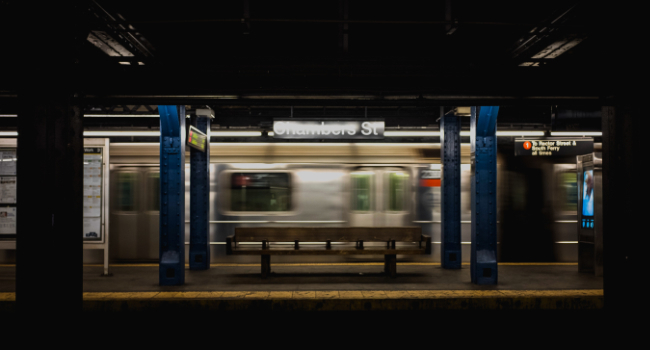
Metro Transit Authority Will Install Security Cameras in Every New York City Subway Car
New York Gov. Kathy Hochul recently announced the Metropolitan Transportation Authority New York City Transit has received a $2 million award, through the Urban Area Security Initiative federal grant program, which will provide funding for the installation of cameras across the entire fleet of subway cars, enhancing security coverage, and, most importantly, increasing passenger confidence in mass transit safety. The Urban Area Security Initiative is a program under the U.S. Department of Homeland Security Preparedness Grants. The funding will enable the purchase of 5,400 cameras to be installed on 2,700 New York City Transit subway cars, two per car. Additionally, the program will fund approximately 3,800 cameras expanding coverage in approximately 130 subway stations.
"My number one priority as Governor is keeping New Yorkers safe," Governor Hochul said. "I am proud that we will be installing cameras on all Subway cars - expanding our security capabilities, deterring crime, and providing our law enforcement with support. As we continue welcoming riders back to the transit system, we will continue doing everything in our power to keep riders safe."
The funding will further strengthen NYC Transit's existing security network of more than 10,000 cameras across all 472 subway stations. The new funding covers the cost of camera installation on 6,355 cars, allowing the MTA to fully outfit every subway car with cameras -- supplementing an existing camera pilot program that includes 200 cameras in 100 subway cars. Additionally, funding from the Subway Action Plan totaling $3.5 million will enable the purchase of 7,310 cameras on 3,655 cars, two per car. The total funding to complete the installations equals $5.5 million. When installation begins an additional 200 train cars per month will have cameras installed until the entire subway car fleet is camera-equipped, which is anticipated to occur sometime in 2025. In addition, when new R211 subway cars are delivered starting in early 2023 they will already be camera-equipped.
This is the latest measure Governor Hochul has taken to deter crime and enhance the safety of New York City Subways. In June, Governor Hochul signed legislation to protect roughly 11,000 more transit workers against assault and harassment. The legislation extended criminal charges to individuals who assault station customer assistants, ticket or revenue collectors, maintenance workers, repairers, cleaners, and their supervisors, who were not protected under previous laws.
MTA Chair and CEO Janno Lieber said, "As I've said many times before, those who commit crimes in the transit system will be identified and brought to justice. Riders should know we've got their back for their entire journey and this significant upgrade - made possible by new dollars from Governor Hochul - is a great step towards reinforcing New Yorkers' confidence in mass transit safety."
New York City Mayor Eric Adams said, "Public safety is my top priority and this new security initiative will further work to ensure that all New Yorkers can get to where they need to go safely. Public transportation is the backbone of New York City, and when commuters feel protected the entire system stands upright. I look forward to the inevitable and positive changes this new program will bring, as well as continuing to work with Governor Hochul to keep our subways safe for all riders."
NYPD Commissioner Keechant L. Sewell said, "The NYPD will never cede an inch in its ongoing work to ensure the safety and security of the millions of riders who, each day, depend on us throughout the nation's largest subway system. This is our most basic promise as we remain dedicated to preventing crime, terrorism, and disorder. The NYPD already uses existing MTA cameras, with great success, to solve crimes. Now, with ridership increasing and overall serious crime in the transit system back below pre-pandemic levels - a consequence of the NYPD's increased, concentrated deployment in stations and on trains - the installation of additional MTA cameras covering the entire fleet of subway cars will further our investigatory capabilities and enhance our ability to provide effective, efficient public safety both below and above ground."
New York City Transit President Richard Davey said, "It's been proven time and time again that cameras in the transit system help fight crime throughout the whole city, not just on the subway. Expanding the camera network will serve to deter those who are intent on committing a crime from entering the transit system."
MTA Chief Safety & Security Officer Patrick Warren said, "Cameras are an extremely effective tool in solving investigations and in deterring crime. Public and employee security and safety are priorities at the MTA and we consistently work towards implementing and improving measures that support these priorities. This grant is an important step forward supporting our safety and security efforts."
All Metro-North trains are equipped with cameras, and more than 90 percent of Long Island Rail Road trains are equipped with security cameras. Last year, camera installation across every subway station was accelerated and completed ahead of schedule. Two thousand cameras were installed in 2021 alone.
The MTA is committed to providing safe and reliable public transit and the Urban Area Security Initiative Award marks the latest step forward in the Authority's mission to be a fully monitored transit system by better deterring crime and increasing passenger security.