The Key to Security
System simplifies employee access and strengthens security
- By David Kraninger
- Oct 01, 2006
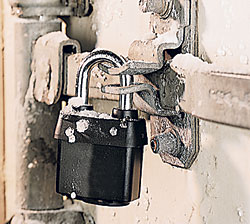 BADCOCK Home Furniture & More is a furniture retailer with a fleet of 45 tractors and 300 trailers, servicing nearly 330 stores in seven states throughout the southeast United States. With an average load worth $40,000, security has become a priority.
Prior to 2003, Badcock used many different styles and brands of padlocks to secure their trailers, and simply added padlocks as they added trailers. There was no plan or program in place to keep track of the padlocks or the keys that opened them.
In 2003, the company realized that their security system could easily be compromised because so many former associates and employees had access to keys. They decided to revamp their system to make it more secure, make it easier for select employees to have access to specific locks and eliminate the need to carry a ring full of keys.
In 2003, the company realized that their security system could easily be compromised because so many former associates and employees had access to keys. They decided to revamp their system to make it more secure, make it easier for select employees to have access to specific locks and eliminate the need to carry a ring full of keys.
Chip Rozier, a Master Lock sales representative, worked with Badcock Furniture's Randy Wilkerson to simplify the company's trailer security system, upgrade trailer security by providing a means of absolute key control and integrate truck security with the rest of the company's security system. Badcock adopted a key control system that eliminates the risk of key copies being made by unauthorized employees. The system uses an exclusive range of key cuts produced from protected, proprietary key blanks. Master Lock registers and tracks all specific key codes to provide assurance that a company's padlock security system retains complete keying integrity over time.
"We selected the new EdgeTM system because we knew it would improve our trailer security and help us to maintain key control," Wilkerson said. "We only had to change padlocks one time and if we ever feel the locks are compromised in some way, we can simply change out cylinders without having to purchase new locks."
How It Works
Each Badcock distribution center has its own, autonomous master key system, which is keyed to a grand master system. The systems include locks used for building, vehicle, trailer and even toolbox security. All of their padlocks are part of Master Lock's 6121 series.
"We are very pleased with the system," Wilkerson said. "Making cylinder changes is fairly easy, and we put everything, including our trailers, under one key controlled security system. Now we have multiple key control levels. One person can have a master key to open up anything within the corporation. We also can break it down so one driver is able to open up specific trailers and one repair man can open up just his own toolbox."
|
A Successful Plan
In order for a key control plan to be successful, the whole organization has to cooperate. First, everyone needs to understand the system and support it. Then, management needs to sit down and decide what kind of system to use:
Keyed Different--Each lock is opened by its own unique key that does not open any other lock in the set.
Keyed Alike--This option provides "same key" convenience and eliminates the need for multiple keys where numerous locks are used. All locks in the set are opened by the same key.
Master Keyed--In a master keyed system, a master key opens all the locks in the system, although each lock also has its own unique key. This permits organizing master key systems along departmental or other functional lines to allow supervisory or emergency access.
Rekeyable Locks--The cylinder in rekeyable locks can be removed in order to change the pinning or replace the original cylinder with a new one, restoring security quickly and economically. This is ideal for situations where keys are lost or stolen.
Interchangeable Core Locks--These padlocks and door locks provide an instant security solution because they do not require disassembly to remove the core (cylinder). The control key fits into the padlock just like the user key, but actuates the interchangeable core retaining mechanism. This allows the removal and replacement of the core (cylinder). Interchangeable cores (IC) can be used in both padlocks and door locks for facility-wide security systems.
Door Key-Compatible Padlocks--These padlocks extend a facility's existing door lock system to padlocks so that the same key can open both door locks and padlocks.
|
Most people equate padlock security with size; the bigger the body, or the thicker the shackle, the more security provided by the lock. But physical security only addresses half of the security needs. Keying security is equally important in commercial security applications. Today, 30 percent of burglaries are through unlawful entry without force. In many of these cases, the thief is a former employee, contractor or delivery person who returned with an unauthorized key to gain entry.
Any organization, particularly a trucking company, has many "security points," including terminal gates, exterior and interior doors, trailer locks, perimeter fencing, vehicle areas and vehicle door locks. A key control system is an easy way to simplify and improve security inside and out by allowing end users to control key duplication.
Using a Policy
With the system, key blanks are completely restricted making unauthorized duplication at retail hardware stores, home centers or anywhere else impossible -- and all operating keys are unique to each facility. The simplicity of the system allows an individual cylinder to be changed out if a key is lost or stolen so that the integrity of system isn't lost.
Key control systems work most effectively with a formal, written policy regarding keys and access. The policy should include:
-
Records of who actually possesses a key and what they can access with it.
-
Number of master keys issued.
-
Steps to take when keys are lost or stolen.
-
Return key policy for ex-employees and contractors.
-
Ensuring correct key level is provided to an employee.
-
Maintenance of the cylinders and locks.
Management needs to determine what will be included in the system (doors, buildings, gates, trucks, trailers and toolboxes) and who will be granted access to what. Once policies are laid out, consult with a key control system manufacturer to determine the best system for your organization.
This article originally appeared in the October 2006 issue of Security Products, pg. 40.