
SafetyLINK - Panic Button Involves Community
SafetyLINK is the world's first wearable safety device that protects children and seniors. It alarms people to summon for help easily, cost effectively and discreetly.
- By Sanjay Chadha
- Mar 25, 2014
 Sir Robert Peel helped create the modern concept of the police force back in 1800s, and his principles are still applicable today. Considered the father of law enforcement, Peel set the standard for policing in London when he was home secretary in UK in 1830s.
In America, somehow we have lost the spirit of Peel’s philosophy. Police work is often reactive, and dispatching an officer after a crime has occurred only creates a statistic. The reactive mode is “business as usual”—but there is another way––the way Sir Robert Peel had outlined in 1830's. Today, the involvement of citizens is called crowd sourcing.
Citizen involvement lies at the heart of community policing, and is the answer to cost effectively reducing crime. With effective community participation, both the response time and policing effectiveness will increase. Whether it’s in the police officers, police cursers, neighborhood or community watch programs, crime stoppers, Amber Alert, police review boards, or crime forums—getting the community involved in crime prevention makes the crucial difference.
Based on this principle of community involvement, SafetyLINK was born. SafetyLINK enables effective community participation by using the tools and technologies that are already available to us.
SafetyLINK brings the power of Bluetooth, smartphones, social networking and crowd sourcing together to create a safety community where people protect each other. SafetyLINK is an industry-first, community-based public safety solution that saves lives. The community is formed of friends, family, coworkers and neighbors that have been invited by members.
Mike Elgan's article, "Why the mob rules" outlines that there are two kinds of crowd sourcing––one in which people need to actively participate, and the other in which people don`t need to actively participate.
SafetyLINK is a crowd sourcing platform in which people need to participate physically by going out of their way to help. Waze, Foursquare, Quora, etc. are great examples of crowd sourced applications that provide great service today but require no to minimal user participation. SafetyLINK is different; it’s based on good humanitarian deeds by fellow community members.
When in need, a user conveniently presses the SOS button for three seconds for the SafetyLINK personal safety device to summon for help to the SafetyLINK cloud server. The server then identifies community members within the community nearby to the location of the SOS and to emergency service. This drastically reduces response time by benefiting from help nearby.
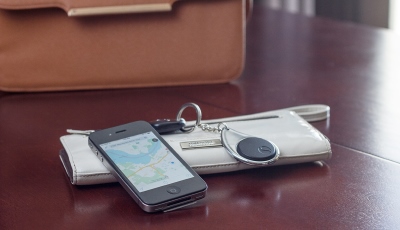
This safety button can be used for children, adults and seniors simply by clipping on to a purse, clothes or by using them as a key fob. By pressing the button, users send an emergency signal immediately to friends, family, nearby members of the SafetyLINK community and the 24/7 monitoring station.
The community aspect is used not only for bringing people together when the "panic button" is pressed, but the community is also involved when an autistic child or an Alzheimer's patient, for example, wanders away. Here’s how:
First, SafetyLINK forms a wireless leash close to home base to protect people who have the tendency to wander away. The SafetyLINK device warns the guardian of the child or patient when they leave the safety zone. SafetyLINK then uses the power of community to locate the missing person. Whenever any SafetyLINK community member or a police curser fitted with SafetyLINK inceptor comes in proximity (200 feet) to the missing person, the location of the person is sent to the central monitoring station.
SafetyLINK is the world's first wearable safety device that protects children and seniors. It alarms people to summon for help easily, cost effectively and discreetly.
To see SafetyLINK in action, please click here.
About the Author
Sanjay has been involved designing and building security products for over 20 years. The products include cyber security, physical security products such as Under Vehicle Scanners, RFID and LPR based vehicle access control, RFID based asset tracking and management, home security systems and most recently mobile based personal security systems called SafetyLINK.