Dutch Tram Attack Leaves 3 Dead

Dutch Tram Attack Leaves 3 Dead

The mayor of the Dutch city of Utrecht said that a "terror motive" is the most plausible option for the attack.

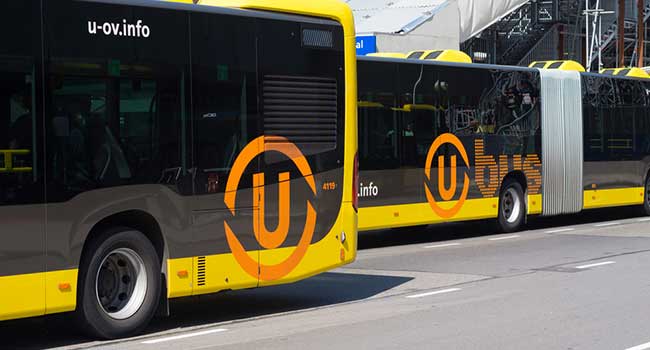
Three people were killed and nine more wounded in an attack on a Dutch tram Monday. Dutch Prime Minister Mark Rutte said that the attack in the city of Utrecht could be terrorism related.

"Our nation was hit by an attack in Utrecht," Rutte said. "It is clear there were shots on tram passengers, that there are wounded."

Just after 11:40 a.m. local time, police in the central Dutch city said on Twitter that "multiple people have been injured as a result of a shooting in a tram in a residential neighborhood." Trauma helicopters were sent to the scene and police asked the public to stay away from the area, allowing first responders to do their work.

Police, including heavily armed officers, flooded the scene which was a busy traffic intersection and the Dutch anti-terror coordinator immediately raised the threat alert to its highest level around Utrecht as a result of the shooting. 

"The threat level has gone to 5," Anti-terror Pieter-Jaap Aalbersberg said in a statement. "Exclusively for the Utrecht province."

The suspect fled from the scene on foot and within a few hours, police gathered in front of an apartment block close to the scene. It was revealed that the suspect in the shooting is a 37-year-old Turkey-born man. Police released a picture of a bearded man sitting on public transport, dressed in a dark blue top with a hood tucked into his neck.

Police said they were searching for the shooter with "all possible means." 

German police say they have upped surveillance on the country's border with the Netherlands and are on the lookout for the gunman. They said they have added police to not only major highways, but also minor crossings as well as railway routes.


About the Author

Sydny Shepard is the Executive Editor of Campus Security & Life Safety.

Featured

  • The Evolution of IP Camera Intelligence

    As the 30th anniversary of the IP camera approaches in 2026, it is worth reflecting on how far we have come. The first network camera, launched in 1996, delivered one frame every 17 seconds—not impressive by today’s standards, but groundbreaking at the time. It did something that no analog system could: transmit video over a standard IP network. Read Now

  • From Surveillance to Intelligence

    Years ago, it would have been significantly more expensive to run an analytic like that — requiring a custom-built solution with burdensome infrastructure demands — but modern edge devices have made it accessible to everyone. It also saves time, which is a critical factor if a missing child is involved. Video compression technology has played a critical role as well. Over the years, significant advancements have been made in video coding standards — including H.263, MPEG formats, and H.264—alongside compression optimization technologies developed by IP video manufacturers to improve efficiency without sacrificing quality. The open-source AV1 codec developed by the Alliance for Open Media—a consortium including Google, Netflix, Microsoft, Amazon and others — is already the preferred decoder for cloud-based applications, and is quickly becoming the standard for video compression of all types. Read Now

  • Cost: Reactive vs. Proactive Security

    Security breaches often happen despite the availability of tools to prevent them. To combat this problem, the industry is shifting from reactive correction to proactive protection. This article will examine why so many security leaders have realized they must “lead before the breach” – not after. Read Now

  • Achieving Clear Audio

    In today’s ever-changing world of security and risk management, effective communication via an intercom and door entry communication system is a critical communication tool to keep a facility’s staff, visitors and vendors safe. Read Now

  • Beyond Apps: Access Control for Today’s Residents

    The modern resident lives in an app-saturated world. From banking to grocery delivery, fitness tracking to ridesharing, nearly every service demands another download. But when it comes to accessing the place you live, most people do not want to clutter their phone with yet another app, especially if its only purpose is to open a door. Read Now

New Products

  • HD2055 Modular Barricade

    Delta Scientific’s electric HD2055 modular shallow foundation barricade is tested to ASTM M50/P1 with negative penetration from the vehicle upon impact. With a shallow foundation of only 24 inches, the HD2055 can be installed without worrying about buried power lines and other below grade obstructions. The modular make-up of the barrier also allows you to cover wider roadways by adding additional modules to the system. The HD2055 boasts an Emergency Fast Operation of 1.5 seconds giving the guard ample time to deploy under a high threat situation.

  • Camden CV-7600 High Security Card Readers

    Camden CV-7600 High Security Card Readers

    Camden Door Controls has relaunched its CV-7600 card readers in response to growing market demand for a more secure alternative to standard proximity credentials that can be easily cloned. CV-7600 readers support MIFARE DESFire EV1 & EV2 encryption technology credentials, making them virtually clone-proof and highly secure.

  • AC Nio

    AC Nio

    Aiphone, a leading international manufacturer of intercom, access control, and emergency communication products, has introduced the AC Nio, its access control management software, an important addition to its new line of access control solutions.