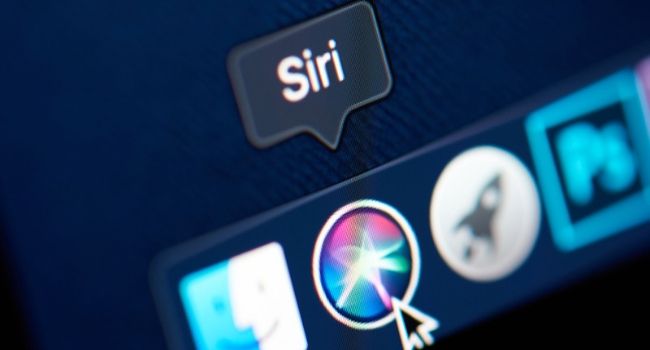
siri app

Apple Contractors Regularly Overhear ‘Confidential’ Conversations Through Siri, Whistleblower Says

An employee spoke out due to their concerns about the potential misuse of information by firms working for Apple.

Employees who oversee quality control for Siri, Apple’s voice assistant used on products across the globe, regularly hear users’ sensitive conversations, including confidential medical information, drug deals and people having sex, according to new revelations published in The Guardian.

An employee working for an Apple contractor said that their job included listening to a sample of recordings from Siri conversations, transcribing them and then grading the responses according to a set rubric. But, the whistleblower said, that work often included listening to accidental activations of Siri, which were most common on the Apple Watch and the HomePod smart speaker.

“There have been countless instances of recordings featuring private discussions between doctors and patients, business deals, seemingly criminal dealings, sexual encounters and so on,” the employee told The Guardian. “These recordings are accompanied by user data showing location, contact details, and app data.”

It’s not uncommon for tech companies to employ people to listen to conversations people have with voice assistants ⁠— Amazon and Google also use the practice to improve quality. But the contractor employee was pushed to go public with Apple’s policies because they were concerned that the sensitive information could be misused, especially since there is a high turnover of employees at the company and privacy is not stressed as a priority.

“There’s not much vetting of who works there, and the amount of data that we’re free to look through seems quite broad,” the employee said. “It wouldn’t be difficult to identify the person that you’re listening to, especially with accidental triggers – addresses, names and so on.”

In response, Apple said a “small portion” of Siri interactions are analyzed to improve the product and that the recordings are not tied to the user’s Apple ID.

“Siri responses are analysed in secure facilities and all reviewers are under the obligation to adhere to Apple’s strict confidentiality requirements,” the company said in a statement.

The tech giant added that less than 1 percent of daily Siri requests are used for grading and are typically only a few seconds long. The contractor employee said recordings could last up to 30 seconds, allowing for a listener to figure out what was happening in the interaction.

The report has stirred some controversy, particularly because there is no option to opt out of being recorded other than deactivating Siri completely. Apple has also prided itself on its privacy and encryption policies in the wake of increased scrutiny of Facebook and Google on those issues.

About the Author

Haley Samsel is an Associate Content Editor for the Infrastructure Solutions Group at 1105 Media.

Featured

  • Security Today Announces 2025 CyberSecured Award Winners

    Security Today is pleased to announce the 2025 CyberSecured Awards winners. Sixteen companies are being recognized this year for their network products and other cybersecurity initiatives that secure our world today. Read Now

  • Empowering and Securing a Mobile Workforce

    What happens when technology lets you work anywhere – but exposes you to security threats everywhere? This is the reality of modern work. No longer tethered to desks, work happens everywhere – in the office, from home, on the road, and in countless locations in between. Read Now

  • TSA Introduces New $45 Fee Option for Travelers Without REAL ID Starting February 1

    The Transportation Security Administration (TSA) announced today that it will refer all passengers who do not present an acceptable form of ID and still want to fly an option to pay a $45 fee to use a modernized alternative identity verification system, TSA Confirm.ID, to establish identity at security checkpoints beginning on February 1, 2026. Read Now

  • The Evolution of IP Camera Intelligence

    As the 30th anniversary of the IP camera approaches in 2026, it is worth reflecting on how far we have come. The first network camera, launched in 1996, delivered one frame every 17 seconds—not impressive by today’s standards, but groundbreaking at the time. It did something that no analog system could: transmit video over a standard IP network. Read Now

  • From Surveillance to Intelligence

    Years ago, it would have been significantly more expensive to run an analytic like that — requiring a custom-built solution with burdensome infrastructure demands — but modern edge devices have made it accessible to everyone. It also saves time, which is a critical factor if a missing child is involved. Video compression technology has played a critical role as well. Over the years, significant advancements have been made in video coding standards — including H.263, MPEG formats, and H.264—alongside compression optimization technologies developed by IP video manufacturers to improve efficiency without sacrificing quality. The open-source AV1 codec developed by the Alliance for Open Media—a consortium including Google, Netflix, Microsoft, Amazon and others — is already the preferred decoder for cloud-based applications, and is quickly becoming the standard for video compression of all types. Read Now

New Products

  • ResponderLink

    ResponderLink

    Shooter Detection Systems (SDS), an Alarm.com company and a global leader in gunshot detection solutions, has introduced ResponderLink, a groundbreaking new 911 notification service for gunshot events. ResponderLink completes the circle from detection to 911 notification to first responder awareness, giving law enforcement enhanced situational intelligence they urgently need to save lives. Integrating SDS’s proven gunshot detection system with Noonlight’s SendPolice platform, ResponderLink is the first solution to automatically deliver real-time gunshot detection data to 911 call centers and first responders. When shots are detected, the 911 dispatching center, also known as the Public Safety Answering Point or PSAP, is contacted based on the gunfire location, enabling faster initiation of life-saving emergency protocols.

  • HD2055 Modular Barricade

    Delta Scientific’s electric HD2055 modular shallow foundation barricade is tested to ASTM M50/P1 with negative penetration from the vehicle upon impact. With a shallow foundation of only 24 inches, the HD2055 can be installed without worrying about buried power lines and other below grade obstructions. The modular make-up of the barrier also allows you to cover wider roadways by adding additional modules to the system. The HD2055 boasts an Emergency Fast Operation of 1.5 seconds giving the guard ample time to deploy under a high threat situation.

  • FEP GameChanger

    FEP GameChanger

    Paige Datacom Solutions Introduces Important and Innovative Cabling Products GameChanger Cable, a proven and patented solution that significantly exceeds the reach of traditional category cable will now have a FEP/FEP construction.