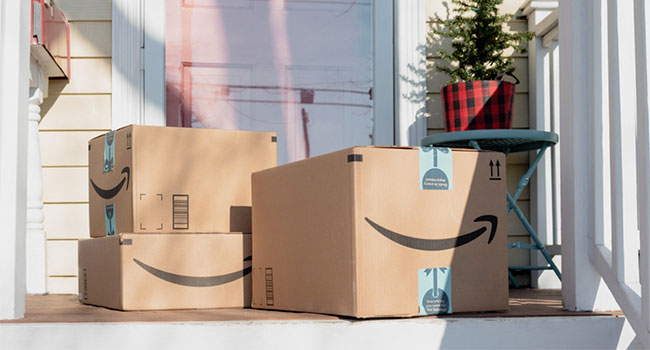
porch package

Study: One in Four Americans Have Had Package Stolen By “Porch Pirates”

Nearly half of Americans don’t believe that delivery companies are doing enough to prevent theft, but the survey respondents also aren’t willing to change their online shopping habits.

Package theft and “porch pirates” have become key concerns of American adults both during and outside of the holiday shopping season, with almost one in four adults saying they have had a package stolen in a recent study.

The survey of more than 1,000 online shoppers by Illinois-based Shorr Packaging Corp. found that 24 percent of respondents had a package stolen. Sixty-four percent of people who had a package stolen said they have since decided to mail their packages to a different address to prevent theft, and nearly 80 percent said they have changed their plans to be around to pick up the package right after it’s delivered.

Among all of the respondents, though, Americans were less likely to send a package to a different address. Almost 70 percent said they were not willing to change their holiday shopping practices due to fears of package theft, according to MarketWatch.

But victims of “porch pirates” have taken several steps to improve residential security. One in four people who have had a package stolen said they added a doorbell camera to their front door, and 17 percent said they installed motion lights to sense when someone is at the door.

The study found that 44 percent of all respondents said delivery companies, like Amazon, UPS and FedEx, are not doing enough to prevent package theft. The companies pointed to services that allow customers to track their packages as they are traveling to the delivery point, ostensibly giving consumers the chance to plan their days around package deliveries.

Some package-theft victims reported taking precautions to prevent future porch piracy, shelling out an average of $191 on home security: One in four said they’d added a doorbell camera, 19% said they had added some other camera, 17% employed motion lights, 10% bought a dog, 5% installed a fence or gate, and 4% said they had used Amazon’s AMZN, +0.10% Key and Smart Lock Kit to enable in-home delivery.

UPS suggested to MarketWatch that customers could have shipments sent to where they are during the day or to a trusted friend who is home during the day. Amazon and FedEx have advised worried customers to send their packages to Amazon package lockers at convenience stores or FedEx offices.

Ordering products online and selecting “in-store pickup” is another option to ensure packages are not taken off the porch.

About the Author

Haley Samsel is an Associate Content Editor for the Infrastructure Solutions Group at 1105 Media.

Featured

  • The Evolution of IP Camera Intelligence

    As the 30th anniversary of the IP camera approaches in 2026, it is worth reflecting on how far we have come. The first network camera, launched in 1996, delivered one frame every 17 seconds—not impressive by today’s standards, but groundbreaking at the time. It did something that no analog system could: transmit video over a standard IP network. Read Now

  • From Surveillance to Intelligence

    Years ago, it would have been significantly more expensive to run an analytic like that — requiring a custom-built solution with burdensome infrastructure demands — but modern edge devices have made it accessible to everyone. It also saves time, which is a critical factor if a missing child is involved. Video compression technology has played a critical role as well. Over the years, significant advancements have been made in video coding standards — including H.263, MPEG formats, and H.264—alongside compression optimization technologies developed by IP video manufacturers to improve efficiency without sacrificing quality. The open-source AV1 codec developed by the Alliance for Open Media—a consortium including Google, Netflix, Microsoft, Amazon and others — is already the preferred decoder for cloud-based applications, and is quickly becoming the standard for video compression of all types. Read Now

  • Cost: Reactive vs. Proactive Security

    Security breaches often happen despite the availability of tools to prevent them. To combat this problem, the industry is shifting from reactive correction to proactive protection. This article will examine why so many security leaders have realized they must “lead before the breach” – not after. Read Now

  • Achieving Clear Audio

    In today’s ever-changing world of security and risk management, effective communication via an intercom and door entry communication system is a critical communication tool to keep a facility’s staff, visitors and vendors safe. Read Now

  • Beyond Apps: Access Control for Today’s Residents

    The modern resident lives in an app-saturated world. From banking to grocery delivery, fitness tracking to ridesharing, nearly every service demands another download. But when it comes to accessing the place you live, most people do not want to clutter their phone with yet another app, especially if its only purpose is to open a door. Read Now

New Products

  • PE80 Series

    PE80 Series by SARGENT / ED4000/PED5000 Series by Corbin Russwin

    ASSA ABLOY, a global leader in access solutions, has announced the launch of two next generation exit devices from long-standing leaders in the premium exit device market: the PE80 Series by SARGENT and the PED4000/PED5000 Series by Corbin Russwin. These new exit devices boast industry-first features that are specifically designed to provide enhanced safety, security and convenience, setting new standards for exit solutions. The SARGENT PE80 and Corbin Russwin PED4000/PED5000 Series exit devices are engineered to meet the ever-evolving needs of modern buildings. Featuring the high strength, security and durability that ASSA ABLOY is known for, the new exit devices deliver several innovative, industry-first features in addition to elegant design finishes for every opening.

  • Camden CM-221 Series Switches

    Camden CM-221 Series Switches

    Camden Door Controls is pleased to announce that, in response to soaring customer demand, it has expanded its range of ValueWave™ no-touch switches to include a narrow (slimline) version with manual override. This override button is designed to provide additional assurance that the request to exit switch will open a door, even if the no-touch sensor fails to operate. This new slimline switch also features a heavy gauge stainless steel faceplate, a red/green illuminated light ring, and is IP65 rated, making it ideal for indoor or outdoor use as part of an automatic door or access control system. ValueWave™ no-touch switches are designed for easy installation and trouble-free service in high traffic applications. In addition to this narrow version, the CM-221 & CM-222 Series switches are available in a range of other models with single and double gang heavy-gauge stainless steel faceplates and include illuminated light rings.

  • Unified VMS

    AxxonSoft introduces version 2.0 of the Axxon One VMS. The new release features integrations with various physical security systems, making Axxon One a unified VMS. Other enhancements include new AI video analytics and intelligent search functions, hardened cybersecurity, usability and performance improvements, and expanded cloud capabilities