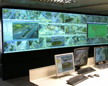
IP Video Enhances Hong Kong Traffic Surveillance

IndigoVision’s complete IP CCTV technology has been used to extend the capabilities of Hong Kong’s extensive traffic surveillance system. The current analog system has been expanded with the addition of 48 cameras using IndigoVision’s IP video system, creating a fully integrated 250 camera hybrid solution. The introduction of IndigoVision’s IP-based distributed networked provides a platform for full migration to IP Video in the future.

The migration project was designed and installed by IndigoVision’s local partner Tung Po (HK) Technology Enterprise Ltd. Tung Po also developed bespoke software to create an integrated ‘front end’ for both the existing analog system and IndigoVision’s IP video. This was interfaced with ‘Control Center’, IndigoVision’s IP Video and alarm management software, which provides powerful virtual matrix switching features, alarm handling and video analysis tools.

Like many large analog systems, Hong Kong’s CCTV surveillance consists of a number of isolated video control rooms which are not interconnected to form a single centrally monitored system -- often referred to as ‘islands’ of video. The IndigoVision solution has created a fully scalable and distributed solution that will allow the future integration of these remote control rooms into one unified system, allowing Hong Kong’s Traffic Police to centrally manage and control the region’s traffic problems.

Plans are in place to expand the system to more than 700 cameras. The first phase of this expansion has been completed with the addition of a 48 camera IP-based system to monitor the Northern district of the city, which was previously not monitored. This region is close to the Chinese border and has significant traffic problems caused by 2 million people a day making cross border journeys. Even though the new extension to the system is predominantly for traffic surveillance the Police also use it for monitoring public events in the area. This demonstrates how easy additional monitoring can be integrated into the new system -- something that would have been too costly with analog CCTV equipment.

IndigoVision’s IP video solution provides a number of significant benefits compared to old VCR/analog systems. Multiple live camera views can be displayed alongside recorded video on the same monitor. ‘Control Center’ tools provide fast analysis of recorded footage allowing the Traffic Police to quickly determine the cause of accidents and incidents. Cameras can also be easily added or relocated in response to changes in the traffic situation at specific locations.

“IndigoVision’s system was chosen following an analysis of competing systems,” said Kenny Leung of Tung Po (HK). “The equipment easily exceeded the technical compliance part of the tender and the end-user was particularly impressed with the picture quality and low latency. Operators can smoothly control PTZ on cameras that are located in the Northern District over 15 miles away.”

IndigoVision’s Software Interface Kit (SIK) was used to develop an interface for uploading video images to the Traffic Department’s website, allowing the public to view selected traffic cameras. IndigoVision uses the SIK to develop interfaces for many third party systems including leading access control systems, to create a truly integrated solution for IP security applications.

The combination of ‘Control Center’ and the IP network creates a ‘virtual matrix’. This replaces the physical video switching matrices of analog systems. Each of the analog camera feeds are connected to IndigoVision’s 8000 transmitter/receiver modules, which converts the signal to 4CIF 25 fps digital video for transmission over the network.

The ‘virtual matrix’ can switch any camera feed to any PC or Monitor, wherever they are located on the IP network. Seven days of full-frame rate continuous video is recorded using IndigoVision’s NVR software running on dual-redundant servers located at the Transport Department HQ.

Featured

  • TSA Introduces New $45 Fee Option for Travelers Without REAL ID Starting February 1

    The Transportation Security Administration (TSA) announced today that it will refer all passengers who do not present an acceptable form of ID and still want to fly an option to pay a $45 fee to use a modernized alternative identity verification system, TSA Confirm.ID, to establish identity at security checkpoints beginning on February 1, 2026. Read Now

  • The Evolution of IP Camera Intelligence

    As the 30th anniversary of the IP camera approaches in 2026, it is worth reflecting on how far we have come. The first network camera, launched in 1996, delivered one frame every 17 seconds—not impressive by today’s standards, but groundbreaking at the time. It did something that no analog system could: transmit video over a standard IP network. Read Now

  • From Surveillance to Intelligence

    Years ago, it would have been significantly more expensive to run an analytic like that — requiring a custom-built solution with burdensome infrastructure demands — but modern edge devices have made it accessible to everyone. It also saves time, which is a critical factor if a missing child is involved. Video compression technology has played a critical role as well. Over the years, significant advancements have been made in video coding standards — including H.263, MPEG formats, and H.264—alongside compression optimization technologies developed by IP video manufacturers to improve efficiency without sacrificing quality. The open-source AV1 codec developed by the Alliance for Open Media—a consortium including Google, Netflix, Microsoft, Amazon and others — is already the preferred decoder for cloud-based applications, and is quickly becoming the standard for video compression of all types. Read Now

  • Cost: Reactive vs. Proactive Security

    Security breaches often happen despite the availability of tools to prevent them. To combat this problem, the industry is shifting from reactive correction to proactive protection. This article will examine why so many security leaders have realized they must “lead before the breach” – not after. Read Now

  • Achieving Clear Audio

    In today’s ever-changing world of security and risk management, effective communication via an intercom and door entry communication system is a critical communication tool to keep a facility’s staff, visitors and vendors safe. Read Now

New Products

  • Automatic Systems V07

    Automatic Systems V07

    Automatic Systems, an industry-leading manufacturer of pedestrian and vehicle secure entrance control access systems, is pleased to announce the release of its groundbreaking V07 software. The V07 software update is designed specifically to address cybersecurity concerns and will ensure the integrity and confidentiality of Automatic Systems applications. With the new V07 software, updates will be delivered by means of an encrypted file.

  • A8V MIND

    A8V MIND

    Hexagon’s Geosystems presents a portable version of its Accur8vision detection system. A rugged all-in-one solution, the A8V MIND (Mobile Intrusion Detection) is designed to provide flexible protection of critical outdoor infrastructure and objects. Hexagon’s Accur8vision is a volumetric detection system that employs LiDAR technology to safeguard entire areas. Whenever it detects movement in a specified zone, it automatically differentiates a threat from a nonthreat, and immediately notifies security staff if necessary. Person detection is carried out within a radius of 80 meters from this device. Connected remotely via a portable computer device, it enables remote surveillance and does not depend on security staff patrolling the area.

  • Unified VMS

    AxxonSoft introduces version 2.0 of the Axxon One VMS. The new release features integrations with various physical security systems, making Axxon One a unified VMS. Other enhancements include new AI video analytics and intelligent search functions, hardened cybersecurity, usability and performance improvements, and expanded cloud capabilities