No Room For Error
Expandable access control system helps improve security for Minnesota healthcare facility
- By Karl Griffith
- Jun 08, 2010
There is little room for error in a healthcare facility. Hospitals that want the highest accreditation must meet stringent standards of care set by the Joint Commission, the healthcare industry’s leading authority on facility standards.
The Joint Commission accredits approximately 88 percent of the nation’s hospitals. To advance hospital security, the organization requires healthcare facilities to:
- Maintain all grounds and equipment.
- Control access to and from security sensitive areas, such as pharmacies, pediatric centers and maternity wards.
- Identify all individuals entering its facility.
- Create an access identification process.
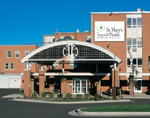
St. Mary’s Innovis Health is a healthcare facility serving Detroit Lakes, Minn., and several surrounding communities. Its growing campus consists of clinics and nursing centers, an emergency room, three assisted-living facilities and administrative offices.
Dedicated to patient safety, the hospital needed an effective way to track the patients and hospital staff entering and leaving its facility.
“We have 87 patient beds operating at near-full capacity at all times,” said Lorri Christl, information technology manager for St. Mary’s Innovis Health. “Additionally, we have patients, staff and visitors constantly going back and forth between the main hospital and surrounding clinics.”
Tracking Activities of a Busy Hospital
What began as a simple camera and key card installation grew into a comprehensive access and timekeeping program, with Fargo-based integrator, Network Center Communications working with St. Mary’s on a plan to help the hospital meet the Joint Commission’s standards.
“A sense of security is critical to maintaining patient and employee satisfaction,” said Mark Petersen, security system design and sales with Network Center Communications. “We knew the hospital needed an access system that could expand with its needs.”
NCC enlisted Graybar, a national distributor of electrical and security equipment with experience supplying security and networking technologies to health care facilities, to help provide a security solution. Together, the companies developed an access security network equipped with Pelco video and Keyscan access-control devices throughout the facility.
“We understand that as a healthcare professional, you have specific requirements when it comes to a security system,” said James Pralle, a technology specialist with Graybar. “With Keyscan, you don’t have to worry about carrying multiple cards and it allows only authorized employees to gain access to restricted areas.”
The security solution added an extra efficiency layer by integrating a mechanism to track employee time and attendance. For a busy hospital transitioning to electronic record keeping, the phone-based timekeeping system was becoming an inefficient relic of a bygone era. St. Mary’s officials realized they could update its time process and increase workplace productivity by linking access security cards to the time clock.
Graybar and NCC worked with Kronos, a developer of workforce management solutions, to engineer a product that programmed the access cards to the time and attendance system.
“These cards far exceeded our expectations,” Christl said. “We now have close to 1,000 badges that make timekeeping and access much easier for our hospital staff.”
The new magnetic strip immediately identifies the employee, including a profile and performance history. This also helps healthcare managers feel at ease knowing that the right staff is at the right place, helping patients at just the correct time.
Additionally, the time and attendance application reduces payroll and labor errors by tracking every employee who enters and leaves the facility. Healthcare managers are always notified when an employee doesn’t check in, and immediate steps can be taken to ensure that all patients are being cared for when staff shifts change.
Importantly, patient and employee safety has also increased, as the hospital now has a quick way to identify the location of its most critical staff for attending to patient emergencies.
Ready for the Future
St. Mary’s continues to add more access control devices throughout its facility, with installations currently occurring on 13 additional doors.
Next, the hospital plans to integrate an IP-based system that will converge video and data networks for integrated monitoring and enable staff to manage a variety of health care equipment.
“We keep building,” Christl said. “And as we grow, we continue to add technologies that help us realize our mission of providing the utmost in patient care. We are very happy with this new access-control system. Patients and employees are more secure, and the hospital is operating more effectively.”