HID Global Adds pivCLASS Credentials to Government Solutions
 HID Global, a provider of secure identity solutions, today announced the addition of a dual-interface (contact/contactless) Personal Identity Verification (PIV) credential to its pivCLASS Government Solutions portfolio, simplifying the issuance of PIV cards and the process of upgrading an existing physical access control system (PACS) to support Federal Information Processing Standards Publication 201 (FIPS-201) standards. The new pivCLASS smart card and the company’s comprehensive pivCLASS portfolio supports federal contractors that need to leverage high-security PIV Interoperability (PIV-I) through the Federal Bridge. The solutions can also be used for a wide range of commercial deployments.
“The FIPS-201 standard for federal employee and contractor identification is now spreading to other applications that require highly secure access control for sensitive areas, including power stations as well as data storage, nuclear power, water and petrochemical facilities and other critical infrastructure,” said Stephane Ardiley, product marketing manager, Credentials with HID Global. “In addition to making it easier for organizations to upgrade their access control systems to FIPS-201 compliance, our pivCLASS portfolio, with the new dual-interface PIV credentials, enable commercial and other organizations to take advantage of the technology created by the federal government’s PIV program for strong security and interoperability.”
HID Global’s pivCLASS credential meets the specified U.S. Government National Institute of Standards and Technology (NIST) security requirements for delivering a reliable, verification system that protects cardholder data with high-assurance, public key infrastructure (PKI)-based, strong authentication. The smart card can be offered as a traditional PIV Interoperable (PIV-I) credential for government use or as a Commercial Identity Verification (CIV) credential for current and emerging applications. In either case, the credential provides users with a single, smart card for physical access to facilities as well as logical access to information systems. This includes secure, certificate-based login to computers, as well as securing corporate networks, web-based applications and personal data. Additionally, the card supports multi-technology biometrics as well as strong authentication for Virtual Private Network (VPN) access.
HID Global’s pivCLASS credential includes the company’s proven Digital Identity Applets framework that enhances credential security, utility and flexibility. This framework offers secure storage and protection for the smart card’s passwords, digital identity credentials, cryptographic functions, personal information and computer access capabilities. It also enables the card to deliver additional services beyond FIPS 201, such as one-time password (OTP) generation and securing the communication channel over the contactless interface.
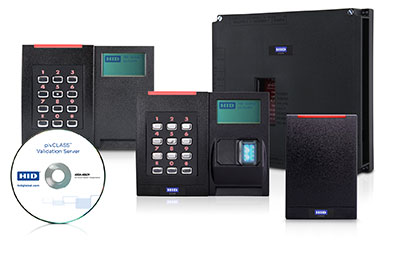
As part of the pivCLASS Government Solutions portfolio, the new, high-security credential joins a comprehensive offering including pivCLASS readers, authentication modules, validation server, and software solutions from HID Global’s recent acquisition of Codebench. The portfolio is an integrated product suite that enables the U.S. federal government, its contractors and other facilities to comply with federal identity mandates and take advantage of the PIV program’s higher-security capabilities, without a rip-and-replace overhaul of their current physical access control system (PACS) infrastructure. HID Global’s new pivCLASS credential has also achieved compliance with the U.S. General Services Administration (GSA) Evaluation Program for certifying that products meet FIPS-201 federal identity specifications.