
Police Virus Infections on the Rise Reported PandaLabs

Police Virus Infections on the Rise Reported PandaLabs

PandaLabs, the anti-malware laboratory of Panda Security, released new data around the rise of the 'Police Virus'. Despite the arrest of the cyber-criminals allegedly responsible for the 'Police Virus' ransomware attacks, this infamous piece of malware has continued to infect thousands of computers around the world, according to data gathered from December 2012 to February 2013 by PandaLabs.

The vast majority of these infections are caused by "exploit kits," applications that allow attackers to infect users' computers simply by getting them to visit a compromised Web page. Cyber-criminals take advantage of security flaws in popular programs - such as Adobe Acrobat or Java, for example – to gain control of systems. At present, there are still a lot of variants of the Police Virus in circulation, all of them detected by PandaLabs as Trj/Ransom.AB.

In an international operation, led by the Technological Investigation Brigade of Spain's National Police force and coordinated by Europol and Interpol, the arrest of the cyber-gang leader in Dubai has not put an end to the malware epidemic.

"This ransomware was netting profits in excess of $1.3 million per year," explained Luis Corrons, technical director of PandaLabs. "However, the number of infections keeps growing, which leads us to think that we are facing an unspecified number of groups launching the same kind of attacks."

'Police Virus' is still active

This malware epidemic has continued to infect hundreds of thousands of computers around the world, using fear and blackmailing techniques to extort money from computer users. The scam is very lucrative and has evolved over time, using various techniques to trick users. The most recent evolution even shows images taken with the users' webcams, making the scam all the more realistic.
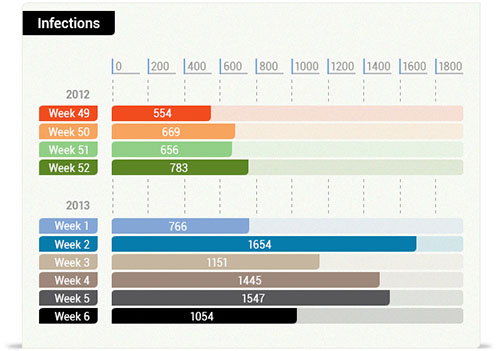
In fact, research carried out by PandaLabs, on two of the malware families used in the attacks, has revealed that the number of infections has doubled from 2,500 to more than 5,000 since the arrest of the ringleader in December 2012.

PandaLabs offers users a couple of tips to avoid falling victim to this type of scam:

  • Keep your computer's software (including the operating system and all installed programs) up-to-date; and
  • Disable Java in your Web browser, or uninstall it completely if you don't need it.

Panda Security, The Cloud Security Company, has launched a new version of its free antivirus software, Panda Cloud Antivirus, neutralizing malware that takes advantage of any of the vulnerabilities exploited by the Police Virus.

Featured

  • Security Today Announces 2025 CyberSecured Award Winners

    Security Today is pleased to announce the 2025 CyberSecured Awards winners. Sixteen companies are being recognized this year for their network products and other cybersecurity initiatives that secure our world today. Read Now

  • Empowering and Securing a Mobile Workforce

    What happens when technology lets you work anywhere – but exposes you to security threats everywhere? This is the reality of modern work. No longer tethered to desks, work happens everywhere – in the office, from home, on the road, and in countless locations in between. Read Now

  • TSA Introduces New $45 Fee Option for Travelers Without REAL ID Starting February 1

    The Transportation Security Administration (TSA) announced today that it will refer all passengers who do not present an acceptable form of ID and still want to fly an option to pay a $45 fee to use a modernized alternative identity verification system, TSA Confirm.ID, to establish identity at security checkpoints beginning on February 1, 2026. Read Now

  • The Evolution of IP Camera Intelligence

    As the 30th anniversary of the IP camera approaches in 2026, it is worth reflecting on how far we have come. The first network camera, launched in 1996, delivered one frame every 17 seconds—not impressive by today’s standards, but groundbreaking at the time. It did something that no analog system could: transmit video over a standard IP network. Read Now

  • From Surveillance to Intelligence

    Years ago, it would have been significantly more expensive to run an analytic like that — requiring a custom-built solution with burdensome infrastructure demands — but modern edge devices have made it accessible to everyone. It also saves time, which is a critical factor if a missing child is involved. Video compression technology has played a critical role as well. Over the years, significant advancements have been made in video coding standards — including H.263, MPEG formats, and H.264—alongside compression optimization technologies developed by IP video manufacturers to improve efficiency without sacrificing quality. The open-source AV1 codec developed by the Alliance for Open Media—a consortium including Google, Netflix, Microsoft, Amazon and others — is already the preferred decoder for cloud-based applications, and is quickly becoming the standard for video compression of all types. Read Now

New Products

  • Camden CV-7600 High Security Card Readers

    Camden CV-7600 High Security Card Readers

    Camden Door Controls has relaunched its CV-7600 card readers in response to growing market demand for a more secure alternative to standard proximity credentials that can be easily cloned. CV-7600 readers support MIFARE DESFire EV1 & EV2 encryption technology credentials, making them virtually clone-proof and highly secure.

  • QCS7230 System-on-Chip (SoC)

    QCS7230 System-on-Chip (SoC)

    The latest Qualcomm® Vision Intelligence Platform offers next-generation smart camera IoT solutions to improve safety and security across enterprises, cities and spaces. The Vision Intelligence Platform was expanded in March 2022 with the introduction of the QCS7230 System-on-Chip (SoC), which delivers superior artificial intelligence (AI) inferencing at the edge.

  • HD2055 Modular Barricade

    Delta Scientific’s electric HD2055 modular shallow foundation barricade is tested to ASTM M50/P1 with negative penetration from the vehicle upon impact. With a shallow foundation of only 24 inches, the HD2055 can be installed without worrying about buried power lines and other below grade obstructions. The modular make-up of the barrier also allows you to cover wider roadways by adding additional modules to the system. The HD2055 boasts an Emergency Fast Operation of 1.5 seconds giving the guard ample time to deploy under a high threat situation.