
Community Delivers the Sound for the First Olympic Size Ice Rink in Singapore

Community Delivers the Sound for the First Olympic-Size Ice Rink in Singapore

Electronics & Engineering (E&E) has completed the installation of a Community sound system at Singapore's first Olympic-size, ice rink at JCube.
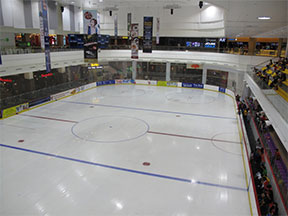
Community Delivers the Sound for the First Olympic-Sized Ice Rink in SingaporeOwned by CapitaMall Trust, JCube is located out of town in Jurong East. Managed by CapitaMall Asia, JCube differentiates itself from the usual shopping and dining mall experience with the ice rink in the center of the building. The 60 x 30 meter rink has a 460-seat gallery and can be used simply for community skating or for more competitive sporting events including speed or figure skating and ice hockey. The space can also host live streaming events and concerts.

The sound system at the JCube rink provides both high-intelligibility speech and entertainment-quality music, and additionally allows for the multi-use requirements of the venue. To meet the specifications of the rink’s management, E&E worked closely with Community’s Singapore-based Director of Business Development, Thomas Mittelmann, who liaised with the technical team at Community’s HQ in the U.S.

Seventeen WET W2-2W8 loudspeakers are mounted around the rink edge. The W2-2W8’s dual, 8-inch, horizontal drivers, with a centrally-located, 1-inch horn, provide the optimum 120-degree horizontal dispersion required for the venue. Additionally, the W2-2W8’s extreme, all-weather capabilities handle the environmental conditions of the rink, and its provision in white ensured the loudspeakers blended perfectly with the venue’s aesthetics.

In addition to the distributed W2-2W8 system, the audio design includes a ceiling loudspeaker system for the audience areas. The upper spectator stand is comprised of thirteen, D8, 8-inch, coaxial, ceiling loudspeakers. The D8 loudspeakers deliver consistent coverage with their Tru-Phase, high-frequency waveguides providing a wide uniform dispersion. In the lower stand, there are thirteen, Community D6, ceiling loudspeakers, providing the same consistent quality as their larger sibling, but equipped with 6.5-inch, low-frequency drivers. Ten, Community D4, ceiling loudspeakers and four, Community DS8, surface-mount loudspeakers are installed at the back of the house.

Five, Ashly Audio NE2400, 2-channel amplifiers power the Community loudspeakers. The network-enabled amplifiers feature full control and monitoring capabilities via standard 10/100 Ethernet protocol and Protea software. An Ashly Audio NE4250 amplifier powers the back-of-house system.

Processing is provided by a Symetrix Symnet, 8x8, digital, signal processor, supplied with SymNet Designer software that equips the rink with more than 300 DSP modules, including feedback elimination, loudspeaker management and auto mixing. The built-in modules enable the audio engineer at the rink to switch quickly and easily from one processing mode to another, depending on the function of the rink, at any given time.

Completing the audio system is a Mackie 1642-VLZ3, 16-channel, compact, recording mixer and Shure SLX24/SM58, handheld, wireless microphones for concert-type events.

Featured

  • Empowering and Securing a Mobile Workforce

    What happens when technology lets you work anywhere – but exposes you to security threats everywhere? This is the reality of modern work. No longer tethered to desks, work happens everywhere – in the office, from home, on the road, and in countless locations in between. Read Now

  • TSA Introduces New $45 Fee Option for Travelers Without REAL ID Starting February 1

    The Transportation Security Administration (TSA) announced today that it will refer all passengers who do not present an acceptable form of ID and still want to fly an option to pay a $45 fee to use a modernized alternative identity verification system, TSA Confirm.ID, to establish identity at security checkpoints beginning on February 1, 2026. Read Now

  • The Evolution of IP Camera Intelligence

    As the 30th anniversary of the IP camera approaches in 2026, it is worth reflecting on how far we have come. The first network camera, launched in 1996, delivered one frame every 17 seconds—not impressive by today’s standards, but groundbreaking at the time. It did something that no analog system could: transmit video over a standard IP network. Read Now

  • From Surveillance to Intelligence

    Years ago, it would have been significantly more expensive to run an analytic like that — requiring a custom-built solution with burdensome infrastructure demands — but modern edge devices have made it accessible to everyone. It also saves time, which is a critical factor if a missing child is involved. Video compression technology has played a critical role as well. Over the years, significant advancements have been made in video coding standards — including H.263, MPEG formats, and H.264—alongside compression optimization technologies developed by IP video manufacturers to improve efficiency without sacrificing quality. The open-source AV1 codec developed by the Alliance for Open Media—a consortium including Google, Netflix, Microsoft, Amazon and others — is already the preferred decoder for cloud-based applications, and is quickly becoming the standard for video compression of all types. Read Now

  • Cost: Reactive vs. Proactive Security

    Security breaches often happen despite the availability of tools to prevent them. To combat this problem, the industry is shifting from reactive correction to proactive protection. This article will examine why so many security leaders have realized they must “lead before the breach” – not after. Read Now

New Products

  • Compact IP Video Intercom

    Viking’s X-205 Series of intercoms provide HD IP video and two-way voice communication - all wrapped up in an attractive compact chassis.

  • Unified VMS

    AxxonSoft introduces version 2.0 of the Axxon One VMS. The new release features integrations with various physical security systems, making Axxon One a unified VMS. Other enhancements include new AI video analytics and intelligent search functions, hardened cybersecurity, usability and performance improvements, and expanded cloud capabilities

  • PE80 Series

    PE80 Series by SARGENT / ED4000/PED5000 Series by Corbin Russwin

    ASSA ABLOY, a global leader in access solutions, has announced the launch of two next generation exit devices from long-standing leaders in the premium exit device market: the PE80 Series by SARGENT and the PED4000/PED5000 Series by Corbin Russwin. These new exit devices boast industry-first features that are specifically designed to provide enhanced safety, security and convenience, setting new standards for exit solutions. The SARGENT PE80 and Corbin Russwin PED4000/PED5000 Series exit devices are engineered to meet the ever-evolving needs of modern buildings. Featuring the high strength, security and durability that ASSA ABLOY is known for, the new exit devices deliver several innovative, industry-first features in addition to elegant design finishes for every opening.