Hacking Hospital Equipment is Child

Hacking Hospital Equipment is Child's Play

When a security consultancy performed a penetration test on an Essentia Health network, the discovery was shocking, prompting a full-on investigation led by Scott Erven, head of information security for Essentia Health, and his team.

Over the course of two years, Erven’s team discovered:

  • Drug infusion pumps for delivering morphine drips, chemo and antibiotics could be remotely manipulated to change the dosage given to patients;
  • Bluetooth-enabled defibrillators could be manipulated to deliver random shocks or none to a patient’s heart;
  • X-rays could be accessed by network lurkers;
  • Temperature settings on blood and drug storing refrigerators could be reset;
  • Digital medical records could be altered, causing misdiagnosis; and
  • Some devices could be blue-screened, restarted or rebooted by hackers, wiping out configuration settings.
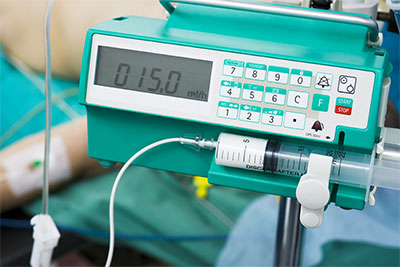
Specific brands of equipment have yet to be released, but Erven did notice some common security holes across the majority of the devices including lack of authentication to access equipment; weak, default and hardcoded vendor passwords being used; and embedded web servers, making it easy to manipulate devices when found on the network.

It was unknown if any of the devices tested by the team were connected to the Internet; however, many are connected to internal networks accessible via the Internet. This could allow hackers to gain access to devices by infecting employee computers with a phishing attack. Once inside the system, hackers can explore internal networks to find vulnerable systems. A hacker could even simply come into the hospital facility and plug his laptop into the network, allowing discovery and attacks on vulnerable systems.

Even though this is just a single study performed on one hospital network, the health care industry as a whole is lacking when it comes to security issues with medical equipment. This is probably because medical equipment has only been regulated for reliability, effectiveness and safety…not security.

According to Erven, vendors must do more to secure devices with encryption and authentication before equipment is sold to customers and if their devices are already in the field, vendors should fix them.

Sometimes vendors tell customers that hardcoded passwords can’t be removed from their equipment because it would require them to take the systems back to the FDA for approval after passwords are changed, but this is simply not true. FDA guidelines for medical equipment include a cybersecurity clause, allowing devices to be patched without recertification. These guidelines also say that vendors need to ensure that their systems are secure and patched, and customers should demand this.

About the Author

Ginger Hill is Group Social Media Manager.

Featured

  • Security Today Announces 2025 CyberSecured Award Winners

    Security Today is pleased to announce the 2025 CyberSecured Awards winners. Sixteen companies are being recognized this year for their network products and other cybersecurity initiatives that secure our world today. Read Now

  • Empowering and Securing a Mobile Workforce

    What happens when technology lets you work anywhere – but exposes you to security threats everywhere? This is the reality of modern work. No longer tethered to desks, work happens everywhere – in the office, from home, on the road, and in countless locations in between. Read Now

  • TSA Introduces New $45 Fee Option for Travelers Without REAL ID Starting February 1

    The Transportation Security Administration (TSA) announced today that it will refer all passengers who do not present an acceptable form of ID and still want to fly an option to pay a $45 fee to use a modernized alternative identity verification system, TSA Confirm.ID, to establish identity at security checkpoints beginning on February 1, 2026. Read Now

  • The Evolution of IP Camera Intelligence

    As the 30th anniversary of the IP camera approaches in 2026, it is worth reflecting on how far we have come. The first network camera, launched in 1996, delivered one frame every 17 seconds—not impressive by today’s standards, but groundbreaking at the time. It did something that no analog system could: transmit video over a standard IP network. Read Now

  • From Surveillance to Intelligence

    Years ago, it would have been significantly more expensive to run an analytic like that — requiring a custom-built solution with burdensome infrastructure demands — but modern edge devices have made it accessible to everyone. It also saves time, which is a critical factor if a missing child is involved. Video compression technology has played a critical role as well. Over the years, significant advancements have been made in video coding standards — including H.263, MPEG formats, and H.264—alongside compression optimization technologies developed by IP video manufacturers to improve efficiency without sacrificing quality. The open-source AV1 codec developed by the Alliance for Open Media—a consortium including Google, Netflix, Microsoft, Amazon and others — is already the preferred decoder for cloud-based applications, and is quickly becoming the standard for video compression of all types. Read Now

New Products

  • ResponderLink

    ResponderLink

    Shooter Detection Systems (SDS), an Alarm.com company and a global leader in gunshot detection solutions, has introduced ResponderLink, a groundbreaking new 911 notification service for gunshot events. ResponderLink completes the circle from detection to 911 notification to first responder awareness, giving law enforcement enhanced situational intelligence they urgently need to save lives. Integrating SDS’s proven gunshot detection system with Noonlight’s SendPolice platform, ResponderLink is the first solution to automatically deliver real-time gunshot detection data to 911 call centers and first responders. When shots are detected, the 911 dispatching center, also known as the Public Safety Answering Point or PSAP, is contacted based on the gunfire location, enabling faster initiation of life-saving emergency protocols.

  • A8V MIND

    A8V MIND

    Hexagon’s Geosystems presents a portable version of its Accur8vision detection system. A rugged all-in-one solution, the A8V MIND (Mobile Intrusion Detection) is designed to provide flexible protection of critical outdoor infrastructure and objects. Hexagon’s Accur8vision is a volumetric detection system that employs LiDAR technology to safeguard entire areas. Whenever it detects movement in a specified zone, it automatically differentiates a threat from a nonthreat, and immediately notifies security staff if necessary. Person detection is carried out within a radius of 80 meters from this device. Connected remotely via a portable computer device, it enables remote surveillance and does not depend on security staff patrolling the area.

  • Unified VMS

    AxxonSoft introduces version 2.0 of the Axxon One VMS. The new release features integrations with various physical security systems, making Axxon One a unified VMS. Other enhancements include new AI video analytics and intelligent search functions, hardened cybersecurity, usability and performance improvements, and expanded cloud capabilities