FBI Employs Israeli Security Firm to Hack Phone

FBI Exhausts All Efforts before Going Back to Court

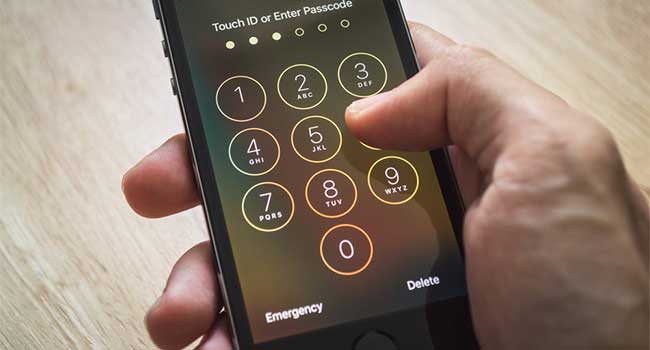
The FBI decided it was best to exhaust all efforts to extract data from an iPhone 5C used by San Bernardino shooter, Syed Farook, before taking Apple to court again. As part of that effort, they began working with an Israeli security firm.

Cellebrite, a privately help Israeli company that specializes in transferring or extracting data from phones, is helping the FBI unlock the phone, according to a report in a Israeli newspaper.

Headquartered in Tel Aviv, the security firm makes a range of mobile data products used by the military, law enforcement and corporate security under the name of UFED. These products enable the “bit-by-bit extraction and in-depth decoding and analysis of data from thousands of mobile devices,” according to their website. This comes in handy in the case of the San Bernardino device, as the iPhone’s iOS completely wipes out all data after entering in a wrong passcode 10 times.  

Apple and the FBI were due to faceoff in court on March 22 in order to resolve the feud over the iPhone. Apple refused to comply with the FBI’s court order demanding that it create a special version of its iOS software that would undermine the security of the phone. In the end, the court date was postponed as the FBI began its communications with Cellebrite.

However, it was too soon for Apple to declare victory. FBI director James Comey announced that after all efforts, they were still locked out of the heavily encrypted device on March 24.

"We tried everything we could think of, asked everybody we thought might be able to help," Comey said. "Before bringing the litigation in San Bernardino. There notion that we said that we had no alternatives without having tried to exhaust the alternatives is silly."

About the Author

Sydny Shepard is the Executive Editor of Campus Security & Life Safety.

Featured

New Products

  • Mobile Safe Shield

    Mobile Safe Shield

    SafeWood Designs, Inc., a manufacturer of patented bullet resistant products, is excited to announce the launch of the Mobile Safe Shield. The Mobile Safe Shield is a moveable bullet resistant shield that provides protection in the event of an assailant and supplies cover in the event of an active shooter. With a heavy-duty steel frame, quality castor wheels, and bullet resistant core, the Mobile Safe Shield is a perfect addition to any guard station, security desks, courthouses, police stations, schools, office spaces and more. The Mobile Safe Shield is incredibly customizable. Bullet resistant materials are available in UL 752 Levels 1 through 8 and include glass, white board, tack board, veneer, and plastic laminate. Flexibility in bullet resistant materials allows for the Mobile Safe Shield to blend more with current interior décor for a seamless design aesthetic. Optional custom paint colors are also available for the steel frame.

  • Camden CV-7600 High Security Card Readers

    Camden CV-7600 High Security Card Readers

    Camden Door Controls has relaunched its CV-7600 card readers in response to growing market demand for a more secure alternative to standard proximity credentials that can be easily cloned. CV-7600 readers support MIFARE DESFire EV1 & EV2 encryption technology credentials, making them virtually clone-proof and highly secure.

  • ResponderLink

    ResponderLink

    Shooter Detection Systems (SDS), an Alarm.com company and a global leader in gunshot detection solutions, has introduced ResponderLink, a groundbreaking new 911 notification service for gunshot events. ResponderLink completes the circle from detection to 911 notification to first responder awareness, giving law enforcement enhanced situational intelligence they urgently need to save lives. Integrating SDS’s proven gunshot detection system with Noonlight’s SendPolice platform, ResponderLink is the first solution to automatically deliver real-time gunshot detection data to 911 call centers and first responders. When shots are detected, the 911 dispatching center, also known as the Public Safety Answering Point or PSAP, is contacted based on the gunfire location, enabling faster initiation of life-saving emergency protocols.