Tech Ban on Some Foreign Flights into the US

Tech Ban on Some Foreign Flights into the U.S.

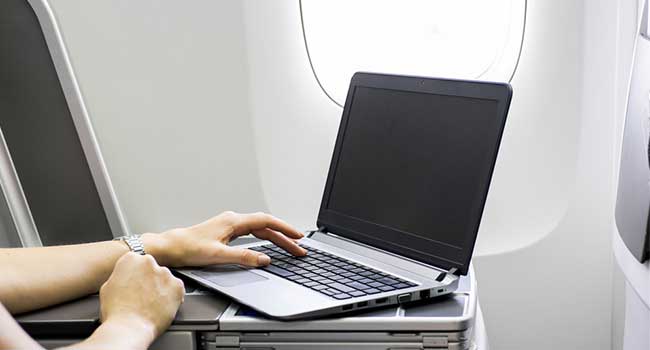
The Transportation Security Administration in the United States has ordered nine airlines to stop passengers from bringing most types of electronic devices, except smartphones, into the cabin for U.S.-bound flights. Instead, passengers will have to check their devices.

The move won’t go into effect until 96 hours after its signing to allow for the countries, airlines and airports to make proper announcements and arrangements.

At a White House Press Briefing Sean Spicer described the motion as a security precaution, but would not give specifics as to why the tech ban was justified. Reports say that the U.S. is especially worried about these particular airports based on screening issues and the possibility of terrorists infiltrating the ranks of authorized airport personnel.

The tech ban covers 10 airports out of 250 airports that are last place of departures towards the United States. Here is the full list of countries affected and the airports associated with them:

  • Cairo International - Cairo, Eqypt
  • Dubai International - Dubai, UAE
  • Abu Dubai International – Abu Dubai, UAE
  • Ataturk International – Istanbul, Turkey
  • Hamad International – Doha, Qatar
  • Queen Alia International – Amman, Jordan
  • Kuwait International – Kuwait
  • Mohammed V International – Casablanca, Morocco
  • King Abdulaziz International – Jeddah, Saudi Arabia
  • King Khalid International – Riyadh, Saudi Arabia

The nine airlines that operate direct flights to the U.S. from affected airports are Egyptair, Emirates Airline, Etihad Airways, Kuwait Airways, Qatar Airways, Royal Air Maroc, Royal Jordanian Airlines, Saudi Arabian Airlines and Turkish Airlines.

Smartphones and devices of similar size will be allowed on board, but passengers will have to check in any electronic devices bigger than that including: laptops, cameras, gaming devices larger than a smartphone, and tablets such as iPads. Medical devices will be allowed on board after going through the screening process.

The U.K. government has also followed suite, banning technology from incoming flights from five countries including Turkey, Lebanon, Egypt, Tunisia and Saudi Arabia and affects 14 different airlines.

Featured

  • TSA Introduces New $45 Fee Option for Travelers Without REAL ID Starting February 1

    The Transportation Security Administration (TSA) announced today that it will refer all passengers who do not present an acceptable form of ID and still want to fly an option to pay a $45 fee to use a modernized alternative identity verification system, TSA Confirm.ID, to establish identity at security checkpoints beginning on February 1, 2026. Read Now

  • The Evolution of IP Camera Intelligence

    As the 30th anniversary of the IP camera approaches in 2026, it is worth reflecting on how far we have come. The first network camera, launched in 1996, delivered one frame every 17 seconds—not impressive by today’s standards, but groundbreaking at the time. It did something that no analog system could: transmit video over a standard IP network. Read Now

  • From Surveillance to Intelligence

    Years ago, it would have been significantly more expensive to run an analytic like that — requiring a custom-built solution with burdensome infrastructure demands — but modern edge devices have made it accessible to everyone. It also saves time, which is a critical factor if a missing child is involved. Video compression technology has played a critical role as well. Over the years, significant advancements have been made in video coding standards — including H.263, MPEG formats, and H.264—alongside compression optimization technologies developed by IP video manufacturers to improve efficiency without sacrificing quality. The open-source AV1 codec developed by the Alliance for Open Media—a consortium including Google, Netflix, Microsoft, Amazon and others — is already the preferred decoder for cloud-based applications, and is quickly becoming the standard for video compression of all types. Read Now

  • Cost: Reactive vs. Proactive Security

    Security breaches often happen despite the availability of tools to prevent them. To combat this problem, the industry is shifting from reactive correction to proactive protection. This article will examine why so many security leaders have realized they must “lead before the breach” – not after. Read Now

  • Achieving Clear Audio

    In today’s ever-changing world of security and risk management, effective communication via an intercom and door entry communication system is a critical communication tool to keep a facility’s staff, visitors and vendors safe. Read Now

New Products

  • HD2055 Modular Barricade

    Delta Scientific’s electric HD2055 modular shallow foundation barricade is tested to ASTM M50/P1 with negative penetration from the vehicle upon impact. With a shallow foundation of only 24 inches, the HD2055 can be installed without worrying about buried power lines and other below grade obstructions. The modular make-up of the barrier also allows you to cover wider roadways by adding additional modules to the system. The HD2055 boasts an Emergency Fast Operation of 1.5 seconds giving the guard ample time to deploy under a high threat situation.

  • FEP GameChanger

    FEP GameChanger

    Paige Datacom Solutions Introduces Important and Innovative Cabling Products GameChanger Cable, a proven and patented solution that significantly exceeds the reach of traditional category cable will now have a FEP/FEP construction.

  • Mobile Safe Shield

    Mobile Safe Shield

    SafeWood Designs, Inc., a manufacturer of patented bullet resistant products, is excited to announce the launch of the Mobile Safe Shield. The Mobile Safe Shield is a moveable bullet resistant shield that provides protection in the event of an assailant and supplies cover in the event of an active shooter. With a heavy-duty steel frame, quality castor wheels, and bullet resistant core, the Mobile Safe Shield is a perfect addition to any guard station, security desks, courthouses, police stations, schools, office spaces and more. The Mobile Safe Shield is incredibly customizable. Bullet resistant materials are available in UL 752 Levels 1 through 8 and include glass, white board, tack board, veneer, and plastic laminate. Flexibility in bullet resistant materials allows for the Mobile Safe Shield to blend more with current interior décor for a seamless design aesthetic. Optional custom paint colors are also available for the steel frame.