Increased Security for U.S. Mosques after Bombing in Minnesota

Increased Security for U.S. Mosques after Bombing in Minnesota

The act has since been named an “act of terrorism.”

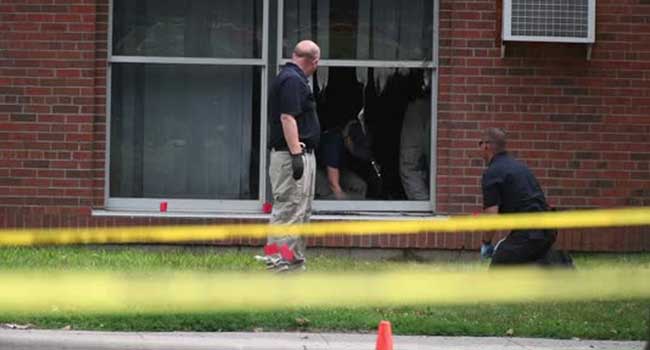
The Dar Al-Farooq Islamic Center in Minneapolis is used to threatening emails and phone calls, but the “improvised explosive device” thrown through a window of their facility has really frightening.

The explosive device, deemed “improvised” by the FBI was thrown through a window of the worship center around 5 a.m. on Sunday morning. No one was injured in the incident, but the device did blow out the window and damage a room inside the center.

Gov. Mark Dayton denounced the attack saying “not in Minnesota.”

“This is an act of terrorism,” Dayton said. “This is against the law in America.”

A U.S. Department of Homeland Security statement on the Bloomington explosion says the department "fully supports the rights of all to freely and safely worship the faith of their choosing and we vigorously condemn such attacks on any religious institution."

The Minnesota chapter of the Council on American-Islamic Relations, or CAIR, said its national office is urging Islamic centers and mosques to step up security.

"If a bias motive is proven, this attack would represent another in a long list of hate incidents targeting Islamic institutions nationwide in recent months," said Amir Malik, the local chapter's civil rights director.

The reward for information leading to an arrest or conviction has grown to $24,000, said Asad Zaman, director of the Muslim American Society of Minnesota.

Featured

New Products

  • Luma x20

    Luma x20

    Snap One has announced its popular Luma x20 family of surveillance products now offers even greater security and privacy for home and business owners across the globe by giving them full control over integrators’ system access to view live and recorded video. According to Snap One Product Manager Derek Webb, the new “customer handoff” feature provides enhanced user control after initial installation, allowing the owners to have total privacy while also making it easy to reinstate integrator access when maintenance or assistance is required. This new feature is now available to all Luma x20 users globally. “The Luma x20 family of surveillance solutions provides excellent image and audio capture, and with the new customer handoff feature, it now offers absolute privacy for camera feeds and recordings,” Webb said. “With notifications and integrator access controlled through the powerful OvrC remote system management platform, it’s easy for integrators to give their clients full control of their footage and then to get temporary access from the client for any troubleshooting needs.”

  • HD2055 Modular Barricade

    Delta Scientific’s electric HD2055 modular shallow foundation barricade is tested to ASTM M50/P1 with negative penetration from the vehicle upon impact. With a shallow foundation of only 24 inches, the HD2055 can be installed without worrying about buried power lines and other below grade obstructions. The modular make-up of the barrier also allows you to cover wider roadways by adding additional modules to the system. The HD2055 boasts an Emergency Fast Operation of 1.5 seconds giving the guard ample time to deploy under a high threat situation.

  • ResponderLink

    ResponderLink

    Shooter Detection Systems (SDS), an Alarm.com company and a global leader in gunshot detection solutions, has introduced ResponderLink, a groundbreaking new 911 notification service for gunshot events. ResponderLink completes the circle from detection to 911 notification to first responder awareness, giving law enforcement enhanced situational intelligence they urgently need to save lives. Integrating SDS’s proven gunshot detection system with Noonlight’s SendPolice platform, ResponderLink is the first solution to automatically deliver real-time gunshot detection data to 911 call centers and first responders. When shots are detected, the 911 dispatching center, also known as the Public Safety Answering Point or PSAP, is contacted based on the gunfire location, enabling faster initiation of life-saving emergency protocols.