12 Months Remaining Until Full REAL ID Enforcement Deadline

12 Months Remaining Until Full REAL ID Enforcement Deadline

DHS enforcing critical identification requirements to protect the homeland

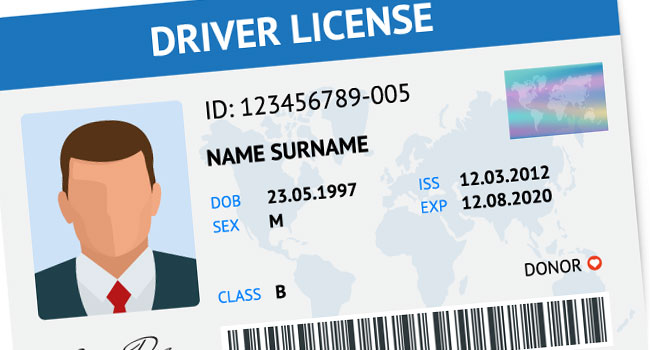
The Department of Homeland Security (DHS) is reminding Americans that only 12 months remain until the Oct. 1, 2021, REAL ID enforcement goes into effect. On Oct. 1, 2021, persons seeking to enter federal facilities, nuclear power plants or commercial airplanes at federally regulated airports will be required to have a REAL ID compliant license or acceptable alternative identification, such as a U.S. passport or passport card, to gain entry. DHS continues to urge Americans to obtain a REAL ID-compliant card or acceptable alternative well before this deadline.

All 50 states, the District of Columbia, Puerto Rico, the U.S Virgin Islands and Guam are fully compliant and are issuing these cards. To date, the states and territories have issued approximately 110 million REAL ID-compliant driver’s licenses and identification cards, representing 40 percent of all driver licenses and identification card holders.

Having improved credentials is critical to the security of our homeland as evidenced by the bipartisan 9/11 Commission, which discovered that terrorists easily procured driver licenses. The 19 terrorists who attacked our country on 9/11 acquired more than 30 driver licenses and identification cards, which helped the terrorists conduct critical aspects of their plot, such as renting cars and boarding flights.

Passed by Congress in 2005 following a 9/11 Commission recommendation, the REAL ID Act and regulations establish minimum security standards for state-issued driver’s licenses and identification cards and prohibits federal agencies, like the Transportation Security Administration, from accepting licenses and identification cards for official purposes from states that do not meet these anti-counterfeiting and anti-fraud standards after specific deadlines.

To avoid confusion regarding the REAL ID Act requirements and enforcement milestones, residents can use the following guidelines to be fully informed and prepared.

Check your state-issued driver license or identification card for the star. REAL ID-compliant cards have a star marking in the upper left- or right-hand corner. Most acceptable alternatives, such as state-issued Enhanced Driver Licenses (EDLs), which are available in five states and can be used for entering the United States at land and sea border crossings, do not have the star, but are acceptable for official REAL ID purposes. For more information on EDLs, please go to www.dhs.gov/enhanced-drivers-licenses-what-are-they.

Bring identity documents to the airport that are acceptable for flying domestically. Check to see if you have the proper identification to fly at tsa.gov/travel/security-screening/identification. TSA’s website has a list of acceptable forms of identification that individuals may use to verify their identity at the screening checkpoint. If you need to obtain a new form of ID, please allow sufficient processing time before you travel. For example, the current processing times for U.S. passports are approximately 10 weeks for routine service and two to three weeks for expedited service.

Check in advance with the federal agency you plan to visit to find out whether identification is required, and if so, what types of identity documents are acceptable. While most federal agencies will continue to accept non-compliant driver’s licenses and identification cards until the enforcement deadline of Oct. 1, 2021, some – like Department of Defense facilities and posts – may no longer accept them.

Read answers to REAL ID frequently asked questions at www.dhs.gov/real-id-public-faqs.

Featured

  • TSA Introduces New $45 Fee Option for Travelers Without REAL ID Starting February 1

    The Transportation Security Administration (TSA) announced today that it will refer all passengers who do not present an acceptable form of ID and still want to fly an option to pay a $45 fee to use a modernized alternative identity verification system, TSA Confirm.ID, to establish identity at security checkpoints beginning on February 1, 2026. Read Now

  • The Evolution of IP Camera Intelligence

    As the 30th anniversary of the IP camera approaches in 2026, it is worth reflecting on how far we have come. The first network camera, launched in 1996, delivered one frame every 17 seconds—not impressive by today’s standards, but groundbreaking at the time. It did something that no analog system could: transmit video over a standard IP network. Read Now

  • From Surveillance to Intelligence

    Years ago, it would have been significantly more expensive to run an analytic like that — requiring a custom-built solution with burdensome infrastructure demands — but modern edge devices have made it accessible to everyone. It also saves time, which is a critical factor if a missing child is involved. Video compression technology has played a critical role as well. Over the years, significant advancements have been made in video coding standards — including H.263, MPEG formats, and H.264—alongside compression optimization technologies developed by IP video manufacturers to improve efficiency without sacrificing quality. The open-source AV1 codec developed by the Alliance for Open Media—a consortium including Google, Netflix, Microsoft, Amazon and others — is already the preferred decoder for cloud-based applications, and is quickly becoming the standard for video compression of all types. Read Now

  • Cost: Reactive vs. Proactive Security

    Security breaches often happen despite the availability of tools to prevent them. To combat this problem, the industry is shifting from reactive correction to proactive protection. This article will examine why so many security leaders have realized they must “lead before the breach” – not after. Read Now

  • Achieving Clear Audio

    In today’s ever-changing world of security and risk management, effective communication via an intercom and door entry communication system is a critical communication tool to keep a facility’s staff, visitors and vendors safe. Read Now

New Products

  • Automatic Systems V07

    Automatic Systems V07

    Automatic Systems, an industry-leading manufacturer of pedestrian and vehicle secure entrance control access systems, is pleased to announce the release of its groundbreaking V07 software. The V07 software update is designed specifically to address cybersecurity concerns and will ensure the integrity and confidentiality of Automatic Systems applications. With the new V07 software, updates will be delivered by means of an encrypted file.

  • A8V MIND

    A8V MIND

    Hexagon’s Geosystems presents a portable version of its Accur8vision detection system. A rugged all-in-one solution, the A8V MIND (Mobile Intrusion Detection) is designed to provide flexible protection of critical outdoor infrastructure and objects. Hexagon’s Accur8vision is a volumetric detection system that employs LiDAR technology to safeguard entire areas. Whenever it detects movement in a specified zone, it automatically differentiates a threat from a nonthreat, and immediately notifies security staff if necessary. Person detection is carried out within a radius of 80 meters from this device. Connected remotely via a portable computer device, it enables remote surveillance and does not depend on security staff patrolling the area.

  • Unified VMS

    AxxonSoft introduces version 2.0 of the Axxon One VMS. The new release features integrations with various physical security systems, making Axxon One a unified VMS. Other enhancements include new AI video analytics and intelligent search functions, hardened cybersecurity, usability and performance improvements, and expanded cloud capabilities