Americans Overconfident Despite Rising Cyber Risks

New survey data reveals a significant gap between perceived digital safety and the actual security habits of U.S. consumers.

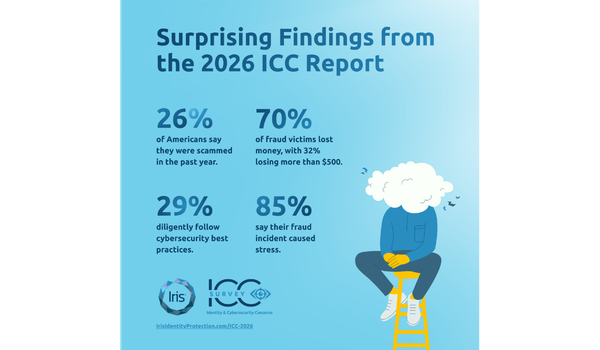
A new report on consumer digital habits shows that while 84% of Americans feel secure using their internet-connected devices, only 29% actually follow recommended cybersecurity best practices. This disconnect comes as 69% of adults report being targeted by scams within the last year.
The Reality of Victimization

According to the second annual Identity & Cybersecurity Concerns (ICC) Survey, one in four Americans fell victim to a scam in the past year. The financial and emotional toll of these incidents is substantial:

  • Financial Impact: 70% of fraud victims lost money, with 32% losing more than $500.
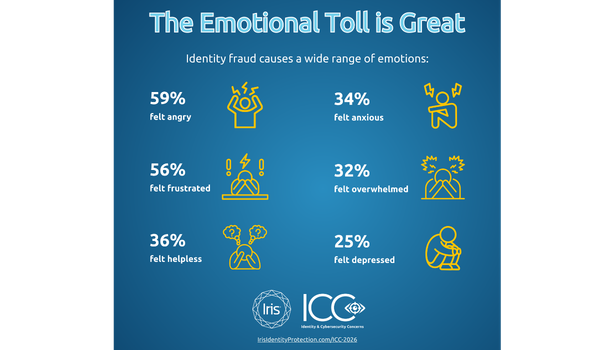
  • Emotional Toll: 85% of victims reported that the incident caused significant stress, including feelings of anger (59%), frustration (56%), and helplessness (36%).
  • Resolution Time: 36% of victims spent several days or more resolving the issue, while 12% are still awaiting a resolution.
Emerging Fears and Barriers

Artificial intelligence has become a primary source of anxiety, with 73% of respondents expressing concern over its malicious use. Despite this fear, only 9% reported direct experience with AI-driven scams, suggesting that traditional methods like phone calls (36%) and phishing (31%) remain the dominant threats.
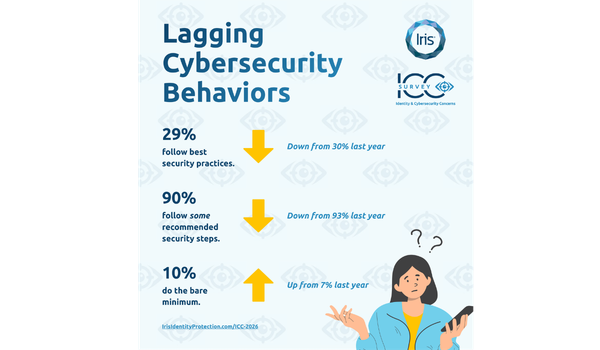
Access to protection tools is also trending downward. The number of consumers reporting no access to identity protection services rose to 22%, up from 18% the previous year. Access to foundational tools like credit monitoring (44%) and password managers (43%) remains below the 50% mark.

Demand for Integration
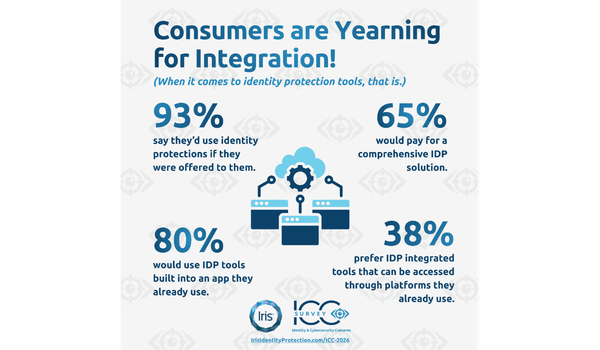
The data suggests that the complexity of managing multiple security apps is a barrier to adoption. Approximately 80% of Americans indicated they would use identity protection tools if they were integrated into apps they already use. Furthermore, 38% of consumers prefer integrated digital experiences over standalone security websites or applications.

About the Author

Jesse Jacobs is assistant editor of SecurityToday.com.

Featured

New Products

  • Camden CM-221 Series Switches

    Camden CM-221 Series Switches

    Camden Door Controls is pleased to announce that, in response to soaring customer demand, it has expanded its range of ValueWave™ no-touch switches to include a narrow (slimline) version with manual override. This override button is designed to provide additional assurance that the request to exit switch will open a door, even if the no-touch sensor fails to operate. This new slimline switch also features a heavy gauge stainless steel faceplate, a red/green illuminated light ring, and is IP65 rated, making it ideal for indoor or outdoor use as part of an automatic door or access control system. ValueWave™ no-touch switches are designed for easy installation and trouble-free service in high traffic applications. In addition to this narrow version, the CM-221 & CM-222 Series switches are available in a range of other models with single and double gang heavy-gauge stainless steel faceplates and include illuminated light rings.

  • Squire Vulcan Combination Padlocks

    Squire Locks USA Vulcan™ Resettable Combination Padlocks

    Stop competing with flimsy, retail-grade hardware—Squire's professional-grade resettable padlocks deliver heavy-duty boron steel shackles and front-facing dials for rugged outdoor environments.

  • ResponderLink

    ResponderLink

    Shooter Detection Systems (SDS), an Alarm.com company and a global leader in gunshot detection solutions, has introduced ResponderLink, a groundbreaking new 911 notification service for gunshot events. ResponderLink completes the circle from detection to 911 notification to first responder awareness, giving law enforcement enhanced situational intelligence they urgently need to save lives. Integrating SDS’s proven gunshot detection system with Noonlight’s SendPolice platform, ResponderLink is the first solution to automatically deliver real-time gunshot detection data to 911 call centers and first responders. When shots are detected, the 911 dispatching center, also known as the Public Safety Answering Point or PSAP, is contacted based on the gunfire location, enabling faster initiation of life-saving emergency protocols.