Report Highlights Outdoor Security Gaps and Staffing Shortages at U.S. Venues
Analysis from Shooter Detection Systems finds automated gunshot detection deployed at 13% of surveyed professional sports venues despite high perimeter crowd concentrations.
- By Chelsey Arries
- Nov 19, 2026
U.S. sports and entertainment venues face security staffing shortages and gaps in automated threat detection, particularly in outdoor areas beyond entry checkpoints, according to a report from gunshot detection provider Shooter Detection Systems.
The report combines FBI active shooter data, venue security director surveys from the National Center for Spectator Sports Safety and Security, spectator surveys and peer-reviewed research. It outlines opportunities to improve perimeter coverage, integrate existing security systems and strengthen emergency response.
Among surveyed professional sports venues, 96% use two-way radios and surveillance cameras, while 94% deploy walk-through magnetometers. By comparison, 13% use automated gunshot detection, even though 30% of venue security directors identified it as a priority investment if additional funding were available.
Staffing also remains a challenge. About 65% of surveyed venue security directors reported staffing shortages during the previous two years, and 74% of professional sports venues rely on contracted security personnel for at least part of their game-day operations.
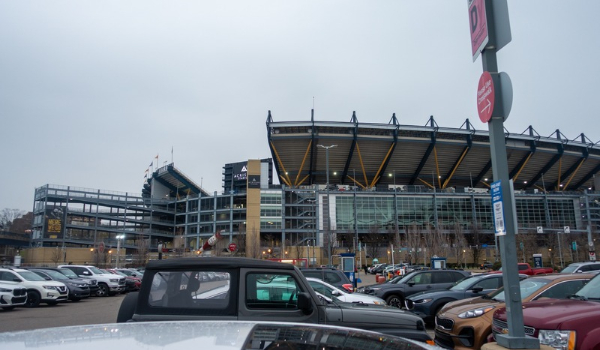
The report highlights large crowds gathering outside traditional screening checkpoints. About half of sports fans tailgate before events, and 76% enter venues within 30 minutes of start time, concentrating spectators in parking lots and other outdoor spaces not covered by entry-screening equipment.
For broader context, the analysis cites 223 active shooter incidents nationwide from 2020 through 2024, a 70% increase over the prior five-year period. About 41% of those incidents occurred in open spaces such as parking lots and public streets, figures that reflect national incidents across all settings rather than sports venues alone. Active shooter incidents also rose 42% from 24 in 2024 to 34 in 2025.
Program certification varies by venue tier. Among professional sports venues, 64% have obtained or are pursuing Department of Homeland Security SAFETY Act certification, compared with 50% of collegiate venues.
Spectator surveys also indicate security affects attendance decisions. Roughly 80% of surveyed fans trust venues to protect them against an active shooter, while nearly three-quarters consider safety and security precautions when deciding whether to attend a sporting event.
The report recommends that venue operators evaluate outdoor security coverage, improve integration across existing systems, balance staffing with automation and strengthen emergency preparedness, while considering technology certification standards such as the DHS SAFETY Act.
About the Author
Chelsey Arries is assistant editor of Security Today, Campus Security Today, Occupational Health & Safety and Environmental Protection Online.