Shadow AI: The Video Surveillance Blind Spot
Unregulated routing of live security video feeds and investigative imagery into unapproved public AI models creates acute, unmonitored data exposure vectors for corporate Security Operations Centers.
- By Derek Martinez
- Jul 13, 2026
Information technology leaders are struggling to keep pace with the rapid expansion of “shadow AI” inside of their organizations. Shadow AI is the use of artificial intelligence tools by company employees without the approval or knowledge of the company’s AI compliance committee; this operational risk outlines a growing governance gap across enterprise organizations.
While the topic of artificial intelligence is the primary discussion point in corporate boardroom and back hallways around business transformation, there is a quiet threat being analyzed by IT security teams. Their enthusiasm for AI-powered software is outpacing corporate governance and leaving organizations exposed to potential data vulnerabilities.
The core risk is clear: proprietary information leaves the company’s controlled environment and places the data and the organization at considerable risk. An employee may upload corporate documents into ChatGPT without approval. A manager may feed sensitive customer data into an unapproved AI tool. This is the entry point of data leaving the company’s controlled environment.
In May 2026, Community Bank disclosed a security incident centered on the use of an unauthorized AI application. According to regulatory filings, private customer information including names, birth dates and social security numbers was exposed through the unapproved AI tool. From the outside, the damage to the organization mirrored that of a cyberattack. However, the threat originated from within.
Physical and IT Security Convergence
To understand why this blind spot has grown, executive leadership must examine the ongoing evolution of security domains. Security practitioners are tasked with protecting the organization across physical and digital architectures. For years, the security industry has discussed the convergence of physical and IT security as a strategic framework, outlined by the National Institute of Standards and Technology, the Cybersecurity and Infrastructure Security Agency and ASIS International.
For physical security practitioners, convergence means more than upgrading video surveillance systems, intrusion detection systems and physical access control systems as a layered security practice. Convergence also requires a complete integration of physical and technological frameworks and standard operating policies. When physical security and information technology are siloed, operational gaps emerge and create an environment where shadow AI tools go completely undetected.
The Blind Spot in Security Operations
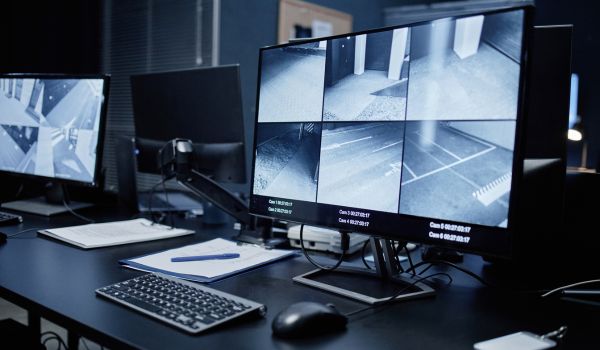
Inside of the modern Security Operations Center, operators have access to live and recorded surveillance video or real-time security oversight, intelligence gathering and investigations; however, that access introduces a potential blind spot when combined with unauthorized tools.
Consider what happens when organizational video and still images are loaded into tools like ChatGPT while an operator attempts to identify a person and test the capabilities of AI language models. Similarly, an investigator may use an unauthorized AI tool to write reports, uploading proprietary and confidential information in the process. These AI tools use the uploaded information to help train their models and as a result, confidential data has, at times, surfaced in the public sphere through indexing, making private conversations searchable by engines such as Google.
Technical operators in the security department have the ability to use unapproved video analytic or AI software (a free tool, perhaps), believing that it will benefit the organization. Convinced that it will speed up their work, an operator may pull video streams and route the video data outside of the organization via a cellular modem and feed that video into an unapproved shadow AI software tool. The blind spot is that this activity can go on undiscovered until a serious question is raised or a data leak is detected, as occurred with the Community Bank incident.
Physical security leaders must implement policies governing the use of AI-powered security and business tools. Those frameworks must also align with organizational standard operating policies and procedures, and clearly state the company’s position on the use of shadow AI.
The Fix: Shadow AI Blueprint
To mitigate the shadow AI risk and secure the enterprise, corporate leadership can incorporate a remediation strategy such as the Shadow AI Blueprint.
Prioritize Data Sanctification. Move beyond policy review to conduct a full data audit. This process transforms the unmanaged data swamp into a trusted data lake for AI tools. Ensure clear ownership, classification and access controls.
Implement the Centaur Wash Protocol. Update intellectual property policies to require human modification of AI-generated content. This modification ensures the company secures legal copyright guards against such risks.
Establish Intent Guardrails. Incorporate AI training focused specifically on preventing intent drift. This ensures that ethical boundaries remain when employees rely on AI tools without proper oversight. This training may help employees understand the risk of shadow AI and identify the dark patterns that can lead to ethical violations and data leaks.
Adopt an Augmented Quotient Mindset. Conduct comprehensive business tools assessments to measure the security departments Augmented Quotient. This evaluation identifies where a unified and organizational framework can replace siloed and unapproved systems, ultimately consolidating AI use under company governance.
The Community Bank incident is a warning to security professionals in all industries. As AI tools become faster and more accessible, employees across every department will continue to reach for them; with or without the approval of company leadership. The organizations that enrich security governance now, before the next incident, will be the ones that transform operational liability into a competitive advantage.