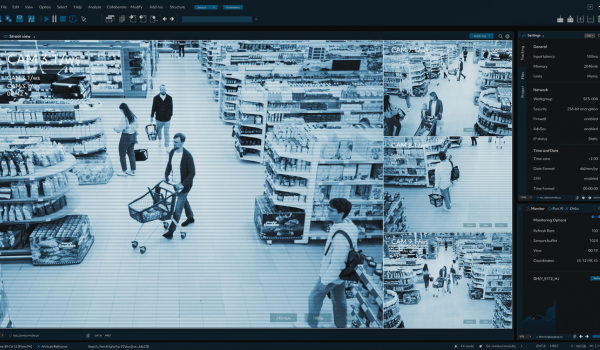
How AI-Powered Video Analytics is Rewriting the Rules
AI video analytics can help retailers detect theft and safety hazards while informing staffing, merchandising and checkout decisions.
- By Tim Palmquist
- Nov 24, 2026
Retail security has always meant balancing safety, service and sales against a tight budget. That balancing act has gotten more difficult. Organized retail crime keeps climbing, labor shortages have left fewer people on the floor, and customers still expect short lines and a smooth experience. Retailers report an 18% year-over-year jump in average shoplifting incidents, according to the National Retail Federation's 2025 Impact of Retail Theft and Violence report, and the vast majority now call organized retail crime a growing concern. Shrinkage sits near a decade high.
Retail's shift to AI-driven video security does not come with a bigger budget or a bigger staff attached, which is exactly the point. It is not just about catching more shoplifters on camera. It is about asking for video data to do more work, for more of the business, without adding headcount or hardware. Retailers that get this right are turning security spending into a broader operational investment, one that pays for itself in loss prevention, liability protection and store performance all at once.
Doing More with Less
For years, a retail video system meant a rack of cameras tied to a local server in the back room, watched mainly to investigate theft after it had already happened. That model was expensive to scale and slow to improve. A chain with a few hundred stores had to duplicate the setup location by location, and insight gathered in one store rarely reached another.
Cloud and hybrid video management have changed that math by letting retailers centralize monitoring across locations, cut down on local hardware, and let corporate IT set consistent standards across the enterprise, all while paying for storage and processing as they use it rather than sinking capital into servers that sit idle most of the day. For smaller retailers who could never justify enterprise-grade analytics on their own, that same cloud economics puts real AI tools within reach for the first time.
Open platform video management software, which sits at the center of that shift, lets a business add new hardware and software as needs change without ripping out what already works, rather than locking retailers into a single vendor's cameras and sensors. That matters because the return on a security investment increasingly depends on what else the system can do. A camera that only records theft is a cost center. Tracks are feeding an open platform that also tracks store conditions, staffing needs and safety hazards are closer to a business tool that helps justify its own spend.
The Liability Layer
Video security can help control expenses well beyond theft; slip and fall claims, for instance, remain one of the most common and costly liability exposures in retail, and a single incident tied to an unaddressed spill or a cluttered aisle can cost far more than the merchandise lost to shoplifting that same day. A fake or exaggerated claim, without clear video to counter it, can settle for thousands of dollars in legal costs alone.
AI-driven hazard detection is a newer addition to the retail video toolbox, and it is a natural extension of tools retailers already use to fight theft. The same analytics engines that flag a loiterer near an exit can be trained to recognize a wet floor, a spill or debris in an aisle, and alert staff before a customer or an employee ever reaches it. Some systems can also detect a fall itself and flag it in real time, giving staff a chance to respond before a minor hazard becomes a major claim. The stakes are real: the estimated medical costs from fatal and nonfatal falls run close to $80 billion, according to the National Floor Safety Institute, and any single incident tied to an unaddressed hazard can turn into a costly liability claim for a retailer.
That speed matters twice over. It protects people, and it protects business. Clear, time-stamped video showing that a hazard was found and addressed quickly is one of the strongest defenses a retailer has against a liability claim, frivolous or otherwise. Built on an open platform, hazard detection does not require new cameras or a separate system. It runs on the same infrastructure already doing the work of theft prevention, which is exactly the kind of layered return that makes the investment easier to justify to finance leadership.
From Detection to Action
The theft-prevention side of the playbook keeps expanding too, as organized retail crime has grown into a coordinated, often violent enterprise, with thieves targeting high-value goods in bulk and moving them quickly through online resale markets. Traditional cameras only show what has already happened. AI-driven analytics, tied into an open platform, give retailers a way to get ahead of it instead.
Some stores use anonymous device tracking, monitoring a phone or device present during a prior theft and alerting staff if it returns. Smart cabinets with anonymous facial recognition can deny repeat offenders access to high-value merchandise without needing to capture any personal identification information. Analytics can flag someone loitering near an exit, a group gathering in an unusual pattern, or tools being carried that do not belong in a store environment. Audio sensors add another layer, picking up the sound of breaking glass, raised voices or other signatures of trouble.
These tools work best together, since their value comes from an open platform that connects video, access control, point-of-sale data, and IoT sensors into one system, so that an alert from one source can be instantly checked against the others. A flagged device paired with an unusual point-of-sale event tells a much clearer story than either signal alone. And when a known organized retail crime ring hits one location, that intelligence can be shared across a chain at once, giving other stores a head start before the same crew strikes again.
The same infrastructure is proving just as useful once the conversation moves past security. Heat maps and dwell time analysis show which aisles draw traffic and where shoppers linger, informing decisions about product placement. AI can spot empty shelves, long checkout lines or blocked aisles before a customer complains. With fewer associates on the floor, that steady flow of information helps managers direct people to where they are needed.
The throughline for retail security today is that the pressure to do more with less is not going away, and neither is the expectation that a security investment earns its keep well beyond the loss prevention office. Retailers who build on an open, connected video platform are finding that the same system protecting against organized retail crime can also protect against liability claims, ease staffing strain, and sharpen day-to-day operations. In an industry where every dollar investment must work harder, that kind of layered return is no longer a nice extra. It is becoming standard for what a modern retail security system is expected to deliver.
This article originally appeared in the November/December 2026 issue of Security Today.