A Shot in the Arm
Biometrics boost security at South Carolina hospital
- By Robert Morse
- Nov 03, 2006
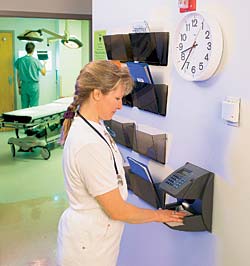 Palmetto Health Richland, originally founded in 1892 as Columbia Hospital, is one of South Carolina's oldest, largest and most respected healthcare providers. A regional community teaching hospital with more than 100 medical specialties and sub-specialties represented by the medical staff, the healthcare center also is a major referral center for patients who require specialized medical care.
Keeping up with changing times means not only pursuing the most advanced medical technologies available, but also implementing innovative security measures as well. Face it, life has changed dramatically since 1892, and so have healthcare security needs.
In 1998, Richland Memorial Hospital merged with Baptist Healthcare System of South Carolina to form Palmetto Heath Richland, the largest healthcare delivery system in the state with two hospitals in Columbia and one in Easley, S.C.
Palmetto Health Richland is affiliated with the University of South Carolina, a graduate research institution that includes schools of medicine, nursing and public health. It is affiliated with the university to provide training opportunities for medical, dental, pharmacy, nursing and other healthcare students. It is one of the largest and most progressive hospitals in the Southeast.
Keeping up with changing times means not only pursuing the most advanced medical technologies available, but also implementing innovative security measures as well. Face it, life has changed dramatically since 1892, and so have healthcare security needs.
Stepping Up Security
Palmetto Health Richland currently has an extensive, CCTV video surveillance system. A total of 225 cameras are placed throughout the campus, with most of the PTZ cameras located outside the facility. Cameras feed images into DVRs, giving security officers the ability to watch events live and/or via recordings. The system ties into the access control software.
Two staff members operate the renovated console room 24 hours a day, seven days a week. This staff is in charge of dispatching, event logging and monitoring the cameras and the access control system. In addition, there are security officers roaming the campus at all times.
Even with the system, campus security is interested in stepping up access control measures in particularly sensitive areas such as the main pharmacy. Palmetto Health security wanted something other than proximity cards or tokens that could be lost, loaned or stolen. That's when they began to consider biometric technology began to be considered.
Biometric technology is not new in the security industry. It has been in use since 1987, providing a secure solution for both time-and-attendance and access control applications. Today, hand and fingerprint readers cover 80 percent of biometric access control applications in use today, so that is where the hospital's security began its search.
The security staff investigated both hand geometry and fingerprint technology, but found drawbacks with finger scanners. The scanners simply gave too many false reads for larger user populations. After all, as important as it is to keep the wrong people out, it is just as important to let the right people in. If there was any difference in the finger at all, for example cuts or liquids that can alter patterns on fingers, or bandages, the finger scanners could not read the finger, and the employee was locked out. Also, there was no auto backup or override with the finger scanners. Security staff would have to manually allow people through.
The hospital then looked at what other organizations were using. When many people use the system, hand readers prove to be more user-friendly and accurate. A hand reader automatically takes a 3-D reading of the size and shape of the employee's hand and verifies the user's identity in less than one second. This solutions was what security was looking for.
A Handy Solution
There are 135 doors on the access control system at Palmetto Health Richland. Biometrics are specifically reserved for sensitive areas such as the entrance to the telephone switch room. Restricted keyways are currently being used for other critical utilities.
The first application of hand geometry at the hospital consisted of two, Schlage Recognition Systems hand geometry readers, two proximity readers and keypad units on four perimeter doors that lead to the pharmacy and pharmacy administration offices. Being a medium-sized department with more than 100 employees, this set up gave the hospital a solid evaluation of the system. Because of the success of the initial installation, biometrics were expanded to other areas. The hospital is considering the hand readers for several more applications on campus.
The hospital is now in the process of adding seven additional hand readers to guard entrances at an offsite information technology center. Biometric readers will be installed at doors to the IT administration offices and the data center.
Integration is Key
Rather than using biometrics as standalone units, security services chose to integrate hand readers into a Lenel access control system.
Biometric manufacturers offer a variety of ways to integrate biometrics into conventional access control systems. The most common way is card reader emulation. This method is effective when integrating into existing, card-based systems to bring extra security to needed areas. The wiring is identical to the card reader's wiring.
For Palmetto Health's purposes, the biometric hand readers essentially work with the access control panel in the exact same way that a card reader does. The card reader output port of the biometric is connected to the panel's card reader port. When a hospital employee uses the hand reader, it outputs the ID number of the individual if, and only if, they are verified.
The format of the output is consistent with the card technology used by the access control panel. Once an ID number reaches the panel, it is handled as if it came from a card reader. The determination of granting access is made by the panel. The access control panel, not the biometric, handles door control and monitoring.
For an older facility, such as Palmetto Health, implementing biometric technology is no more or less challenging than adding card-based readers to an existing access control system.
A Promising Prognosis
Biometrics provide a higher level of security at Palmetto Health. Security service likes that people don't have to carry cards or some other device for access control. That is especially helpful to physicians, who will have one less item to keep up with when the system transitions to hand readers in those areas.
Even so, access control is a new concept to the campus and culture. Beyond the technical integration issues, there are some very human concerns. Carefully taking into account the hospital culture has been a major factor in the entire security scenario.
The hospital was previously a county hospital. Since the merger in 1998, security has seen a major upgrade. There are hundreds of employees who have worked at the hospital for long periods of time. As a county hospital, many people had the freedom to access any part of the hospital. The security team and hospital administrators have made a strong and concerted effort to bring employees on board by stressing safety and security benefits.
Security services has consistently communicated with employees on how to use the hand geometry readers, giving them instructions and encouraging them to take the extra time needed for access control for personal and hospital safety and security reasons. It is important to cultivate employee buy-in when making the transition. In a perfect world, there wouldn't be a need for strict security measures. But this isn't a perfect world, and security is essential in today's healthcare environment.
The access control readers, including biometrics, have increased safety and security awareness for hospital employees and personnel. Audit trails provide the accountability needed in this environment. That has helped resolve issues such as nurses borrowing supplies from other departments. Even though it seems like a minor issue, it can adversely impact other departments.
In summary, biometrics have elevated the sense of safety and security.
The Best Prescription
Biometrics recognize people, not plastic cards. They ensure that you are you. For locations not using cards, biometric technologies are easy to supervise since no one forgets to bring their hands to work, and there are no hands for administrators to manage. For locations with card systems, biometrics provide an additional layer of higher security to vital entrances or doors, ensuring that lost or stolen cards are not later used to access facilities.