Feds Seize 9 Tons of Marijuana Near Otay Mesa Border Crossing
Seven individuals have been charged in federal court with drug smuggling following the discovery by U.S. Customs and Border Protection (CBP) officers of more than 9 tons of marijuana inside a tractor trailer attempting to enter the United States at the Otay Mesa Commercial Port of Entry.
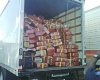
During CBP's secondary inspection of the truck, an X-ray search revealed the vehicle's trailer was packed with hundreds of pillow-sized bricks of marijuana. The street value of the marijuana is estimated at more than $13 million.
Following the discovery, agents from U.S. Immigration and Customs Enforcement's (ICE) Homeland Security Investigations (HSI) set up surveillance on the tractor trailer as it left the border crossing and proceeded to a nearby junkyard. There, ICE HSI agents arrested the seven suspects as they transferred the bricks of marijuana from the vehicle's trailer into a waiting cargo truck.
The suspects were arraigned in federal court Wednesday. They include:
- Cristian Bajoner, 20, of San Diego;
- Victor Hernandez, 29, of Tijuana, Mexico:
- Francisco Javier Peinado, 47, of Tijuana, Mexico;
- Jonathan Peinado, 19, of Chula Vista, Calif.;
- Heriberto Peinado-Covarrubias, 45, of Tijuana, Mexico;
- Dahir Alan Peinado-Leyva, 19, of Tijuana, Mexico; and
- Jorge Manuel Zamora-Ponce, 21 of Tijuana, Mexico.
Authorities seized both the tractor trailer and cargo truck. The investigation is ongoing.