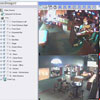
Austin ISD Switches 3000 Plus Camera System to Video Insight

Massive Texas School District with 3,000 Cameras Switches Video Management Provider

One massive Texas school district recently upgraded its video surveillance system in an effort to keep up with advancements in Web management platforms.

Austin Independent School District – the nation’s 38th largest school system – has replaced its existing video management system with Video Insight software. Encompassing 230-square miles, Austin ISD has 86,000 students, 11,000 employees, 124 campuses and more than 3,000 video surveillance cameras.

“We were unhappy with the platform that we had invested in and we needed a more practical solution – something that was easy to use,” says Austin ISD Police Department Representative Wayne Russell. “We needed something that didn’t require an incredible amount of CPU processor power that could also serve as a fully-functioning Web client.”

After an exhaustive bid process, Russell found the solution in Video Insight. “Video Insight was the only software solution that worked seamlessly with our existing cameras and it offered a very dependable Web client," Russel says.

A fully functional Web client application was very important to Austin ISD, says Russell, due to the number of employees that tend to move from campus to campus in such a large school system. Russell says prior to the Video Insight implementation his VMS administrator spent a considerable amount of time with user maintenance. “With this number of users a reliable Web client is more economical than installing (and uninstalling) thick VMS clients on each PC, which also overburdens our already taxed VMS administrators,” he says.

The switch to Video Insight has resulted in an improved video management system for Austin ISD in many respects, including: Little to no training for employees; increased video camera image quality; more efficient storage; faster system performance; variety in camera choice and LDAP integration. The 3,000-plus camera system is monitored by the AISD police dispatch 24-hours a day, seven days a week, paying particular attention during peak times to camera feeds in the bus drop off and pick up areas, cafeterias during breakfast and lunch time, playgrounds and in hallways during class changes. Administrators monitor cameras at each school campus, but they report incident to the AISD police who have the sole authority to clip and export video.

Video Insight Chief Technical Officer James Whitcomb says that Video Insight’s open architecture, ease of use and features that were developed specifically for large systems with multi-campuses and facilities is what makes it best suited for a project like Austin ISD. And because Video Insight software supports more than 1,000 cameras from 60 manufacturers, users have a wide variety of choice when it comes to adding cameras to their system.

“As a result of our work together Austin ISD has better system management, better use of storage, no need for in-depth training,” Whitcomb says. “The best news is that they have reliable video surveillance that adds to – and does not detract – from a district-wide safety program.”

Featured

  • The Future of Access Control: Cloud-Based Solutions for Safer Workplaces

    Access controls have revolutionized the way we protect our people, assets and operations. Gone are the days of cumbersome keychains and the security liabilities they introduced, but it’s a mistake to think that their evolution has reached its peak. Read Now

  • A Look at AI

    Large language models (LLMs) have taken the world by storm. Within months of OpenAI launching its AI chatbot, ChatGPT, it amassed more than 100 million users, making it the fastest-growing consumer application in history. Read Now

  • First, Do No Harm: Responsibly Applying Artificial Intelligence

    It was 2022 when early LLMs (Large Language Models) brought the term “AI” into mainstream public consciousness and since then, we’ve seen security corporations and integrators attempt to develop their solutions and sales pitches around the biggest tech boom of the 21st century. However, not all “artificial intelligence” is equally suitable for security applications, and it’s essential for end users to remain vigilant in understanding how their solutions are utilizing AI. Read Now

  • Improve Incident Response With Intelligent Cloud Video Surveillance

    Video surveillance is a vital part of business security, helping institutions protect against everyday threats for increased employee, customer, and student safety. However, many outdated surveillance solutions lack the ability to offer immediate insights into critical incidents. This slows down investigations and limits how effectively teams can respond to situations, creating greater risks for the organization. Read Now

  • Security Today Announces 2025 CyberSecured Award Winners

    Security Today is pleased to announce the 2025 CyberSecured Awards winners. Sixteen companies are being recognized this year for their network products and other cybersecurity initiatives that secure our world today. Read Now

New Products

  • Compact IP Video Intercom

    Viking’s X-205 Series of intercoms provide HD IP video and two-way voice communication - all wrapped up in an attractive compact chassis.

  • 4K Video Decoder

    3xLOGIC’s VH-DECODER-4K is perfect for use in organizations of all sizes in diverse vertical sectors such as retail, leisure and hospitality, education and commercial premises.

  • ResponderLink

    ResponderLink

    Shooter Detection Systems (SDS), an Alarm.com company and a global leader in gunshot detection solutions, has introduced ResponderLink, a groundbreaking new 911 notification service for gunshot events. ResponderLink completes the circle from detection to 911 notification to first responder awareness, giving law enforcement enhanced situational intelligence they urgently need to save lives. Integrating SDS’s proven gunshot detection system with Noonlight’s SendPolice platform, ResponderLink is the first solution to automatically deliver real-time gunshot detection data to 911 call centers and first responders. When shots are detected, the 911 dispatching center, also known as the Public Safety Answering Point or PSAP, is contacted based on the gunfire location, enabling faster initiation of life-saving emergency protocols.