Search Warrant Required Before Using Secretive Cellphone Surveillance

Search Warrant Required Before Using Secretive Cellphone Surveillance

Representing the first effort to create uniform legal standards for federal authorities using equipment such as cell-site simulators to track cellphones, a search warrant must now be obtained before using this secretive and intrusive technology. This new policy was announced by the Justice Department on Thursday, September 3, 2015.

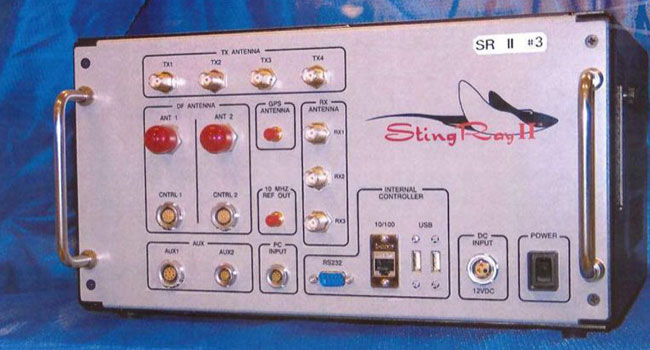
This technology is known as Stingray, a suitcase-sized device that can sweep basic cellphone data from a neighborhood by tricking phones in the area to believe that it’s a cellphone tower. This allows the device to identify unique subscriber numbers. The data is transmitted to police to help them determine the location of a cellphone without the cellphone user making a call or sending a text.  

Privacy groups and lawmakers have stated their concerns about local police departments infringing on privacy rights by using this technology. This policy, though, only applies to federal agencies within the Justice Department, not state and local law enforcement, like some groups had hoped for. Still, as federal law enforcement officials praise this technology as a valuable tool to catch fugitives and other criminals, privacy groups fear the secrecy surrounding it and the collection of innocent bystander’s data that just happen to be in a particular location.

The Justice Department seems mindful about these concerns, specifying the policy indicates that in most cases, except for emergencies like national security threats, a warrant must be obtained. Additionally, authorities are required to delete all collected data once they have obtained the data they needed. Training is expected to be provided to all employees.

How do you feel about this new policy? Would you feel as though your privacy was violated if your cellphone data was obtained by Stingray?

About the Author

Ginger Hill is Group Social Media Manager.

Featured

New Products

  • Camden CM-221 Series Switches

    Camden CM-221 Series Switches

    Camden Door Controls is pleased to announce that, in response to soaring customer demand, it has expanded its range of ValueWave™ no-touch switches to include a narrow (slimline) version with manual override. This override button is designed to provide additional assurance that the request to exit switch will open a door, even if the no-touch sensor fails to operate. This new slimline switch also features a heavy gauge stainless steel faceplate, a red/green illuminated light ring, and is IP65 rated, making it ideal for indoor or outdoor use as part of an automatic door or access control system. ValueWave™ no-touch switches are designed for easy installation and trouble-free service in high traffic applications. In addition to this narrow version, the CM-221 & CM-222 Series switches are available in a range of other models with single and double gang heavy-gauge stainless steel faceplates and include illuminated light rings.

  • FEP GameChanger

    FEP GameChanger

    Paige Datacom Solutions Introduces Important and Innovative Cabling Products GameChanger Cable, a proven and patented solution that significantly exceeds the reach of traditional category cable will now have a FEP/FEP construction.

  • ResponderLink

    ResponderLink

    Shooter Detection Systems (SDS), an Alarm.com company and a global leader in gunshot detection solutions, has introduced ResponderLink, a groundbreaking new 911 notification service for gunshot events. ResponderLink completes the circle from detection to 911 notification to first responder awareness, giving law enforcement enhanced situational intelligence they urgently need to save lives. Integrating SDS’s proven gunshot detection system with Noonlight’s SendPolice platform, ResponderLink is the first solution to automatically deliver real-time gunshot detection data to 911 call centers and first responders. When shots are detected, the 911 dispatching center, also known as the Public Safety Answering Point or PSAP, is contacted based on the gunfire location, enabling faster initiation of life-saving emergency protocols.