Security Changes for Golden Gate Bridge After Daredevils’ Stunt

Security Changes for Golden Gate Bridge After Teens' Climb

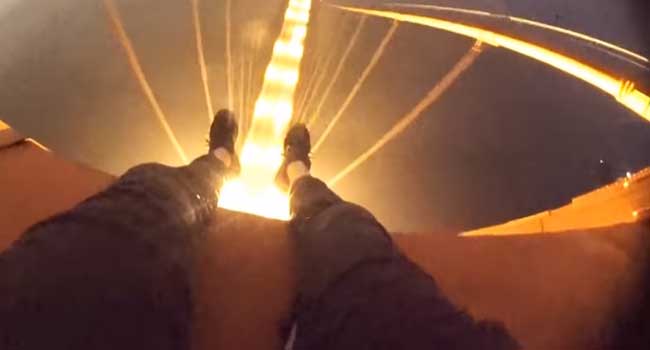
Two teens evaded complex security measures to make it to the top of the Golden Gate Bridge.

Security officials in the bridge district of San Francisco are looking into more intense security for the Golden Gate Bridge after two teens successfully made it to the top of one of the towers without setting off any alarms.

Peter Teatime and his friend Tommy Rector dodged the bridge’s multi-million dollar security system approved by Homeland Security and climbed the 748 foot-high structure with no safety equipment last month. Local security and law officials had no idea until the YouTube video began to gain popularity weeks after the climb.

Changes are now underway in the “security infrastructure” monitoring of the cameras and patrolling on the bridge, Golden Gate Bridge, Highway and Transportation District spokeswoman Priya Clemens said. The district will be conducting an independent assessment of security led by the Northern California Regional Intelligence Center.

The district said in a statement that the security system is in place to keep people from harming the bridge, but acknowledged that the trespassing incident “raises questions about how such an unauthorized climb was possible.”

In an interview with CBS News, Teatime said he noticed the tough security measures.

“I will say security is really tough,” Teatime said. “They have motion detectors, cameras. I have a lot of experience with stuff like this, so I was able to get around and on the cables.”

Featured

  • Improve Incident Response With Intelligent Cloud Video Surveillance

    Video surveillance is a vital part of business security, helping institutions protect against everyday threats for increased employee, customer, and student safety. However, many outdated surveillance solutions lack the ability to offer immediate insights into critical incidents. This slows down investigations and limits how effectively teams can respond to situations, creating greater risks for the organization. Read Now

  • Security Today Announces 2025 CyberSecured Award Winners

    Security Today is pleased to announce the 2025 CyberSecured Awards winners. Sixteen companies are being recognized this year for their network products and other cybersecurity initiatives that secure our world today. Read Now

  • Empowering and Securing a Mobile Workforce

    What happens when technology lets you work anywhere – but exposes you to security threats everywhere? This is the reality of modern work. No longer tethered to desks, work happens everywhere – in the office, from home, on the road, and in countless locations in between. Read Now

  • TSA Introduces New $45 Fee Option for Travelers Without REAL ID Starting February 1

    The Transportation Security Administration (TSA) announced today that it will refer all passengers who do not present an acceptable form of ID and still want to fly an option to pay a $45 fee to use a modernized alternative identity verification system, TSA Confirm.ID, to establish identity at security checkpoints beginning on February 1, 2026. Read Now

  • The Evolution of IP Camera Intelligence

    As the 30th anniversary of the IP camera approaches in 2026, it is worth reflecting on how far we have come. The first network camera, launched in 1996, delivered one frame every 17 seconds—not impressive by today’s standards, but groundbreaking at the time. It did something that no analog system could: transmit video over a standard IP network. Read Now

New Products

  • Camden CV-7600 High Security Card Readers

    Camden CV-7600 High Security Card Readers

    Camden Door Controls has relaunched its CV-7600 card readers in response to growing market demand for a more secure alternative to standard proximity credentials that can be easily cloned. CV-7600 readers support MIFARE DESFire EV1 & EV2 encryption technology credentials, making them virtually clone-proof and highly secure.

  • AC Nio

    AC Nio

    Aiphone, a leading international manufacturer of intercom, access control, and emergency communication products, has introduced the AC Nio, its access control management software, an important addition to its new line of access control solutions.

  • HD2055 Modular Barricade

    Delta Scientific’s electric HD2055 modular shallow foundation barricade is tested to ASTM M50/P1 with negative penetration from the vehicle upon impact. With a shallow foundation of only 24 inches, the HD2055 can be installed without worrying about buried power lines and other below grade obstructions. The modular make-up of the barrier also allows you to cover wider roadways by adding additional modules to the system. The HD2055 boasts an Emergency Fast Operation of 1.5 seconds giving the guard ample time to deploy under a high threat situation.