TSA Stops 3,251 Firearms At Airport Checkpoints Nationwide During the First Half of 2023

TSA Stops 3,251 Firearms At Airport Checkpoints Nationwide During the First Half of 2023

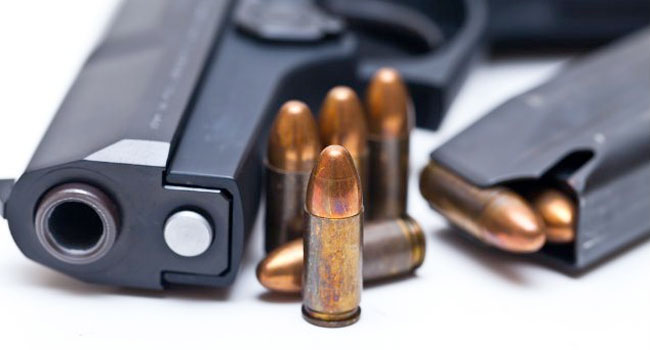
The Transportation Security Administration (TSA) intercepted 3,251 firearms at airport security checkpoints during the first half of 2023, which ended June 30. The total represents an average 18 firearms per day at TSA checkpoints of which more than 92% were loaded. This is an increase from the first half of 2022 when Transportation Security Officers (TSOs) stopped 3,053 firearms at security checkpoints of which more than 86% were loaded.

In the first five days of July, TSOs nationwide intercepted 90 additional firearms bringing the total through July 5 to 3,341. Although the rate at which passengers bring firearms to airport security checkpoints has actually declined in 2023, the number of passengers traveling has also increased, so the agency is expected to surpass last year’s record of 6,542 firearm interceptions.

Passengers who wish to travel with a firearm must ensure it is properly packed in checked baggage and declared at the airline ticket counter. Airlines may have additional requirements for traveling with firearms and ammunition, so travelers must also contact their airline for carriage policies prior to arriving at the airport. Firearms and ammunition are prohibited at TSA security checkpoints.

“Anyone traveling with a firearm must follow the rules and pack it properly in checked baggage in addition to declaring it to the airline,” said TSA Administrator David Pekoske. “Passengers who bring a firearm to the security checkpoint present a security risk, and there are consequences for doing so. I applaud the work of our Transportation Security Officers for their dedication to our transportation security mission, ensuring these firearms do not get into the secure area of the airport and on board aircraft.”

When passengers bring firearms to the TSA security checkpoint, TSOs contact local law enforcement to check the contents of the carry-on bag, safely unload and take possession of the firearm and process the passenger in accordance with local laws on firearms. TSA will impose a civil penalty up to $14,950, eliminate TSA PreCheck® eligibility for five years and may require enhanced screening. Some passengers will be arrested or cited, depending on local laws on firearms.

The number of firearm catches during the first half of 2023 represents a 6% increase over the same period in 2022. However, over the same period, passenger volume at checkpoints increased 15%, showing the rate at which passengers brought firearms to airport checkpoints declined in 2023. As of June 30, 2023, TSA stopped about eight firearms per million passengers. During the first half of calendar year 2022, TSA prevented 8.5 firearms per million passengers.

During the second quarter of 2023, TSOs stopped 1,744 firearms at airport checkpoints of which more than 92% of those firearms were loaded. During the second quarter of 2022, TSOs prevented 1,686 firearms from entering the secure area of airports of which about 86% of those firearms were loaded.

Firearm possession laws vary by state and local government, but firearms are prohibited at TSA security checkpoints, in the secure area of an airport, and on board aircraft, even if a passenger has a concealed carry permit.

Featured

  • Security Today Announces 2025 CyberSecured Award Winners

    Security Today is pleased to announce the 2025 CyberSecured Awards winners. Sixteen companies are being recognized this year for their network products and other cybersecurity initiatives that secure our world today. Read Now

  • Empowering and Securing a Mobile Workforce

    What happens when technology lets you work anywhere – but exposes you to security threats everywhere? This is the reality of modern work. No longer tethered to desks, work happens everywhere – in the office, from home, on the road, and in countless locations in between. Read Now

  • TSA Introduces New $45 Fee Option for Travelers Without REAL ID Starting February 1

    The Transportation Security Administration (TSA) announced today that it will refer all passengers who do not present an acceptable form of ID and still want to fly an option to pay a $45 fee to use a modernized alternative identity verification system, TSA Confirm.ID, to establish identity at security checkpoints beginning on February 1, 2026. Read Now

  • The Evolution of IP Camera Intelligence

    As the 30th anniversary of the IP camera approaches in 2026, it is worth reflecting on how far we have come. The first network camera, launched in 1996, delivered one frame every 17 seconds—not impressive by today’s standards, but groundbreaking at the time. It did something that no analog system could: transmit video over a standard IP network. Read Now

  • From Surveillance to Intelligence

    Years ago, it would have been significantly more expensive to run an analytic like that — requiring a custom-built solution with burdensome infrastructure demands — but modern edge devices have made it accessible to everyone. It also saves time, which is a critical factor if a missing child is involved. Video compression technology has played a critical role as well. Over the years, significant advancements have been made in video coding standards — including H.263, MPEG formats, and H.264—alongside compression optimization technologies developed by IP video manufacturers to improve efficiency without sacrificing quality. The open-source AV1 codec developed by the Alliance for Open Media—a consortium including Google, Netflix, Microsoft, Amazon and others — is already the preferred decoder for cloud-based applications, and is quickly becoming the standard for video compression of all types. Read Now

New Products

  • A8V MIND

    A8V MIND

    Hexagon’s Geosystems presents a portable version of its Accur8vision detection system. A rugged all-in-one solution, the A8V MIND (Mobile Intrusion Detection) is designed to provide flexible protection of critical outdoor infrastructure and objects. Hexagon’s Accur8vision is a volumetric detection system that employs LiDAR technology to safeguard entire areas. Whenever it detects movement in a specified zone, it automatically differentiates a threat from a nonthreat, and immediately notifies security staff if necessary. Person detection is carried out within a radius of 80 meters from this device. Connected remotely via a portable computer device, it enables remote surveillance and does not depend on security staff patrolling the area.

  • Mobile Safe Shield

    Mobile Safe Shield

    SafeWood Designs, Inc., a manufacturer of patented bullet resistant products, is excited to announce the launch of the Mobile Safe Shield. The Mobile Safe Shield is a moveable bullet resistant shield that provides protection in the event of an assailant and supplies cover in the event of an active shooter. With a heavy-duty steel frame, quality castor wheels, and bullet resistant core, the Mobile Safe Shield is a perfect addition to any guard station, security desks, courthouses, police stations, schools, office spaces and more. The Mobile Safe Shield is incredibly customizable. Bullet resistant materials are available in UL 752 Levels 1 through 8 and include glass, white board, tack board, veneer, and plastic laminate. Flexibility in bullet resistant materials allows for the Mobile Safe Shield to blend more with current interior décor for a seamless design aesthetic. Optional custom paint colors are also available for the steel frame.

  • ResponderLink

    ResponderLink

    Shooter Detection Systems (SDS), an Alarm.com company and a global leader in gunshot detection solutions, has introduced ResponderLink, a groundbreaking new 911 notification service for gunshot events. ResponderLink completes the circle from detection to 911 notification to first responder awareness, giving law enforcement enhanced situational intelligence they urgently need to save lives. Integrating SDS’s proven gunshot detection system with Noonlight’s SendPolice platform, ResponderLink is the first solution to automatically deliver real-time gunshot detection data to 911 call centers and first responders. When shots are detected, the 911 dispatching center, also known as the Public Safety Answering Point or PSAP, is contacted based on the gunfire location, enabling faster initiation of life-saving emergency protocols.