Drawing a Fine Line
People are fascinated by innovation
- By Rob Phillips
- Mar 04, 2014
 Technological advancement drives our
society, our feats and failures, our
hopes and possibilities. Samsung’s 2013
ad for the Galaxy Gear, best described
as a phone and computer inside a wristwatch, hit
all the nostalgic high points by taking us through
the old TV programs and movies that featured this
“futuristic” device. Their unique selling proposition:
“We’ve made fantasy a reality.” Their tagline:
“The next big thing is here.”
Technological advancement drives our
society, our feats and failures, our
hopes and possibilities. Samsung’s 2013
ad for the Galaxy Gear, best described
as a phone and computer inside a wristwatch, hit
all the nostalgic high points by taking us through
the old TV programs and movies that featured this
“futuristic” device. Their unique selling proposition:
“We’ve made fantasy a reality.” Their tagline:
“The next big thing is here.”
“The Jetsons” and “Star Trek” are classics for
good reason. We’re fascinated by what can happen
in the future. Technology has touched all industries,
and home security, in particular, has transformed
itself over the last three years. Sales representatives
are pitching a new kind of system that
taps into our gadget-driven urges.
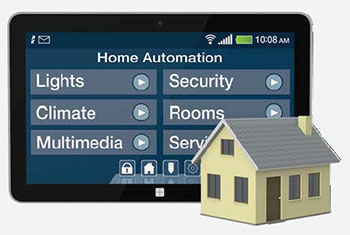
“Home automation” just sounds cooler to a
consumer, doesn’t it? As a consumer, I say, “Yes, it
does.” It references a more comprehensive product
with the ability to manage a security system from
anywhere on a computer, smartphone or tablet, delivering
a new comfort level to homeowners. Traveling
or working parents can know if their child
returned home at a certain time because they can
watch live or recorded video of their home from
virtually anywhere. And, they can control home
temperature, lights or appliances during seasonal
months, when electricity bills can swell to hundreds
of dollars.
Dealers just need to remember one thing: Security—
the promise to help protect customers’ lives and
property—must remain at the core of their business.
Growth and a Cherry on Top
A 2013 study by ASIS International (ASIS) and
the Institute of Finance and Management (IOFM)
showed a booming market for security. It is a $350
billion market, according to “The United States Security
Industry: Size and Scope, Insights, Trends,
and Data” report, with some $282 billion consisting
of private sector spending.
What’s more, 17 security companies made “The
2013 Inc. 5000 List” that recognizes America’s
fastest-growing businesses based on self-reported,
growth data.
Technology has redefined the meaning of home
and commercial security. It’s now just as much
about having a “smart” home as it is about having a
“secure” home. Monitored alarm systems are great,
but remote control usage of the system and common
household appliances means unprecedented
RMR ranges for dealers.
Some customers must be convinced that they
need an alarm system in their neighborhood, because
everyone wants to save money. Dealers can
stress that a $50 to $60 monthly monitoring rate
is a practical exchange for lower, “greener” energy
bills, along with 24/7 monitored protection of
property. And, of course, there’s no price on knowing
that loved ones are safe.
Sales representatives are reaching a new type of
customer who may enjoy the idea of daily interaction
with their system on a Web-enabled device,
just as they would with Facebook or Twitter.
For many homeowners, however, automation is
merely a helpful add-on in their efforts to stay safe.
Adam, a home security customer, for example, installed
cameras in and around his house after the
birth of his first child. He enjoys having the freedom
to check in on his baby’s crib from his smartphone
while he’s at work.
“It’s just an added benefit, another safety measure,”
he said. “And, it’s a pretty cool feature, too.
Like a cherry on top.”
A Stickier Customer
Let’s face it, home security isn’t nearly as exciting
as home automation. Most people won’t buy the
Samsung Galaxy Gear because it’s a watch that tells
time. They’ll buy it because it’s an all-inclusive,
electronic gizmo that lets them call friends and
family, check their email and listen to music.
Despite security’s large growth potential, some
prospective customers already feel safe and don’t
see the need for yet another monthly bill. Statistics say only 15 percent of U.S. homes
have an alarm system and certainly
the entire 15 percent isn’t using
theirs on a daily basis.
A home automation package
can, in theory, lead to a longer-term
customer. Interactive services give
people daily interaction with their
system. For example, after checking
a text message, they can arm their
system or lock their front door with
a simple tap on their phone. It reinforces
the value of that extra bill.
That’s great, but security companies—
new and traditional—can’t
lose sight of their overall mission.
Superior Monitoring,
Customer Service
As the security market grows, so
does the competition. Telecom giants
AT&T and Time Warner now
offer home automation solutions
with their cable, phone and Internet
packages. It’s an evolving digital gold
rush for all players involved with new
products and new upsell opportunities.
But, the keys to sustained industry
success haven’t changed: elite
alarm monitoring, customer service
and customer education.
Bells and whistles aside, most
customers buy an alarm system
because they want to feel safe, and
they want their family to feel safe.
A burglar attacks a U.S. home every
15 seconds, according to Alarm.org.
A mother or father doesn’t want to
feel as if home security is merely
bundled with TV service.
In addition to home automation
packages, traditional companies,
like Monitronics and their authorized
dealers, can lean on decades of
monitoring experience. Their Five
Diamond Certified Alarm Response
Center has highly-trained and certified
operators standing ready to assist
customers during burglary, fire,
carbon monoxide and medical emergencies.
Monitronics has partnered
with agencies to reduce false alarms
and dispatch emergency information
electronically in select cities.
It’s critical that a customer understands
home automation at the
time of sale. Walking customers
through a triggered remote event
that fits their lifestyle will help prevent
future dissatisfaction with their
system and provide an extra service
touch that often nets referrals.
A company’s technician should not
complete their install until the customer
has proven they understand
the fundamentals of their new interactive
services plan—at least the
most common things they’ll do with
their security system.
There’s real value and peace of
mind in being able to check on your
house at any time. There’s also comfort
in having a 24/7 certified operator
there.
It’s every company’s goal (or
should be) to validate current and
potential customers’ trust as a security
provider. This business is, after
all, about protecting people.
This article originally appeared in the March 2014 issue of Security Today.