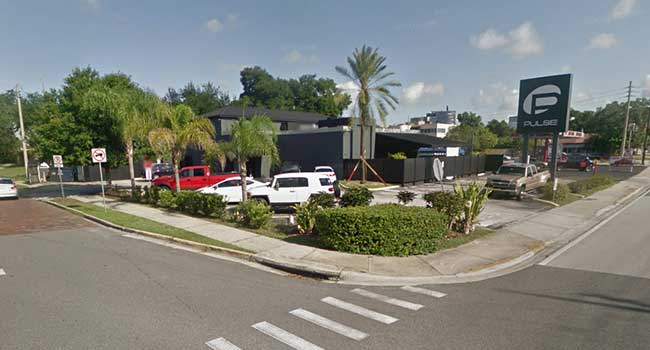
Orlando Shooting Becomes Worst in U.S. History

Orlando Shooting Becomes Worst in U.S. History

Key Developments

  • The gunman has been identified as Omar Mir Seddique Mateen of Fort Pierce, Florida. He was born a U.S. citizen in New York to parents from Afghanistan.
  • The shooter pledged allegiance to ISIS in a phone call to 911.
  • 49 people, including Mateen, are deceased as a result of the shooting. As many as 50 injured are at local hospitals around the Orlando area. Twenty-seven people remain hospitalized as of June 14. Six remain "critically ill" and 5 are in "guarded" condition.
  • The gunman was recognized as someone who had been to the nightclub before. Officials believe he had been scouting out the location, as he was "calm and well-organized."
  • Officials believe the suspect had been scouting out Disney World as a possible location to attack, as well.
  • On June 15, the FBI called the attack both a hate crime and terrorism.
  • Investigators are focusing on the suspect's phone for clues as to the motive of the shooting.
  • The gunman's ex-wife is being investigated as it has been previously reported that she may have known about the attack before it happened.

In the early morning hours of Sunday, June 12, gunshots rang out inside a popular nightclub in Orlando, Florida. When the sun would rise, we would see the details of what is now being called the worst mass shooting in U.S. history.

An American-man, later identified as Omar Mir Seddique Mateen, entered the night club with an assault rifle and a pistol at about 2 a.m. and started shooting killed 49 people and wounding at least 53 others, Orlando officials said.

After the initial gunshots were fired, Mateen was confronted by an off duty officer and was taken outside the club where he fired more rounds to get away from the officer and ran back inside the club.

People were trapped inside the club during a three hour standoff as Orlando Police and the FBI worked to negotiate with the shooter. Finally, police crashed into the building with an armored vehicle and stun grenades in an effort to distract the shooter and rescue people from the building.

Nine officers entered the club following the distractions and the shootout that ensued resulted in the death of Mateen. Only one officer was hurt, with injuries to the face when his Kevlar helmet met a bullet from the gunman.

Following the mass shooting, Florida Gov. Rick Scott declared a state of emergency in Orange County.

It has been determined that Mateen had been interviewed by the FBI in 2013 and 2014 in terror-related cases, but both cases were closed. Mateen was able to purchase both the firearms he used in the shooting legally.

Police are investigating to see if Mateen worked under the influence of ISIS or if the attack was ISIS inspired. During the attack, Mateen called 911 to pledge his allegiance to ISIS, mentioning the Boston Bombers on the call.

About the Author

Sydny Shepard is the Executive Editor of Campus Security & Life Safety.

Featured

  • Security Today Announces 2025 CyberSecured Award Winners

    Security Today is pleased to announce the 2025 CyberSecured Awards winners. Sixteen companies are being recognized this year for their network products and other cybersecurity initiatives that secure our world today. Read Now

  • Empowering and Securing a Mobile Workforce

    What happens when technology lets you work anywhere – but exposes you to security threats everywhere? This is the reality of modern work. No longer tethered to desks, work happens everywhere – in the office, from home, on the road, and in countless locations in between. Read Now

  • TSA Introduces New $45 Fee Option for Travelers Without REAL ID Starting February 1

    The Transportation Security Administration (TSA) announced today that it will refer all passengers who do not present an acceptable form of ID and still want to fly an option to pay a $45 fee to use a modernized alternative identity verification system, TSA Confirm.ID, to establish identity at security checkpoints beginning on February 1, 2026. Read Now

  • The Evolution of IP Camera Intelligence

    As the 30th anniversary of the IP camera approaches in 2026, it is worth reflecting on how far we have come. The first network camera, launched in 1996, delivered one frame every 17 seconds—not impressive by today’s standards, but groundbreaking at the time. It did something that no analog system could: transmit video over a standard IP network. Read Now

  • From Surveillance to Intelligence

    Years ago, it would have been significantly more expensive to run an analytic like that — requiring a custom-built solution with burdensome infrastructure demands — but modern edge devices have made it accessible to everyone. It also saves time, which is a critical factor if a missing child is involved. Video compression technology has played a critical role as well. Over the years, significant advancements have been made in video coding standards — including H.263, MPEG formats, and H.264—alongside compression optimization technologies developed by IP video manufacturers to improve efficiency without sacrificing quality. The open-source AV1 codec developed by the Alliance for Open Media—a consortium including Google, Netflix, Microsoft, Amazon and others — is already the preferred decoder for cloud-based applications, and is quickly becoming the standard for video compression of all types. Read Now

New Products

  • Luma x20

    Luma x20

    Snap One has announced its popular Luma x20 family of surveillance products now offers even greater security and privacy for home and business owners across the globe by giving them full control over integrators’ system access to view live and recorded video. According to Snap One Product Manager Derek Webb, the new “customer handoff” feature provides enhanced user control after initial installation, allowing the owners to have total privacy while also making it easy to reinstate integrator access when maintenance or assistance is required. This new feature is now available to all Luma x20 users globally. “The Luma x20 family of surveillance solutions provides excellent image and audio capture, and with the new customer handoff feature, it now offers absolute privacy for camera feeds and recordings,” Webb said. “With notifications and integrator access controlled through the powerful OvrC remote system management platform, it’s easy for integrators to give their clients full control of their footage and then to get temporary access from the client for any troubleshooting needs.”

  • QCS7230 System-on-Chip (SoC)

    QCS7230 System-on-Chip (SoC)

    The latest Qualcomm® Vision Intelligence Platform offers next-generation smart camera IoT solutions to improve safety and security across enterprises, cities and spaces. The Vision Intelligence Platform was expanded in March 2022 with the introduction of the QCS7230 System-on-Chip (SoC), which delivers superior artificial intelligence (AI) inferencing at the edge.

  • Camden CV-7600 High Security Card Readers

    Camden CV-7600 High Security Card Readers

    Camden Door Controls has relaunched its CV-7600 card readers in response to growing market demand for a more secure alternative to standard proximity credentials that can be easily cloned. CV-7600 readers support MIFARE DESFire EV1 & EV2 encryption technology credentials, making them virtually clone-proof and highly secure.