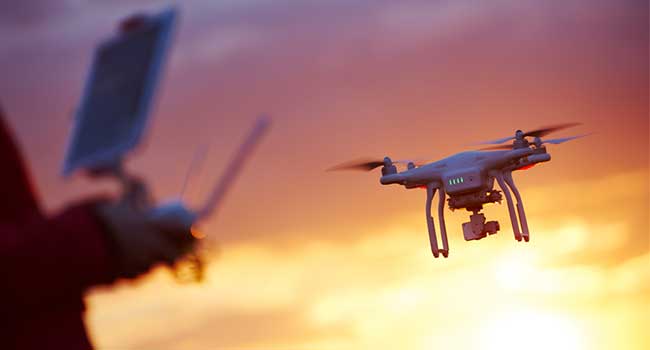
Drone Proposal Suggests Identification Transmit
DJI, a drone manufacturer, is proposing that all the unmanned aircrafts transmit identification information to help identify drones to security and law enforcement.
DJI said in a paper, released on Monday, that radio transmissions of an identification code or the operator’s Federal Aviation Administration registration number could help pin-point security concerns while also protecting the operator’s privacy. The paper also suggests that more steps could be taken to create an identification system, and that operators could include what information they’d like to include.
The proposed idea states that anyone with a radio transmitter could obtain the transmissions, but only law enforcement or aviation regulators would be able to use the registration number to identify the owner of the aircraft.
FAA officials have proposed drones flying over events or largely populated areas in the past, but have placed those regulations on the back burner while there is no technology to help discover drones that may pose security risks.
The issue will headline the discussion at a three-day drone symposium sponsored by the FAA and the Association for Unmanned Aerial Vehicles International that is going on this week.