Rethinking Perimeter Security: Building Smarter, Layered Defenses
Perimeter security is evolving from physical barriers to layered systems that integrate access control, surveillance and detection for smarter protection.
- By Brach Bengtzen
- Feb 18, 2026
Perimeter security is a key component of any physical security system. Protecting the outer layer of a facility is the first step to keeping the people and property within that space safe — so proper perimeter protection is a necessity.
While the intended purpose of perimeter security has still been steadfast over the years, the typical make-up of a perimeter security system has changed significantly with the emergence of new, exciting technologies.
Importantly, many facilities need to remain welcoming and efficient while still supporting a robust approach to their security. Schools, healthcare campuses and public venues are examples of places where perimeter security needs to simultaneously prevent security breaches while ensuring that visitors, staff, customers, students and more are embraced with open arms.
Luckily, integrators today are well equipped to make these systems a reality.
What Is Perimeter Security Today?
Perimeter security refers to a combination of physical and electronic security measures used to protect the outer boundary of a site. In the past, this simply meant putting fences, walls, gates and security staff in place, to prevent unauthorized entry.
In today’s world, perimeter security is much more. Modern perimeter protection emphasizes situational awareness and early detection just as much as prevention. As a result, perimeter security today functions as a key source of information in addition to a vital line of protection.
The Key Components of Modern Perimeter Security
The basis of a modern perimeter is a strong collection of physical barriers. Fences, gates and walls are basic physical barriers that prevent the easy entrance of unauthorized visitors to a property.
Once these physical barriers have been set up, a variety of electronic systems can then be implemented. Access control is a powerful tool to incorporate into a site’s perimeter protection. Through an intuitive access control system, security administrators can watch movement in and out of a site, and limit access through specified entry and exit points of the perimeter via access permissions.
With access control, authorized persons can enter the space upon the presentation of a valid credential; meanwhile, unauthorized persons will be denied entry.
Additionally, many access control systems today can detect events like doors being propped or forced open — simple actions that may introduce serious vulnerabilities along any perimeter. Detection and monitoring technologies add further intelligence to the perimeter.
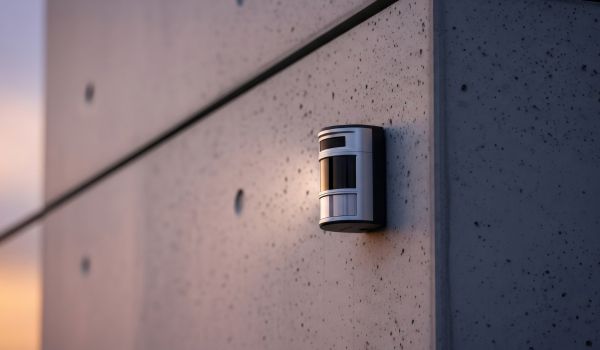
Video surveillance tools offer real-time visibility and the ability to match security incidents with informative video footage. Additionally, alarm devices, like motion detectors or glass break sensors, can alert security staff to any immediate threats to the perimeter. When used together, tools like video surveillance, alarms, access control and physical barriers can provide a well-rounded, reliable barrier to security threats along the perimeter of a site.
Challenges Facing Perimeter Security
By their very nature, perimeter security systems are often exposed to the elements—wind, rain, snow, dust, high and low temperatures. Because of this, it is important for integrators to use hardware that can withstand even the harshest environments.
For example, Ingress Protection (IP) ratings are a standardized code that specify dust and water resistance for device enclosures, such as an access control reader. A device with an IP rating of 65 or higher is ideal for outdoor use, making it a perfect piece of hardware for a perimeter installation.
Installations that do not use the proper weather-proofed tools may face significant, costly issues down the line. In addition to environmental factors, a continuing challenge for perimeter security (and physical security in general) is unpredictable human behavior. Even with systems that are designed to automatically detect security threats, it is the responsibility of security staff to properly respond to those threats.
Being able to quickly and effectively respond to anticipated or unfolding threats is a necessity, and it requires effective training and response procedures to ensure that individuals take all the correct steps. Furthermore, unpredictable human errors may introduce vulnerabilities — such as doors being accidentally propped open or access credentials being misplaced.
Proper training must be done to ensure that security protocols are followed—since technology alone cannot make up for irresponsible or inconsistent security practices.
The Future of Perimeter Security
Ultimately, perimeter security is not about building stronger or taller walls — it is about implementing smarter boundaries. And as security concerns continue to evolve (and the threat of intrusion stays ever-present), perimeter security must evolve in turn. As such, the future of perimeter security lies in intuitive, layered systems that rely on the latest and greatest technologies to balance security with functionality.