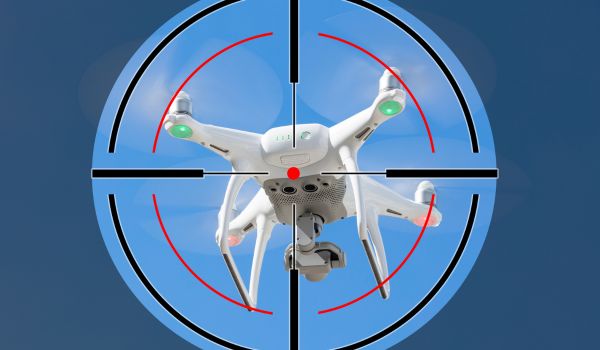
Teledyne FLIR Launches Advanced Drone Tracking Software
New Prism C-UAS technology utilizes artificial intelligence and thermal image processing to identify unauthorized aircraft at greater distances.
- By Jesse Jacobs
- Apr 29, 2026
A new software stack designed to identify and monitor unauthorized unmanned aircraft systems aims to provide security operators with earlier warnings and improved detection ranges for small drone threats.
Teledyne FLIR OEM announced the release of Prism C-UAS, a platform that integrates patented thermal infrared image signal processing with AI-driven perception. The software addresses the increasing frequency of drone incursions, which federal authorities suggest have become a primary security concern for airports, borders and critical infrastructure.
According to data from the Federal Aviation Administration, more than 100 drone incursions occur monthly near domestic airports. Security experts note that the proliferation of low-cost, autonomous drones has shifted the landscape from a regulatory hurdle to a significant tactical threat.
The Prism software employs denoising and contrast enhancement algorithms to improve the signal-to-noise ratio of incoming data. This allows the system to detect moving targets with fewer than four pixels on a sensor, effectively extending the perimeter of a defensive architecture.
"Software has become a defining performance differentiator in today’s C-UAS environment," said Jared Faraudo, vice president of product management at Teledyne FLIR OEM. He noted that the system is designed to transform raw thermal data into actionable intelligence for multi-layered defense.
Once a potential threat is identified, an AI-based detector and multi-object tracker work to maintain a persistent lock on the aircraft. The developers designed the system to minimize false positives while specifically targeting small, fast-moving objects that often evade conventional radar or visual monitoring.
The platform is built to integrate with existing infrared camera families and various commercial visible-light cameras. This compatibility allows for multispectral configurations across global security deployments.