The Future of Venue Security Isn't More of Everything
Adding more surveillance hardware and software only increases cognitive overload for security teams; the path forward lies in utilizing AI to aggregate existing, siloed inputs into a single actionable environment.
- By Norm Litterini
- Jul 15, 2026
You probably share many of the same frustrations as security teams across the country: Despite having access to more information than ever before, complexity and uncertainty only seem to increase.
Every event generates a constant stream of inputs from surveillance cameras, access control systems, voice communications, social media and intelligence reports. More technology creates more data.
At the same time, your teams are coordinating with dozens of stakeholders, each focused on their own piece of the puzzle. Real-time decisions often come down to trusting your gut when you’re awash in streams of data.
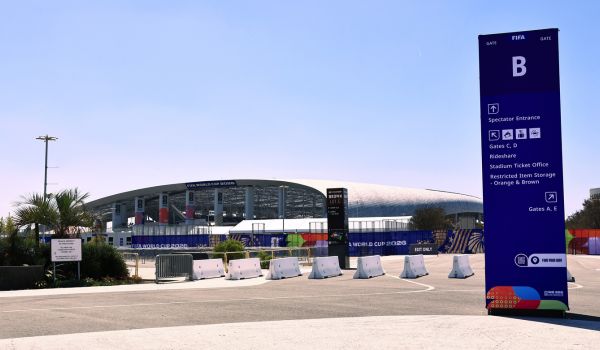
When we asked senior security leaders supporting FIFA operations what technology improvement would have the greatest impact, the answers were telling — not more applications, sensors or cameras, but faster laptops, threat databases and fewer disparate communications channels.
The takeaway? The challenge isn’t collecting more information — it's making sense of the information you already have.
For colleges and universities, the challenge is particularly acute. Campuses function like miniature cities, and large-scale events require dynamic coordination across stakeholders, processes and sources. The issue isn't gathering information; it’s figuring out what’s meaningful and what to do about it.
The future of campus and venue security depends less on deploying additional technologies and the data they produce, and more on connecting existing processes, and stakeholders with the right information so teams can make faster, better-informed decisions.
More Technology, More Data, And Yet More Uncertainty
Security teams have more tools at their disposal than ever before. Your operations centers may monitor a dozen or more technology platforms for daily operations and more for special events. Investments in campus security technologies are on the rise as institutions seek to improve safety, address staffing challenges and respond to sophisticated threats.
More technology does not automatically create better situational awareness. Every new system can introduce another dashboard, workflow and more operational data. The result is not a lack of visibility, but visibility scattered across too many places.
Consider a thunderstorm during a football game or commencement ceremony. Your stakeholders have different information: Emergency management is monitoring the weather; campus police are focused on crowd movement; venue operations are evaluating covered spaces; and transportation is looking at traffic flow. The challenge is ensuring everyone is making decisions from the same understanding of the situation.
Collaboration Is The Real Security Challenge
Every event requires coordination with multiple stakeholders. Your biggest challenge may not be a missing camera or sensor. It may be getting the relevant information to the decision maker fast enough to create a shared understanding of an evolving situation.
The challenge is ensuring that security teams have a shared focus across many data streams. Effective collaboration depends on bringing information together in a way that helps people quickly understand what is happening and what action is needed.
Artificial Intelligence (AI) can process data streams from multi-modal technologies and create meaning and focus, even for diverse groups of stakeholders.
Where AI Fits (And Where It Doesn't)
AI has moved from pilot projects to operational reality across higher education facilities. Industry surveys show growing optimism about AI's ability to improve threat detection, analysis, and responses, while also highlighting concerns around governance, privacy, compliance and cost.
The appeal is straightforward: AI can help stretched staff process more information, identify risks faster and focus attention where it matters most. AI can also reduce administrative burden and help operators focus on understanding a situation rather than searching for information.
AI on its own is not a cure for operational complexity. It may accelerate analysis, but it cannot overcome disconnected systems, fragmented workflows or poor information sharing. If critical information remains scattered across departments and technology platforms, AI will simply process it faster.
That is why many organizations are shifting their focus away from standalone tools and toward environments where existing technologies, information sources and stakeholders can be fused together. The goal is not to replace cameras, access control systems or communications platforms. It is to connect them in a way that creates shared understanding of the situation and supports faster, more informed decisions.
What does that look like in practice? Increasingly, organizations are using platforms that bring information from multiple systems into a single operational environment, allowing AI to identify patterns and surface relevant context across sources.
Rather than forcing decision makers to fuse inputs in their heads, these platforms aggregate video, access control, intelligence, and other data sources, using AI to help identify patterns, surface relevant information and suggest the best response.
In the end, the greatest opportunity may be to use AI to look at all your data and tools at once.
The Most Important Upgrade Isn't Another Data Stream From An Application
The lesson from one of the world's largest sporting events is surprisingly simple: even the most sophisticated security operations are still looking for ways to reduce uncertainty caused by complexity.
That lesson applies directly to campus venues. As threats become more sophisticated and stakeholders bring more data and toolsets, success will depend on making sense of the information to take action.
The organizations best prepared for future threats will not necessarily be the ones with the most technology or the most data. They will be the ones that can reduce uncertainty, create shared understanding, and turn information into action faster than everyone else.
In an environment where information is abundant and attention is limited, that may be the most important advantage of all.