Modern AI Campuses Need Layered Perimeter Security Systems
As data center footprints expand past 50 acres, security leaders pair radar, thermal and visible cameras to prevent costly downtime.
- By Jesse Jacobs
- Sep 08, 2026
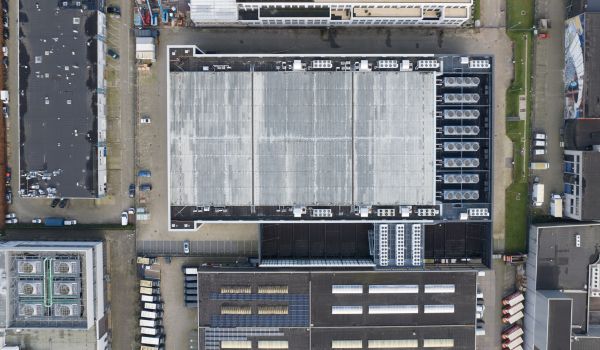
Rapid expansion across artificial intelligence infrastructure has fundamentally altered how physical security teams protect hyper-scale data centers, according to Futurum Group. As cloud providers expand facilities past 50-acre footprints, security managers face sprawling outer perimeters that often border poorly lit service roads, power substations and critical utility yards.
Protecting these massive boundaries has highlighted the limits of traditional video monitoring. Simply installing dozens of additional standard security cameras often floods control rooms with unnecessary alerts without providing security personnel a clear picture of potential threats.
Major outages present severe financial risks to operators. Industry research from Uptime Institute shows that over half of major data center disruptions cost more than $100,000, with one in five exceeding $1 million. When movement near a boundary fence line threatens power or cooling systems, early and accurate detection becomes crucial to maintaining facility uptime.
To solve coverage challenges across expansive properties, site designers are turning to a layered technology strategy:
- Radar for initial tracking: Long-range ground radars continuously scan wide boundaries in all weather conditions. Radar units immediately identify a target's precise location, speed and direction of travel, allowing security teams to distinguish someone walking parallel to a fence from an intruder moving directly toward critical infrastructure.
- Thermal imaging for night confirmation: When low light, fog or extreme weather degrades standard video images, thermal sensors keep targets visible via heat signatures. Multispectral units combine thermal sensors with optical lenses, allowing operators to verify targets without adding artificial site lighting.
- Visible PTZ cameras for identification: Automated pan-tilt-zoom cameras automatically slew to radar tracking coordinates, giving human operators the high-definition visual detail needed to identify individuals or vehicles.
Filtering out routine distractions remains another primary challenge for security operations centers. Wildlife, blowing debris and nearby road traffic generate frequent alarms that drain operator focus. By running classification analytics at the camera level, modern edge systems identify human and vehicle signatures before sending alerts to control rooms.
Processing data directly at the edge also reduces bandwidth demands and central server loads across growing facility networks.
Integrating radar and thermal technologies into existing video management and command-and-control software enables security personnel to maintain sight of an intruder from the outer perimeter to interior zones. Rather than replacing existing access control systems, this unified approach gives operators actionable intelligence before an intrusion impacts critical power systems.
Regional security priorities also shape how these systems are deployed. European sites leverage unlit perimeter systems to support strict energy efficiency rules, while facilities in North America emphasize grid resilience and the protection of surrounding electrical infrastructure.