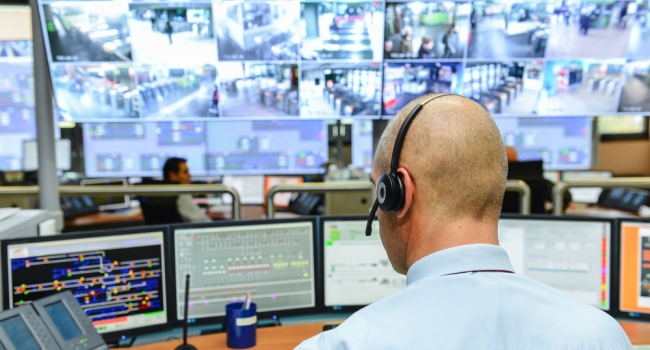
Online Exclusive: Real Talk About Remote Video Monitoring
Embarking on a remote video monitoring solution, especially third party, can seem like an overwhelming mission. However, with considerable value add to be gained by augmenting your security function, it’s imperative to educate yourself to recognize if it is right for you.
- By Cale Dowell
- Feb 25, 2015
 With recent innovations and improved economies of scale, remote video monitoring is becoming a value added service of numerous security companies. As the cost of intelligent cameras becomes more and more budget friendly, companies are starting to dabble in remote video monitoring to capitalize on increased capabilities, amplified intelligence and improved situational awareness.
But what does remote video monitoring actually accomplish, and what type of remote video technology solutions make a difference? Does simply having remote access to your own Closed Circuit Television (CCTV) system accomplish anything? The reality is both simple and complex, and might vary depending on your specific needs as an end user. But, most importantly, the days of dedicated security personnel live monitoring a localized CCTV solution are beginning to dwindle at a rapid pace. The primary cause: cost and advancements to technology.
Unsurprisingly, people are fallible. Much to the disagreement of my nephew, humans are not designed to sit and stare at a video screen all day. And yet, the average cost for a 24/7 onsite individual to monitor a local CCTV feed is often more than $100,000 annually.
As a result, security professionals and end users alike are turning to hybrid solutions leveraging remote video monitoring. Companies no longer have to spend an arm and a leg for onsite personnel to monitor onsite security cameras 24/7. We can stream that feed to a remote location, in many cases at a significant cost savings. But it begs the question: if the onsite individual isn’t any good, why would an offsite professional do any better?
Technological innovations play a role
This is where innovations in technology have come into play. They provide the stimulus needed to analyze suspicious alarms when they trigger. Paired with a robust video solution, these alarms become more valuable because a monitoring service can verify what triggered the alarm remotely. And companies began turning to event based models to make onsite or offsite security professional more effective. However, in the world of real time monitoring, false alarms are the killer. Intrusion alarms and motion detection are examples of antiquated technology. They activate off an extremely simplistic ruleset. The contacts become misaligned, the alarm triggers. Pixilation change in the camera will activate an event. There’s no intelligence to the signal and false alarms are rampant.
But technology has advanced much, much more, providing monitoring personnel the tools to amplify the focus on the valuable intelligence sought. Innovations in video analytics allow operators and end users to get more specific on how and why an event should be triggered, even classifying objects and customizing rulesets within virtual zones. Video analytics provides “smart” technology. And when leveraged with a robust remote monitoring center, video analytics can dramatically impact the level of actionable situational awareness and response. The result: significant reduction of false alarms, quicker intervention, and reduced dependency on labor.
Is remote video monitoring the right fit?
So how do you determine whether or not remote video monitoring is right for you? First, make sure your organization is leveraging innovative technology and not just outsourcing a feed. Simply pawning off your CCTV to a remote site doesn’t mean it will have an impact to your security function. Making use of a technology like video analytics is essential. Second, think about your security holistically. Many corporate end users have a dream to create their own security operations center (SOC) that would monitor all of their security systems and CCTV across a region, nation, or worldwide. However, the vast majority that start down the path of visualizing their own robust monitoring center realize that the capital cost and staffing needs essentially demands they create their own security company within their organization. This is not to say that all corporate users should avoid building their own SOC, but in many cases it isn’t necessary. For example, within our own organization we have several national clients that have successfully re-evaluated their holistic security designs to dramatically increase situational awareness and effective manpower response while reducing annual security expenditures. And since security is generally not a revenue driver, the best option for many major corporations is often to consider a third party provider.
Over the next 5-10 years, we’re going to see an incredible consolidation of security functions amongst some of the world’s largest providers. Many corporate end users are pushing for “one stop shops” that can provide the complete end-to-end physical security solution: equipment needs (intrusion, access control and CCTV), integration and service, manpower, and monitoring. This allows for a more universal approach to security design, with each function playing a key role and working together to maximize the overall value, as opposed to piecemealing the solution across multiple vendors. Pairing those functions with a robust, remote security operations center to monitor and respond to events as they occur will dramatically impact security effectiveness and cost savings.
Many points to consider
So when determining whether video monitoring is right for you, consider whether or not the vendor of choice can provide the full suite of services. And finally, no matter how great the technology might be, it becomes worthless if the people monitoring the events do not have adequate training or the proper disposition to be effective in their response and judgment.
Thus, the most important attributes to consider with respect to remote video monitoring are the following: what does the provider offer, and what do they do in house? Can they also supply manpower, access control, CCTV solutions, etc.? If so, is it through a partnership, or do they actually provide it themselves? And, most importantly, who are the people monitoring events and what kind of training do they receive? Consider asking questions like:
- Can I take a tour of your security operations center?
- What type of existing technology can you integrate with?
- How can you maximize the existing investment in security architecture that we have onsite?
- How will blending services impact my security budget? What services can you blend for us?
- Where would you recommend augmentation or reduction of existing man hours (if any)?
- What certifications do your monitoring personnel have?
- How can we customize responses to triggered events?
- What type of redundancies do you have onsite?
When picking a remote video monitoring provider, you should consider a provider that offers more than just the monitoring component. The technology they deploy, the ability to integrate with existing hardware, and their training and certification will be vital to any impact made on your security design and spend.
Embarking on a remote video monitoring solution, especially third party, can seem like an overwhelming mission. However, with considerable value add to be gained by augmenting your security function, it’s imperative to educate yourself to recognize if it is right for you. Ask vendors to help you understand the ins and outs of what they provide. Ask them to educate you on the finer points of how the technology works, and what makes their monitoring center so great. Keep abreast of new technology, and stay involved in the industry to understand what new functions are being developed to improve capabilities and cost control. As always, the best way to impact your security functions is to be proactive and stay on top of what’s simply “new” and what actually works.