Police Are Training Canines to Sniff Out Electronics

Police Are Training Canines to Sniff Out Electronics

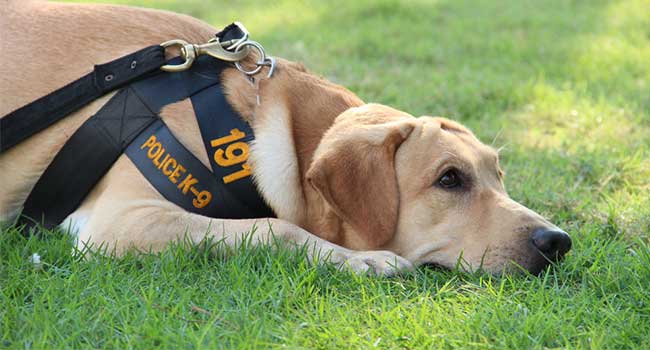
Strong nosed K-9s help police sniff out electronics.

Police departments in the United States are training canines to use their excellent sniffing skills to find electronics such as thumb drives and mobile phones. According to a report by CNET, police train dogs to associate food with locating the faint chemical smell of electronic devices.

The practice is a lesser known use for canines across the country. One of the biggest cases to involve a dog sniffing out an electronic device was in 2015 when a Labrador retriever named Bear uncovered a man's flash drive that contained child pornography, which helped make the case for the man's conviction.

The training was kept secret for years so that authorities could catch unsuspecting criminals without running into complications and so that they could be sure the dogs weren't making mistakes. A K-9 instructor for the Connecticut State Police said that out of every 50 dogs tested, only one usually has a strong enough nose to identify the weak scent of electronics.  

The instructor explained that electronics are harder to sniff out than bombs, drugs, humans or inflammable liquids. Labrador retrievers tend to have the required snout for the job. These canines are called electronic storage detection (ESD) dogs.

ESD dogs can find SIM cards that have a log of phone calls, find friends' iPhones to replace the Apple feature, or even identify surveillance cameras in odd places like a coat hook.

About the Author

Sydny Shepard is the Executive Editor of Campus Security & Life Safety.

Featured

New Products

  • Luma x20

    Luma x20

    Snap One has announced its popular Luma x20 family of surveillance products now offers even greater security and privacy for home and business owners across the globe by giving them full control over integrators’ system access to view live and recorded video. According to Snap One Product Manager Derek Webb, the new “customer handoff” feature provides enhanced user control after initial installation, allowing the owners to have total privacy while also making it easy to reinstate integrator access when maintenance or assistance is required. This new feature is now available to all Luma x20 users globally. “The Luma x20 family of surveillance solutions provides excellent image and audio capture, and with the new customer handoff feature, it now offers absolute privacy for camera feeds and recordings,” Webb said. “With notifications and integrator access controlled through the powerful OvrC remote system management platform, it’s easy for integrators to give their clients full control of their footage and then to get temporary access from the client for any troubleshooting needs.”

  • FEP GameChanger

    FEP GameChanger

    Paige Datacom Solutions Introduces Important and Innovative Cabling Products GameChanger Cable, a proven and patented solution that significantly exceeds the reach of traditional category cable will now have a FEP/FEP construction.

  • Camden CM-221 Series Switches

    Camden CM-221 Series Switches

    Camden Door Controls is pleased to announce that, in response to soaring customer demand, it has expanded its range of ValueWave™ no-touch switches to include a narrow (slimline) version with manual override. This override button is designed to provide additional assurance that the request to exit switch will open a door, even if the no-touch sensor fails to operate. This new slimline switch also features a heavy gauge stainless steel faceplate, a red/green illuminated light ring, and is IP65 rated, making it ideal for indoor or outdoor use as part of an automatic door or access control system. ValueWave™ no-touch switches are designed for easy installation and trouble-free service in high traffic applications. In addition to this narrow version, the CM-221 & CM-222 Series switches are available in a range of other models with single and double gang heavy-gauge stainless steel faceplates and include illuminated light rings.