SIA Submits Letter to FDA Addressing Thermal Imaging Systems

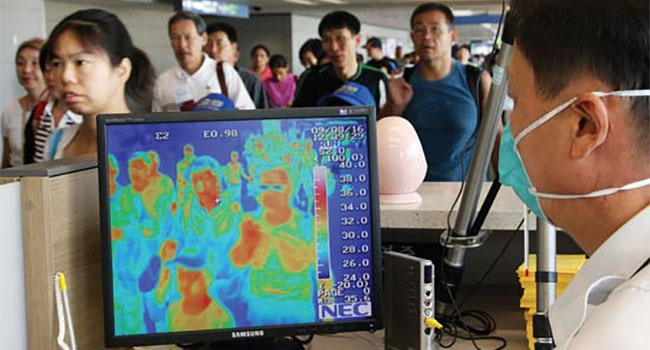
SIA recently submitted a letter to the Food and Drug Administration (FDA) Commissioner Stephen Hahn with a focus on an awareness that some companies are not following FDA guidelines related to the use of thermal imaging systems during the COVID-19 pandemic. The letter also encouraged the enforcement of FDA’s guidelines. The letter is available here.

SIA developed and issued the letter in October with input from an ad hoc group of SIA members who responded to a call for volunteers; the ad hoc group represented established producers and resellers of thermal camera systems in addition to other security industry companies which had a business or general interest in the technology.

As captured through this group and from direct feedback from members, it was clear many SIA members were concerned with thermographic camera systems for a variety of reasons. Some of these concerns that were voiced included:

Many companies have spent extensive resources on research and development testing their solutions against standards so that they can be used as a medical device. This included third-party testing and or the FDA’s 510(k) clearance process. Companies were concerned that tested products were being undercut by untested (and thus less expensive) products.

There were media reports of a number of products that did not work as marketed – particularly claims related to detecting temperatures of multiple subjects at a time, including while those multiple subjects were in motion, and claims that solutions were able to return accurate body/surface temperatures when the procerus region (the area around the bridge of the nose and corners of the eyes) was covered.

There were also reports of vendors and resellers claiming that their thermographic camera solutions are not medical devices and are therefore not subject to FDA guidelines. The group noted that there appears to be confusion as to what constitutes a medical device. The FDA’s definition of a medical device includes thermographic cameras that screen for temperature – or plainly any device that is “intended for use in the diagnosis of disease or other conditions, or in the cure, mitigation, treatment, or prevention of disease, in man or other animals” [emphasis added by SIA].

The input from members was that there are products being installed with the intention of disease management and mitigation, and that management and mitigation ultimately do not occur – because some of the products are unable to work as advertised, and this then leads to a false sense of safety.

“SIA believes it is extremely important that these thermographic solutions are marketed appropriately and implemented in line with the FDA’s guidelines,” said SIA CEO Don Erickson. “Circumventing the implementation guidelines can lead to market confusion and create a false sense of public safety related to the mitigation of the COVID-19 pandemic.”

The ad hoc group of SIA members also plans to follow up with additional guidance to the industry and the public that aligns with the FDA’s guidelines.

Featured

  • The Future of Access Control: Cloud-Based Solutions for Safer Workplaces

    Access controls have revolutionized the way we protect our people, assets and operations. Gone are the days of cumbersome keychains and the security liabilities they introduced, but it’s a mistake to think that their evolution has reached its peak. Read Now

  • A Look at AI

    Large language models (LLMs) have taken the world by storm. Within months of OpenAI launching its AI chatbot, ChatGPT, it amassed more than 100 million users, making it the fastest-growing consumer application in history. Read Now

  • First, Do No Harm: Responsibly Applying Artificial Intelligence

    It was 2022 when early LLMs (Large Language Models) brought the term “AI” into mainstream public consciousness and since then, we’ve seen security corporations and integrators attempt to develop their solutions and sales pitches around the biggest tech boom of the 21st century. However, not all “artificial intelligence” is equally suitable for security applications, and it’s essential for end users to remain vigilant in understanding how their solutions are utilizing AI. Read Now

  • Improve Incident Response With Intelligent Cloud Video Surveillance

    Video surveillance is a vital part of business security, helping institutions protect against everyday threats for increased employee, customer, and student safety. However, many outdated surveillance solutions lack the ability to offer immediate insights into critical incidents. This slows down investigations and limits how effectively teams can respond to situations, creating greater risks for the organization. Read Now

  • Security Today Announces 2025 CyberSecured Award Winners

    Security Today is pleased to announce the 2025 CyberSecured Awards winners. Sixteen companies are being recognized this year for their network products and other cybersecurity initiatives that secure our world today. Read Now

New Products

  • Automatic Systems V07

    Automatic Systems V07

    Automatic Systems, an industry-leading manufacturer of pedestrian and vehicle secure entrance control access systems, is pleased to announce the release of its groundbreaking V07 software. The V07 software update is designed specifically to address cybersecurity concerns and will ensure the integrity and confidentiality of Automatic Systems applications. With the new V07 software, updates will be delivered by means of an encrypted file.

  • AC Nio

    AC Nio

    Aiphone, a leading international manufacturer of intercom, access control, and emergency communication products, has introduced the AC Nio, its access control management software, an important addition to its new line of access control solutions.

  • Camden CV-7600 High Security Card Readers

    Camden CV-7600 High Security Card Readers

    Camden Door Controls has relaunched its CV-7600 card readers in response to growing market demand for a more secure alternative to standard proximity credentials that can be easily cloned. CV-7600 readers support MIFARE DESFire EV1 & EV2 encryption technology credentials, making them virtually clone-proof and highly secure.