Additional Security Needed on St. Patrick’s Day
- By Sydny Shepard
- Mar 17, 2016
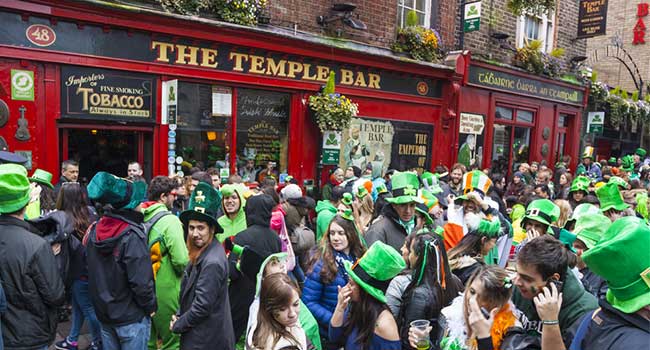
Locals and tourists may be disappointed to find that they may not be able to access Temple Bar, a popular cultural spot that draws many foreign eyes in Dublin, Ireland, on St. Patrick’s Day. Due to incidents in the previous years, Dublin City Council has designed a plan to keep the crowd under control.
A private security firm has been hired to patrol all access points of the bar, and when the area becomes too full, it will be closed off to members of the public until people leave the bar, allowing for others to come inside.
The new plan is aimed at avoiding the “saturation” of the area, which has caused problems in the previous years, according to city council officials. They are worried that ambulances getting through the crowds in case someone is hurt and they also aim to please the business owners that expressed concern about the crowds last year.
In addition to the crowd control, CCTV will also be used to monitor the area. The level of congestion on St. Patrick’s Day makes it difficult for guards to see all activity, so Dublin officials are hoping the CCTV will give them a good bird’s eye view of the situation.
Officials said that the new measures will be assessed and, if found effective, could be used in the city for other large-scale events, such as high-profile sporting events.
About the Author
Sydny Shepard is the Executive Editor of Campus Security & Life Safety.