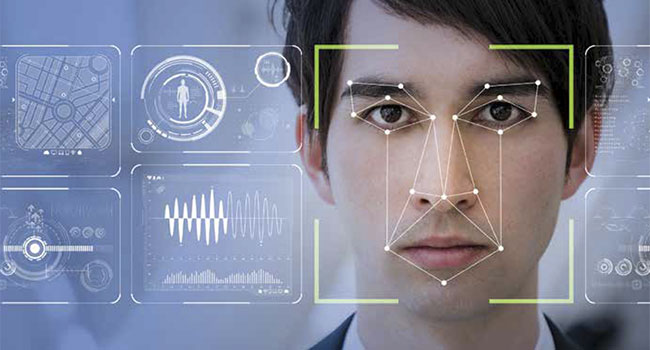
The Flaws and Dangers of Facial Recognition
The best way to prevent your facial identity from being stolen is to limit it to airport and border security use cases
- By Martin Zizi
- Mar 01, 2019
When dealing with airport and border security, we
need databases, we need to share information and
we need law enforcement. However, for day-to-day
authentication use cases like IoT, we should resort
to physiologic biometrics that rely on unique live signals. Such live
signals allow for effective authentication while at the same time protecting
privacy and democracy.
Problem: Facial Recognition
Can be Spoofed and Hacked
By 2020 it is expected that more than one billion smartphones will
feature facial recognition solutions (Counterpoint Research). In
2017, when Apple announced Face ID would be one of the newest
features incorporated into the iPhone X model, it was not long before
mobile phone companies followed suit. Users merely look at their
smartphone screen and it unlocks, creating the most contactless mobile
authentication to date. It quickly surpassed the coveted fingerprint
authentication. However, it did not come without flaws.
Quickly becoming ubiquitous, study after study exposed vulnerabilities
in facial recognition. Researchers from the University of Toronto
were able to use adversarial learning to beat a neural net using
another neural net. According to the study, by adjusting only a few
pixels at the corner of a person’s eye or mouth would be unrecognizable
to the facial recognition technology. Apple has set the highest
standard for facial recognition with Face ID, developing a second
camera called the “True Depth Camera,” which maps your face and
takes special 3D pictures that are used to authenticate you with an
infrared camera, flood illuminator and dot projector. However, not
every device can withstand extensive tests. Dutch organization Consumentenbond
found that 42 out of 110 devices tested were unlocked
by using a picture of the device’s owner. Lenovo/Motorola, LG,
Nokia, Samsung, and BlackBerry were all compromised.
Not only has facial recognition been spoofed and hacked, but
the use of databases has added vulnerabilities, including widespread
breaches. In 2018, there were many soon-to-be historic data breaches—
how can we trust our facial identity is protected in this climate?
Another important question: what’s stopping big companies from
selling this information to the highest bidder? Nothing. In fact, Amazon
offers Face Rekognition, which allows clients to build their own
facial recognition system. According to Amazon’s blog post, Washington’s
sheriff office has been using Amazon Rekognition since 2016
to “reduce the identification time of reported suspects from two to
three days down to minutes and had apprehended their first suspect
within a week by using their new system.”
Facial recognition databases can compromise democracy or be
used for big data—or far worse—they can be wrong. According to
a study done by the ACLU, Amazon’s Face Rekognition software
incorrectly matched 28 members of Congress, identifying them as
people previously arrested for a crime. Out of the 28 members of
Congress wrongly identified, 40 percent of them were people of color.
Solution: Resort to Physiologic
Biometrics for Everyday Use
Cases to Protect Facial Identity
Facial recognition has the potential to be dangerous. In practice, we
see that it can be hacked or spoofed, databases can be breached or
sold, and sometimes it’s just not effective; as such, we should restrict
facial recognition to viable use cases like airport and border security.
In the example of airport and border security, we need facial recognition
technology to use databases to make sure someone boarding a
plane is not on a no-fly list. This will uphold a level of security we
expect when traveling. Security and safety are not synonymous. As a
society, we need to define which biometric solution will be the most
successful for each given use case.
When we talk about biometric authentication for the IoT, we need
to act safely, as all connected devices are susceptible to online threats.
We cannot rely on facial recognition that is easily compromised by a
mere picture of the device’s owner or tricked by an adversarial neural
net. And, further, what is to happen if someone steals your facial
identity? You can’t simply “cancel” your face like you would a stolen
credit card.
We turn to the brain for answers. According to an article in Fast
Company, researchers from Binghamton University used a combination
of how the human brain reacts to stimuli along with the
unique brain structure to create a “brain password,” a biometric
solution relying on the brain’s “inexhaustible source of secure passwords.”
Still in its infancy, this technology is contingent on 32 electrical
sensors placed on one’s head; in the future these sensors can
be put in a headset to compute accurate readings. However, there
are other, less invasive ways to obtain this neural information. We
can capture neuro-muscular data with high sensitivity kinetic sensors
using Micro-Electro-Mechanical Systems (MEMS) present in
standard mobile devices. Extracting this information can yield a
stable and unique neural signature with the potential to act as our
key to the IoT.
At Aerendir we believe the future of biometrics should be as frictionless
as facial recognition, but as strong as “brain passwords;” with
this in mind, NeuroPrint was born. While our NeuroPrint technology
can extract a unique neural signal from any muscle in the body, we
started with the hands due to their connection to mobile devices. We
are currently focused on adding sensors and microcontrollers into the
seat of a car—the possibilities are endless.
The body can truly become our own personal password, our digital
identity. Our brain provides a solution that authenticates, while at
the same time shielding us from preying actors. Because if our neural
signal is equivalent to a one million character-long password, we can
safely encrypt all of our activities and communications if we were to
decide to do so.
Of course, there are other physiological biometrics that could be
used, including heartbeat and voice, but using the physiological signals
of the body seems to be the most promising and SAFE way to
avoid the associated dangers.
Safety is not security. The IoT needs safety. Safety is, by definition,
something we as users should control. The IoT has to be usercentric
to be the powerful tool it is bound to be; it
should never become the door of a prison, which
it could potentially become if we allow facial recognition
to enter every facet of our lives.
This article originally appeared in the March 2019 issue of Security Today.