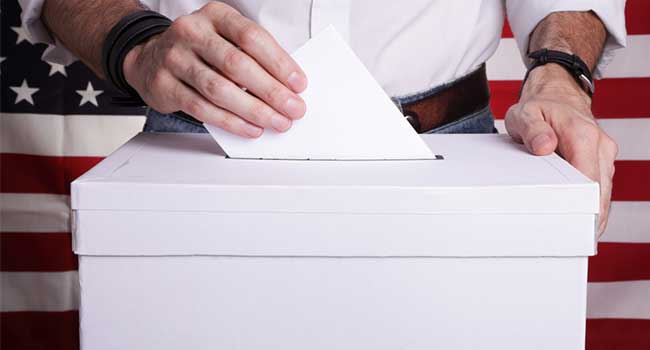
Stanford Scholars Set Forth 2020 Election Security Recommendations

A group of 14 Stanford scholars put together a report of recommendations for increased election security, addressing problems of cybersecurity, ballot security, and election transparency.

A Stanford University group released a plan named Securing American Elections: Prescriptions for Enhancing the Integrity and Independence of the 2020 U.S. Presidential Election and Beyond last week. The report was a comprehensive strategy to protect the integrity and independence of U.S. elections, and is the first white paper published by the Stanford Cyber Policy Center.

Voer-to-cover, the plan comprised 108 pages and 45 recommendations. From there, the 45 recommendations were organized into eight different chapters, which were:

• Understanding Putin’s Intentions and Actions in the 2016 U.S. Presidential Election

• Increasing the Security of the U.S. Election Infrastructure

• Regulating Online Political Advertising by Foreign Governments and Nationals

• Confronting Efforts at Election Manipulation for Foreign Media Organizations

• Combatting Organized Disinformation Campaigns from State-aligned Actors

• Enhancing Transparency about Foreign Involvement in U.S. Elections

• Establishing International Norms and Agreements to Prevent Election Interference

• Deterring Foreign Governments from Election Interference

The plan included specific recommendations on how to prevent a situation like Russia’s efforts to interfere with the 2016 election from happening again. In addition, the strategy addresses a few different election concerns such as cybersecurity, ballot security, and election transparency.

The report mirrors the 9/11 report in that it is hoping to turn its security recommendations into reality. Nate Persily, a report author and director of Stanford’s Cyber Policy Center, told The Washington Post that the group recognizes the partisan dissonance surrounding the topic of election security, but hopes the reforms are agreeable from both conservative and liberal standpoints.

“We’re not naïve,” Persily said. “We recognize that the topic of Russian intervention in the 2016 election provokes a partisan reaction and there’s a partisan allergy to some types of recommendations. But we believe Democrats and Republicans can unite around what are some common-sense reforms.”

There are 14 co-authors for the report and include both Michael McFaul, who was a U.S. ambassador to Russia during the Barack Obama administration, and Alex Stamos, who is the former Facebook chief security officer. The group set forth their recommendations at Securing Our Cyber Future: Innovative Approaches to Digital Threats on June 6.

About the Author

Kaitlyn DeHaven is the Associate Content Editor for the Infrastructure Solutions Group at 1105 Media.

Featured

  • Brivo, Eagle Eye Networks Merge

    Dean Drako, Chairman of Brivo, the leading global provider of cloud-native access control and smart space technologies, and Founder of Eagle Eye Networks, the global leader in cloud AI video surveillance, today announced the two companies will merge, creating the world’s largest AI cloud-native physical security company. The merged company will operate under the Brivo name and deliver a truly unified cloud-native security platform. Read Now

  • Security Industry Association Announces the 2026 Security Megatrends

    The Security Industry Association (SIA) has identified and forecasted the 2026 Security Megatrends, which form the basis of SIA’s signature annual Security Megatrends report defining the top 10 factors influencing both near- and long-term change in the global security industry. Read Now

  • The Future of Access Control: Cloud-Based Solutions for Safer Workplaces

    Access controls have revolutionized the way we protect our people, assets and operations. Gone are the days of cumbersome keychains and the security liabilities they introduced, but it’s a mistake to think that their evolution has reached its peak. Read Now

  • A Look at AI

    Large language models (LLMs) have taken the world by storm. Within months of OpenAI launching its AI chatbot, ChatGPT, it amassed more than 100 million users, making it the fastest-growing consumer application in history. Read Now

  • First, Do No Harm: Responsibly Applying Artificial Intelligence

    It was 2022 when early LLMs (Large Language Models) brought the term “AI” into mainstream public consciousness and since then, we’ve seen security corporations and integrators attempt to develop their solutions and sales pitches around the biggest tech boom of the 21st century. However, not all “artificial intelligence” is equally suitable for security applications, and it’s essential for end users to remain vigilant in understanding how their solutions are utilizing AI. Read Now

New Products

  • AC Nio

    AC Nio

    Aiphone, a leading international manufacturer of intercom, access control, and emergency communication products, has introduced the AC Nio, its access control management software, an important addition to its new line of access control solutions.

  • HD2055 Modular Barricade

    Delta Scientific’s electric HD2055 modular shallow foundation barricade is tested to ASTM M50/P1 with negative penetration from the vehicle upon impact. With a shallow foundation of only 24 inches, the HD2055 can be installed without worrying about buried power lines and other below grade obstructions. The modular make-up of the barrier also allows you to cover wider roadways by adding additional modules to the system. The HD2055 boasts an Emergency Fast Operation of 1.5 seconds giving the guard ample time to deploy under a high threat situation.

  • 4K Video Decoder

    3xLOGIC’s VH-DECODER-4K is perfect for use in organizations of all sizes in diverse vertical sectors such as retail, leisure and hospitality, education and commercial premises.