Ring Doorbells Had Security Bug That Exposed Wi-Fi Passwords To Hackers

Ring Doorbells Had Security Bug That Exposed Wi-Fi Passwords To Hackers

Researchers found that the Wi-Fi passwords were sent over the network in plain HTTP rather than being encrypted.

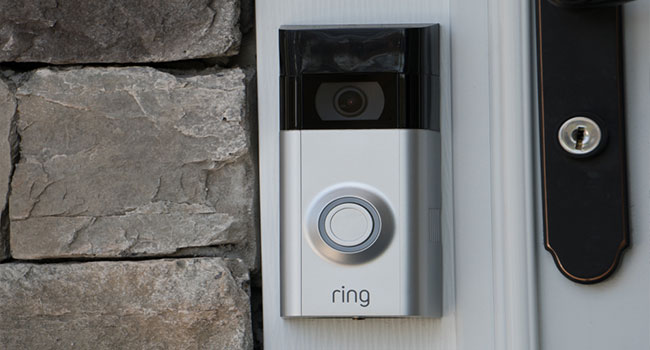
Ring doorbells contained a security vulnerability that exposed passwords to the Wi-Fi networks they were connected to, according to research published by Bitdefender.

The security technology company said that the doorbell, which is owned and sold by Amazon, was sending Wi-Fi passwords in cleartext, or unencrypted text, as the doorbell joined the network. This vulnerability would allow nearby hackers to learn the Wi-Fi password and potentially gain access to other devices connected to the network, TechCrunch reported.

“When first configuring the device, the smartphone app must send the wireless network credentials,” Bitdefender wrote. “This takes place in an unsecure manner, through an unprotected access point. Once this network is up, the app connects to it automatically, queries the device, then sends the credentials to the local network.”

The issue was ultimately fixed on all Ring doorbells in September but was not disclosed to users until this week. Researchers at Bitdefender told Amazon about the vulnerability in June, stating that all of the exchanges required to configure the device with a smartphone app are performed through “plain HTTP.”

“This means the credentials are exposed to any nearby eavesdroppers,” the report reads.

There is no evidence that the vulnerability was ever used against users, according to TechCrunch.

Hackers could also trigger the reconfiguration of the Ring doorbell by overloading it with deauthentication messages, causing the device to get dropped from the WiFi network. The mobile app would lose connectivity with the device and ask the user to reconfigure it, allowing hackers another path to intercept the network, according to the report.

Smart home technology has become increasingly popular in recent years but has not come without security issues. In a report published in July, researchers found that they were able to unlock front doors remotely with a now-discontinued smart home hub called ZipaMacro.

About the Author

Haley Samsel is an Associate Content Editor for the Infrastructure Solutions Group at 1105 Media.

Featured

  • Improve Incident Response With Intelligent Cloud Video Surveillance

    Video surveillance is a vital part of business security, helping institutions protect against everyday threats for increased employee, customer, and student safety. However, many outdated surveillance solutions lack the ability to offer immediate insights into critical incidents. This slows down investigations and limits how effectively teams can respond to situations, creating greater risks for the organization. Read Now

  • Security Today Announces 2025 CyberSecured Award Winners

    Security Today is pleased to announce the 2025 CyberSecured Awards winners. Sixteen companies are being recognized this year for their network products and other cybersecurity initiatives that secure our world today. Read Now

  • Empowering and Securing a Mobile Workforce

    What happens when technology lets you work anywhere – but exposes you to security threats everywhere? This is the reality of modern work. No longer tethered to desks, work happens everywhere – in the office, from home, on the road, and in countless locations in between. Read Now

  • TSA Introduces New $45 Fee Option for Travelers Without REAL ID Starting February 1

    The Transportation Security Administration (TSA) announced today that it will refer all passengers who do not present an acceptable form of ID and still want to fly an option to pay a $45 fee to use a modernized alternative identity verification system, TSA Confirm.ID, to establish identity at security checkpoints beginning on February 1, 2026. Read Now

  • The Evolution of IP Camera Intelligence

    As the 30th anniversary of the IP camera approaches in 2026, it is worth reflecting on how far we have come. The first network camera, launched in 1996, delivered one frame every 17 seconds—not impressive by today’s standards, but groundbreaking at the time. It did something that no analog system could: transmit video over a standard IP network. Read Now

New Products

  • Mobile Safe Shield

    Mobile Safe Shield

    SafeWood Designs, Inc., a manufacturer of patented bullet resistant products, is excited to announce the launch of the Mobile Safe Shield. The Mobile Safe Shield is a moveable bullet resistant shield that provides protection in the event of an assailant and supplies cover in the event of an active shooter. With a heavy-duty steel frame, quality castor wheels, and bullet resistant core, the Mobile Safe Shield is a perfect addition to any guard station, security desks, courthouses, police stations, schools, office spaces and more. The Mobile Safe Shield is incredibly customizable. Bullet resistant materials are available in UL 752 Levels 1 through 8 and include glass, white board, tack board, veneer, and plastic laminate. Flexibility in bullet resistant materials allows for the Mobile Safe Shield to blend more with current interior décor for a seamless design aesthetic. Optional custom paint colors are also available for the steel frame.

  • FEP GameChanger

    FEP GameChanger

    Paige Datacom Solutions Introduces Important and Innovative Cabling Products GameChanger Cable, a proven and patented solution that significantly exceeds the reach of traditional category cable will now have a FEP/FEP construction.

  • A8V MIND

    A8V MIND

    Hexagon’s Geosystems presents a portable version of its Accur8vision detection system. A rugged all-in-one solution, the A8V MIND (Mobile Intrusion Detection) is designed to provide flexible protection of critical outdoor infrastructure and objects. Hexagon’s Accur8vision is a volumetric detection system that employs LiDAR technology to safeguard entire areas. Whenever it detects movement in a specified zone, it automatically differentiates a threat from a nonthreat, and immediately notifies security staff if necessary. Person detection is carried out within a radius of 80 meters from this device. Connected remotely via a portable computer device, it enables remote surveillance and does not depend on security staff patrolling the area.