TSA Plans For Hiring and Overtime Freeze Ahead of Spring Break Travel Season

TSA Plans For Hiring and Overtime Freeze Ahead of Spring Break Travel Season

The agency faces pressure to cut costs in the face of a pay increase for federal workers, but DHS officials say they will expand hiring after the freeze ends in April.

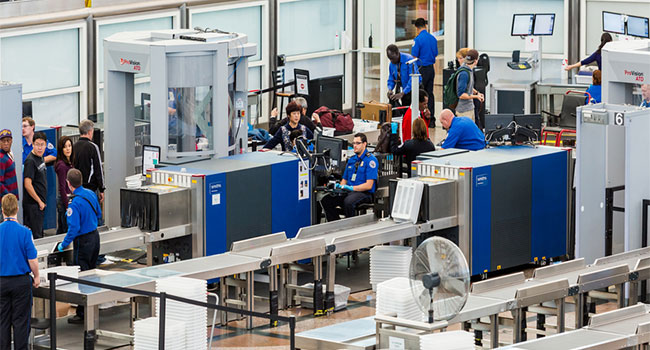
With spring break travel season in sight, the Transportation Security Administration has frozen hiring and overtime for security screeners, according to Department of Homeland Security officials.

The department is hoping to save money with the measures, which will be in place through April 26, according to reporting from KUER, Utah’s NPR station. But there are concerns among security officials that the hiring freeze could lead to longer lines and not enough staff to handle the growing number of passengers coming through domestic airports each week.

“In anticipation of another record-breaking summer travel season, the Transportation Security Administration is managing resources by prioritizing overtime to the busiest of travel periods,” the TSA told KUER in a statement. “Additionally, TSA will continue to assess applicants for entry into TSA, and will conduct two extended hiring windows to coincide with the busy summer travel season.”

In its 2021 budget, the DHS said it anticipates a 4 percent growth in passenger traffic in the upcoming year and previewed its plans to have a delay in hiring early in the year. The agency is addressing a pay raise for federal employees by redirecting funding for hiring to meet the salary increase requirements.

A hiring freeze for the TSA is fairly rare, according to the union that represents agency employees. Hydrick Thomas, who leads the American Federation of Government Employees TSA Council 100 told KUER that he had not seen a freeze since joining the agency in 2002. There has not been a memo issued about the matter, as is typical procedure.

“You always have overtime — no matter how much staff you hire,” Thomas said. This agency has large turnover every month. What are you going to do when you have no staff to process passengers?”

Once the measure ends in April, there will be a rush to hire people as soon as possible, particularly for new airports and locations where passenger growth is highest. Congressional lawmakers are still waiting for more details, and airline industry trade groups have not commented publicly as the TSA has not released more information about the measures.

Additional challenges await the TSA as they prepare to implement the REAL ID Act starting on Oct. 1, which requires airline passengers to obtain driver’s licenses or state-issued IDs that have a star in the upper-right corner. The new licenses are mandated by the 2005 Real ID Act, which requires states to issue IDs with features that make it harder for terrorists or criminals to replicate them.

About the Author

Haley Samsel is an Associate Content Editor for the Infrastructure Solutions Group at 1105 Media.

Featured

  • Security Industry Association Announces the 2026 Security Megatrends

    The Security Industry Association (SIA) has identified and forecasted the 2026 Security Megatrends, which form the basis of SIA’s signature annual Security Megatrends report defining the top 10 factors influencing both near- and long-term change in the global security industry. Read Now

  • The Future of Access Control: Cloud-Based Solutions for Safer Workplaces

    Access controls have revolutionized the way we protect our people, assets and operations. Gone are the days of cumbersome keychains and the security liabilities they introduced, but it’s a mistake to think that their evolution has reached its peak. Read Now

  • A Look at AI

    Large language models (LLMs) have taken the world by storm. Within months of OpenAI launching its AI chatbot, ChatGPT, it amassed more than 100 million users, making it the fastest-growing consumer application in history. Read Now

  • First, Do No Harm: Responsibly Applying Artificial Intelligence

    It was 2022 when early LLMs (Large Language Models) brought the term “AI” into mainstream public consciousness and since then, we’ve seen security corporations and integrators attempt to develop their solutions and sales pitches around the biggest tech boom of the 21st century. However, not all “artificial intelligence” is equally suitable for security applications, and it’s essential for end users to remain vigilant in understanding how their solutions are utilizing AI. Read Now

  • Improve Incident Response With Intelligent Cloud Video Surveillance

    Video surveillance is a vital part of business security, helping institutions protect against everyday threats for increased employee, customer, and student safety. However, many outdated surveillance solutions lack the ability to offer immediate insights into critical incidents. This slows down investigations and limits how effectively teams can respond to situations, creating greater risks for the organization. Read Now

New Products

  • HD2055 Modular Barricade

    Delta Scientific’s electric HD2055 modular shallow foundation barricade is tested to ASTM M50/P1 with negative penetration from the vehicle upon impact. With a shallow foundation of only 24 inches, the HD2055 can be installed without worrying about buried power lines and other below grade obstructions. The modular make-up of the barrier also allows you to cover wider roadways by adding additional modules to the system. The HD2055 boasts an Emergency Fast Operation of 1.5 seconds giving the guard ample time to deploy under a high threat situation.

  • Luma x20

    Luma x20

    Snap One has announced its popular Luma x20 family of surveillance products now offers even greater security and privacy for home and business owners across the globe by giving them full control over integrators’ system access to view live and recorded video. According to Snap One Product Manager Derek Webb, the new “customer handoff” feature provides enhanced user control after initial installation, allowing the owners to have total privacy while also making it easy to reinstate integrator access when maintenance or assistance is required. This new feature is now available to all Luma x20 users globally. “The Luma x20 family of surveillance solutions provides excellent image and audio capture, and with the new customer handoff feature, it now offers absolute privacy for camera feeds and recordings,” Webb said. “With notifications and integrator access controlled through the powerful OvrC remote system management platform, it’s easy for integrators to give their clients full control of their footage and then to get temporary access from the client for any troubleshooting needs.”

  • Unified VMS

    AxxonSoft introduces version 2.0 of the Axxon One VMS. The new release features integrations with various physical security systems, making Axxon One a unified VMS. Other enhancements include new AI video analytics and intelligent search functions, hardened cybersecurity, usability and performance improvements, and expanded cloud capabilities