On the Cutting Edge
Implementing AI for efficiency during growth and development
- By Jeff Montoya
- Aug 07, 2020
Video analytics (VA) continue to evolve in sophistication
and are fast becoming standard in
video surveillance devices and solutions. The
rapid evolution of video analytics has also given
way to the growing development and adoption
of Artificial Intelligence (AI) and deep learning technologies
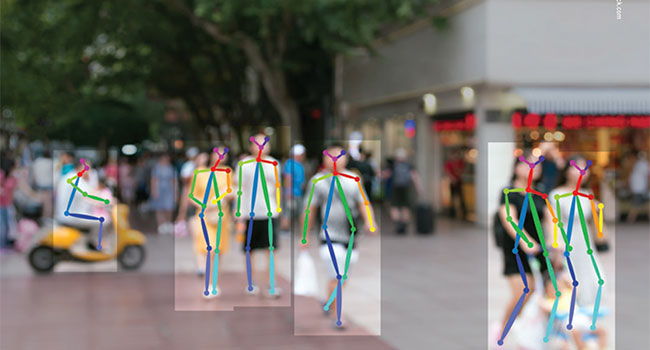
in security applications. Capable of tapping into other information
facilitated by sensors, including people counting, identity management,
and heat mapping, an AI system can deliver end users much
more information than traditional security applications ever could.
These data gathering functions enhance operations and are providing
new value for many end users, not only from a security standpoint,
but from an operational one, as well.
CONTINUALLY LEARNING
Advanced AI modeling technology continually learns what a
typical scene looks like. It significantly reduces false alarms because
it can detect atypical events or motion and alert operators
in real time to initiate an appropriate response.
Other AI capabilities, such as metadata filtering, are helping to
speed up investigations considerably. Metadata filtering automatically
recognizes objects, places and movements, and then extracts
and stores metadata relating to every scene. This meta data provides
classification, identity, and context to video streams, enabling
operators to organize, search and retrieve intelligent information
from massive amounts of video footage quickly and easily.
Additionally, people matching AI technology extracts the appearance characteristics of a selected individual and rapidly
searches through hours of footage for the most similar matches
from single or multiple recorded video streams.
Despite all these benefits, cost remains for some, one of the
main stumbling blocks for AI adoption. Processing power is
also another challenge. Initial solutions required complex server-based
set ups, which put them out of reach of most organizations.
Fortunately, price points are continuing to come down as new AI
functionality becomes accessible through some existing VMS solutions
and cloud-based applications. This, coupled with the fact
that vendors are presenting clearer and more concise applications
that address everyday challenges, is allowing increasingly more
end users to leverage the benefits of AI capabilities.
According to The Hill, AI has been steadily on the rise, going
from $12 billion in 2017 to a projected $60 billion in 2021.
But that projection will likely increase exponentially in the midst
of the COVID-19 pandemic. The rapid spread of the virus will
inevitably trigger many enterprises – many of which are losing
exorbitant amounts of revenue - to replace humans as a factor
of production. Machines can’t be infected by the virus and therefore
wouldn’t put a halt to production, disrupt the food supply
chain or other manufacturing processes. They also don’t need to
socially distance.
SOCIAL DISTANCING
Health guidelines dictating that people maintain a six foot distance
apart from each other are impacting so many facets of our
daily lives, both personally and professionally. Everyday function
as simple as going to the grocery store now require guards at the
entrances to space people apart and admit a limited number of
shoppers at a time. Many companies won’t be able to sustain the
cost of guards and security staff to enforce social distancing over
a long period of time. It is expensive. The automation of processes
via analytics will surely be an attractive, more affordable
solution.
Especially important in battling the spread of COVID-19 is
the ability to combine facial recognition and fever detection AI.
Thermal cameras have been used for a while now to detect people
with fever.
Cameras equipped with AI-based multi-sensory technology
are being used in myriad facilities including airports, hospitals
and nursing homes. The technology automatically detects people
with a fever, tracks their movements, recognizes their faces and
detects whether they are wearing a face mask.
In addition, intelligent drones and robots are being deployed
increasingly more to monitor adherence to the strict social distancing
measures required to curb the spread of the virus. To
further enforce compliance, some drones are being used to track
people not wearing face masks in public, while still others are
being employed to broadcast information to large gatherings
of people. Some are actually even being used to disinfect public
spaces.
There will, undoubtedly, be a surge in demand for simpler,
more cost-effective heat mapping and people counting to ensure
social distancing – be that in retail, warehousing/distribution centers,
schools and universities, public gathering places and the list
goes on.
Organizations that may not be able to budget for a sophisticated
new VMS with AI will likely look to leverage the surveillance
investment they already have with a simple add-on. Simple devices
such as people counting products, for instance, offer many benefits.
In addition to helping to enforce social distancing, they can
provide insights to define marketing and operational strategies,
and data to inform key business decisions. In-demand capabilities
will likely include passive staff detection, dwell time measuring
and the ability to connect multiple units to cover wide openings.
EMPLOYING COST-EFFECTIVE ANALYTICS
Many end users are already employing simple but cost-effective
‘blob’ type analytics, which typically includes images, audio
or other multimedia objects, and appliances to meet their operational
requirements. These are now commonplace in many applications,
as analytics cameras and plug-and-play appliances have
proven cost-effective and easy to deploy.
To even better leverage the benefit of AI, the onus is on manufacturers
and systems integrators to help customers understand
their biggest pain points and challenges. System integrators
should explain to their customers how they can operate more efficiently,
while continuing to reduce risks, increase safety and meet
compliance and duty of care requirements.
Although customers have rapidly adopted onboard analytics,
they can deliver false positives in the control room caused by
weather or other environmental factors. This can get problematic,
especially for large sties as it can lead to monitoring teams either
responding inefficiently to false alarms or simply shutting down
alerts altogether, potentially missing critical incidents.
DEEP LEARNING APPLICATIONS
It is in these types of environments that deep learning applications
are already delivering significant benefits and rapid ROI.
They learn from experience and significantly outperform human
performance with the capability to analyze vast amounts of data
points taken from video footage across single or multiple cameras
simultaneously. This allows AI applications to first detect and
then identify an event or threat, while filtering out false alarms
and, in turn, making first responders far more efficient and ensuring
critical incidents are never missed.
The value of and applications for artificial intelligence will inevitably
continue to expand, both in general as well as in response
to battling COVID-19. While nothing can ever replace the value
of human intelligence and decision-making,
having AI in the arsenal can surely aid in the
fight and help in winning the war on this invisible
enemy.
This article originally appeared in the July / August 2020 issue of Security Today.