Baltimore Council Says No to Facial Recognition

Baltimore Council Says No to Facial Recognition

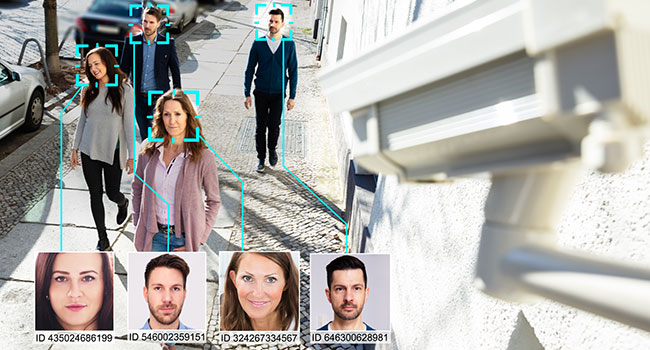
The Baltimore City Council voted overwhelmingly earlier this week to pass one of the strictest facial recognition bans in the United States. It would not only prohibits law enforcement and municipal agencies from procuring and using the technology but also bars private citizens in the city from leveraging it. Only two city councilmembers voted against the ordinance, which now goes to Mayor Brandon Scott for final approval.

The measure does carve out an exemption for the use of biometrics in access control systems and will expire at the end of 2022 provided the council does not vote to extend it after undertaking a study on the matter.

While several cities across the country have passed laws prohibiting police and other government agencies from procuring or using facial recognition systems in recent years, only Portland, Ore., has sought to ban private use of the technology by businesses. However, Baltimore’s ordinance would be the first to criminalize consumer use of such systems.

“Despite today’s inexplicable outcome to impose a complete ban on the use of facial recognition in Baltimore, there is still an opportunity to find reasonable compromise and fulfill Mayor Scott’s clear vision for improving citywide processes through the use of technology,” Security Industry Association CEO Don Erickson said in a statement. “SIA respectfully urges the mayor to reject the proposal passed by the council and instead appoint a balanced commission of citizen and privacy advocates, law enforcement personnel and private sector representatives to recommend guidelines within the next 180 days governing the use of facial recognition by business and government agencies.

“Lowering the temperature of the debate over facial recognition through more careful study and input during this period of time may produce a better outcome that can be supported by all stakeholders,” Erickson said, in his statement.

Prior to the ordinance’s passage, SIA, along with the Consumer Technology Association (CTA), the Information Technology and Innovation Foundation (ITIF), and XR Association, sent a letter to the Baltimore City Council Public Safety and Government Operations Committee urging it to reject the measure and noted a number of different commercial and consumer applications that would be impacted by its passage, such as increased and customized accessibility for disabled persons, devices that assist people suffering from blindness, memory loss or prosopagnosia (face blindness) with recognizing friends and others.

The letter also urged rejection of emergency systems to determine building occupant status following an evacuation order during a fire or other life-threatening event, healthcare facilities to verify patient identities while reducing the need for close proximity interpersonal interactions COVID-19 mitigation applications for business operations, allowing users to verify identities for vaccine validation, test results and other information, and in-home electronic devices with facial recognition, like smart baby monitors Customization of heating, lighting, sound and other room features based on building occupant preference/needs, and online test proctoring software.

Featured

  • Security Industry Association Announces the 2026 Security Megatrends

    The Security Industry Association (SIA) has identified and forecasted the 2026 Security Megatrends, which form the basis of SIA’s signature annual Security Megatrends report defining the top 10 factors influencing both near- and long-term change in the global security industry. Read Now

  • The Future of Access Control: Cloud-Based Solutions for Safer Workplaces

    Access controls have revolutionized the way we protect our people, assets and operations. Gone are the days of cumbersome keychains and the security liabilities they introduced, but it’s a mistake to think that their evolution has reached its peak. Read Now

  • A Look at AI

    Large language models (LLMs) have taken the world by storm. Within months of OpenAI launching its AI chatbot, ChatGPT, it amassed more than 100 million users, making it the fastest-growing consumer application in history. Read Now

  • First, Do No Harm: Responsibly Applying Artificial Intelligence

    It was 2022 when early LLMs (Large Language Models) brought the term “AI” into mainstream public consciousness and since then, we’ve seen security corporations and integrators attempt to develop their solutions and sales pitches around the biggest tech boom of the 21st century. However, not all “artificial intelligence” is equally suitable for security applications, and it’s essential for end users to remain vigilant in understanding how their solutions are utilizing AI. Read Now

  • Improve Incident Response With Intelligent Cloud Video Surveillance

    Video surveillance is a vital part of business security, helping institutions protect against everyday threats for increased employee, customer, and student safety. However, many outdated surveillance solutions lack the ability to offer immediate insights into critical incidents. This slows down investigations and limits how effectively teams can respond to situations, creating greater risks for the organization. Read Now

New Products

  • Luma x20

    Luma x20

    Snap One has announced its popular Luma x20 family of surveillance products now offers even greater security and privacy for home and business owners across the globe by giving them full control over integrators’ system access to view live and recorded video. According to Snap One Product Manager Derek Webb, the new “customer handoff” feature provides enhanced user control after initial installation, allowing the owners to have total privacy while also making it easy to reinstate integrator access when maintenance or assistance is required. This new feature is now available to all Luma x20 users globally. “The Luma x20 family of surveillance solutions provides excellent image and audio capture, and with the new customer handoff feature, it now offers absolute privacy for camera feeds and recordings,” Webb said. “With notifications and integrator access controlled through the powerful OvrC remote system management platform, it’s easy for integrators to give their clients full control of their footage and then to get temporary access from the client for any troubleshooting needs.”

  • EasyGate SPT and SPD

    EasyGate SPT SPD

    Security solutions do not have to be ordinary, let alone unattractive. Having renewed their best-selling speed gates, Cominfo has once again demonstrated their Art of Security philosophy in practice — and confirmed their position as an industry-leading manufacturers of premium speed gates and turnstiles.

  • Unified VMS

    AxxonSoft introduces version 2.0 of the Axxon One VMS. The new release features integrations with various physical security systems, making Axxon One a unified VMS. Other enhancements include new AI video analytics and intelligent search functions, hardened cybersecurity, usability and performance improvements, and expanded cloud capabilities