Why the Future of Security Depends on People and Technology
Titan Protection’s Ryan Smith explains why the $117 billion security market is moving beyond "guards vs. tech" to embrace high-ROI blended strategies.
- By Ryan Smith
- Apr 24, 2026
Not long ago, walking the floor at a security conference meant rows of gates, locks, barriers and key cards. Today, those same conference floors are aglow with analytics dashboards, buzzing with autonomous drones and filled with the latest AI-enabled tech. The security industry isn’t just curious about technology anymore—it’s actively adopting it, integrating it and planning around it.
That shift is reflected in the numbers. In 2022, guarding services still accounted for roughly 47% of the total security services market. But non-guarding security services—such as installation, monitoring and equipment maintenance—are growing rapidly, with the market projected to reach $117 billion by 2026.
It’s an exciting transformation – but capitalizing on its potential requires abandoning a false choice that still shows up far too often in industry conversations: do we invest in people, or do we invest in technology?
The reality is that the future of security depends on both, specifically, working together. That means shifting mindsets away from either-or thinking and toward blended strategies that combine the power of people with the power of technology.
Invest In People
It’s often said that humans are the most dangerous predators on the planet. And as long as threats to physical spaces originate from people – not machines – security will require humans in the loop. Judgment, empathy, discretion and relationship-building are essential to modern security operations – and, for now at least, they are uniquely human capabilities.
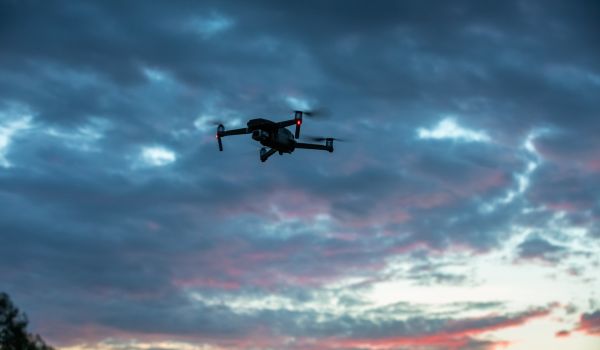
One of the most effective features of Titan Protection’s “drone in a box” system is what we call “talk down,” which allows our drone operators to address intruders in real time through a speaker on the drone. Having a human directing and speaking through the drone has a deterrent effect that no purely automated system would.
But technology is evolving more rapidly than ever, which means the role of humans in security will need to evolve just as quickly. Security companies need agile talent management strategies that will help them keep pace not just with the capabilities that technology offers today, but with whatever the next frontier of innovation brings.
We need to stop asking questions like, “Which roles can be replaced by artificial intelligence?” and start asking questions like, “How can artificial intelligence help this role bring more value to the customer?” and “What uniquely human capabilities can we unlock, with technology as a tool?”
The answers to these questions will evolve as technology does but investing in people and adopting blended approaches that combine the best that humans and technology have to offer is the best way to future-proof your workforce – and your bottom line.
Embrace Technology as a Mission Enabler
At the same time that we’re investing in people, the industry must embrace the best technology—not to replace humans, but enable them.
The mistake many organizations make is waiting for a single, perfect solution or adopting technology for technology’s sake. The better approach is strategic: identify gaps, understand risks and deploy tools that meaningfully augment human capabilities.
Our drone-as-a-service model is one example.
Drones can’t solve every security challenge – and they don’t need to. But they are exceptionally well-suited to protect large, hard-to-patrol areas with high-value assets. Titan’s early experience with autonomous response and patrol (ARP) drones has shown that these deployments cost 60% less than on-site guards. Together, the technology and our highly-trained monitoring center staff deliver a security solution that's greater than either could achieve alone
Staying at the forefront of technology doesn’t mean chasing every new innovation. It means continuously asking the right questions, adopting blended “goldilocks” solutions that give you the agility to adjust and iterate as technology advances.
Start With the Goal—and Design for a Blended Solution
This mindset shift applies to customers as well.
Too often, organizations begin the security conversation by asking for a specific product – like guards or drones – or worse, by defaulting to the lowest-priced option. That approach almost guarantees static, siloed solutions and, ultimately, underperformance.
Instead of asking security providers to price a particular solution, start by defining the goal. What risk are you trying to mitigate? What does success actually look like? This creates space for more effective, tailored solutions – ones that intentionally blend human expertise with technological capability.
This clarity is especially critical in a period of rapid technological change. Today’s hype-worthy gadget can quickly become tomorrow’s obsolete - and expensive - drag on the balance sheet.
One-size-fits-all strategies, or plans built around tactics alone, are brittle by design. Blended approaches that combine trained professionals with thoughtfully deployed technology offer something far more durable and resilient.
The Path Forward
The industry is moving away from a guard-by-the-hour model and toward something smarter: the best people, empowered by the best technology.
But that future won’t happen by accident. It requires intentional investment in the workforce, disciplined adoption of technology and a shared commitment to moving beyond false choices.
It means allowing technology to do what it does best—analyzing data, identifying patterns and processing information at scale—so people are freed up to do what only they can do: exercise judgment, apply creativity and build trust and relationships.
That’s the future of security—and it’s one worth building, together.