September 11, 2001: A Day That Changed America
Editorial staff reflect on 9/11's 25th anniversary, honoring the fallen while analyzing how the tragedy permanently transformed safety, security and emergency preparedness.
- By Ralph C. Jensen
- Sep 10, 2026
There are moments in history that divide time into a “before” and an “after.” For the United States, September 11, 2001, was one of those moments. It was a morning when ordinary routines—people going to work, boarding airplanes, making phone calls, beginning another school day—were shattered by an act of extraordinary violence. The horror was not only in the loss of life, but in the realization that familiar symbols of American life could suddenly become targets.
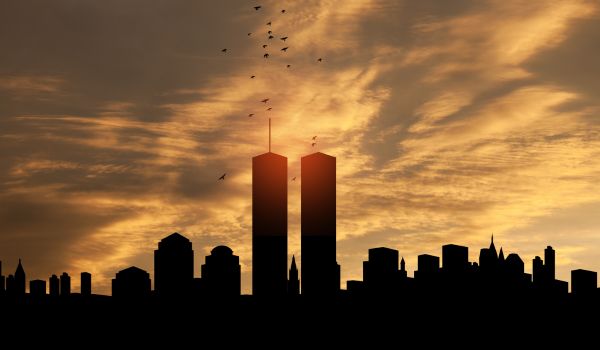
Four commercial airplanes were hijacked that morning. The attackers seized control of the aircraft and killed members of the crews and others who stood in their way. Two of the planes were deliberately flown into the World Trade Center towers in New York City. The images that followed were almost impossible to comprehend: enormous buildings struck by passenger airplanes, fires raging hundreds of feet above the ground, people fleeing through streets filled with smoke and debris and thousands of first responders moving toward the danger while others desperately tried to escape it.
A third airplane was flown into the Pentagon, the headquarters of the U.S. military. There, too, the attack demonstrated that the violence was not confined to New York. The United States itself had been attacked on its own soil, and one of the nation's most recognizable military institutions had been struck.
“I remember it was a Tuesday and I was at home preparing to leave Dallas on a trip. Once the attacks happened, I immediately cancelled my plans and was glued to the TV watching it all unfold. In the aftermath, security and safety became priorities for all of us. In the ensuing months and years our franchises took on an expanded responsibility from the new priorities of protecting people, property and assets. We still do and will continue to do so as security and safety remain a focus.” Brian Rendine, integrated media director for Security Today.
The fourth airplane, United Airlines Flight 93, became the setting for another extraordinary chapter of that morning. Passengers aboard the flight learned through telephone calls that other hijacked aircraft had been used as weapons. Understanding that their own airplane might have been intended for another target, several passengers chose to resist. They confronted the hijackers, knowing the enormous danger they faced.
Their actions prevented the aircraft from reaching its intended destination. Flight 93 crashed into a field near Shanksville, PA, killing everyone aboard, but the passengers' resistance saved additional lives on the ground. Their courage remains one of the most powerful examples of ordinary people making an extraordinary sacrifice.
“Awakened by my wife that morning in 2001, she had been watching the news and seeing that a plane had ‘”accidentally’” crashed in New York City. I started watching the live coverage when the second plane came. At that point, I knew the world had forever changed, and for the next several weeks, I experienced feelings of anger, patriotism, revenge, sadness, and confusion.” Rick Neigher, integrated media consultant for Security Today.
As the scope of the attacks became clear, the nation's normal transportation system effectively stopped. The Federal Aviation Administration ordered civilian aircraft in the United States to land, and aircraft already in the air were diverted to airports around the country. Thousands of passengers suddenly found themselves far from home, uncertain when they would be able to continue their journeys. Airports that had moments earlier been places of routine travel became places of confusion, uncertainty and waiting.
“Flying into Atlanta for the NSC tradeshow just 10 days after September 11 was an eerie experience; our flight was practically empty, echoing a stunned nation. The MSA Safety booth became a somber gathering point for attendees. It stood without reps or products—just four large TVs, one on each corner, broadcasting live updates of the ongoing rescue and recovery. As a media representative for OH&S Magazine, the vital mission of our industry was nothing new to me. Yet, in that quiet room, which was normally bustling, the typical business of B2B media faded, leaving only the raw, human weight of why the safety industry exists in the first place.” Jenna Conwell, regional sales manager, OH&S magazine.
The grounding of aircraft lasted for several days, although the situation was not simply a matter of passengers being held by the government. Most stranded travelers were left waiting because the entire aviation system had been shut down while authorities assessed the threat and determined how and when commercial flying could safely resume. For many people, the experience was deeply unsettling: they could not fly home, could not easily make other travel arrangements and had little understanding of what might happen next.
“The September 11 attacks changed how I see my work in occupational health and safety. The terrible loss of life showed me how important it is for every workplace to prepare for emergencies. In my role, I help share information and safety solutions that can protect workers when the unexpected happens. After September 11, the safety industry, including OH&S, focused on evacuation plans, emergency training, communication, respiratory protection, mental health and support for first responders. This tragedy reminded me that safety is not just about following rules. It is about caring for people and helping everyone return home safely each day.” Barbara Blake, regional sales manager, OH&S magazine.
That uncertainty extended far beyond airports. Across the country, people watched television and waited for information. Families tried to contact loved ones. Parents worried about children at school. Employees wondered whether their workplaces were safe. People who had friends or relatives in New York, Washington or aboard one of the aircraft waited anxiously for news. In a matter of hours, millions of Americans discovered how quickly the assumption of safety and security could disappear.
The consequences for security were profound. Before 9/11, air travel was already subject to security procedures, but the attacks transformed the way Americans thought about aviation and public safety. Airport screening became more rigorous. Cockpit doors were strengthened and secured. The government created the Transportation Security Administration, and travelers became accustomed to procedures that had previously been unfamiliar or considerably less restrictive. Identification checks, baggage screening, restrictions on liquids and other items and heightened attention to suspicious behavior became ordinary parts of traveling.
“Sept. 11 was supposed to be my first day off in 14 days. It was a beautiful, blue-sky morning. Then I got the call that the towers had been hit. I ran to the WHYY newsroom in Philadelphia, where I was handed a microphone and recorder and told to get to the Liberty Bell — there was fear it could be a target, too. By 10:30 on a weekday morning, one of Philadelphia’s busiest landmarks was eerily quiet. I stood there with the head of the National Park Service, both of us stunned, trying to comprehend what had just happened.” Stasia DeMarco, content editor, OH&S and Environmental Protection.
The changes did not stop at airports. Security became a much larger presence in American life. Government buildings, public events, borders, transportation systems and workplaces adopted new precautions. The attacks also prompted major changes in intelligence gathering, immigration and border enforcement, emergency preparedness and national security policy. Some of these measures were widely accepted as necessary protections; others generated years of debate over privacy, civil liberties, surveillance and the proper balance between security and individual freedom.
Yet statistics and policy changes cannot fully express what 9/11 meant to individuals.
For families who lost someone, the date is not merely a historical event. It is the day a husband, wife, mother, father, son, daughter, brother, sister, friend or colleague did not come home. For firefighters, police officers, emergency medical workers and other first responders, it became a day of unimaginable sacrifice. Many who survived the immediate attacks continued to experience physical and psychological consequences for years afterward.
“My first memory of Sept. 11’s impact was flying from Los Angeles to Denver the day airports reopened; one of seven uneasy passengers on what was an eerily empty wide-body jet. Soon after, as an editor covering telecommunications, I saw how security and privacy questions were reshaping the telecom industry in real-time. Today, as a group publisher serving safety, security and environmental professionals, September 11’s influence remains. From access control and cybersecurity to emergency preparedness and protecting respiratory health, the attacks from 25 years ago continue to shape the work we cover and the people we serve. That’s a trend that I expect will continue.” David Kopf, group publisher, Security & Safety, executive editor, at 1105 Media.
The effects reached people who had never set foot in New York or Washington. Americans began looking at airplanes differently. Some became afraid to fly. Others became uneasy in tall buildings or crowded public places. A generation of children grew up practicing security procedures and hearing conversations about terrorism that had been largely unfamiliar to their parents. Families altered travel plans, routines, careers and sometimes their understanding of the world itself.
“I was too young to remember September 11, and I have no memory of life before it, either. What I know comes from my family and colleagues; from watching footage years later; from talking about it in school. I don’t know air travel without TSA screenings, and “See Something, Say Something” signs have accompanied most of my public transit trips. Throughout every life, I see reminders of an event I can only understand through others’ accounts. Without memories of my own, I am grateful to those who share their experiences and help generations like mine understand its lasting significance.” Alex Saurman, managing editor and senior marketing associate of Security Today.
There was also, however, another side to the aftermath. Amid the fear and grief, Americans witnessed remarkable acts of compassion and courage. Strangers helped strangers. Communities donated blood and supplies. People opened their homes to travelers who could not get home. First responders ran toward collapsing buildings while knowing they might not return. Ordinary passengers aboard Flight 93 faced an extraordinary situation and chose to act. That mixture of horror and courage is important to remember.
September 11 was an attack designed to create destruction, fear and uncertainty. It succeeded in causing enormous loss and in changing American society. But it also revealed qualities that violence could not destroy: courage, sacrifice, compassion and the instinct to help others in moments of profound danger.
“I had just begun my workday at Pinellas Suncoast Transit Authority in Clearwater, FL, when I overheard urgent hushed voices in the hallway saying, ‘A plane just struck one of the Twin Towers!’ My colleagues and I huddled in the breakroom around the TV to watch the unbelievable event happen before our eyes. Barely a word was spoken besides, ‘oh my goodness,’ and we all had the same utter look of shock on our faces. I recall not knowing what to do besides stand in disbelief while others around me were brought to tears by the abrupt, traumatic emotional toll to an exposed world.” Laurie Layman, senior art director for the Security-Safety Group at 1105 Media..
The United States that went to sleep on September 10, 2001, was not the same country that woke up on September 12. The physical damage was concentrated in particular places, but the emotional impact crossed every state and reached millions of homes. Security would never again feel quite the same. Air travel would never again feel quite as routine. And for the families who lost loved ones, September 11 would remain not simply a date in history, but a permanent dividing line in their own lives.
More than two decades later, the responsibility of remembering September 11 is not simply to remember how people died. It is also to remember how people responded—to terror with courage, to uncertainty with determination and to unimaginable loss with compassion. History records the buildings that fell and the airplanes that were hijacked. But it should also preserve the human stories of the people who ran toward danger, the passengers who resisted, the families who waited and the countless Americans whose lives were permanently changed by a single September morning.
Editor’s note: Members of the staff from Security Today, Campus Security Today, Occupational Health & Safety and Environmental Protection are listed above and participated in crafting this Remembrance of the valiant souls who died on September 11, 2001. May this 25th anniversary help shape the narrative of peace and goodwill throughout the world.